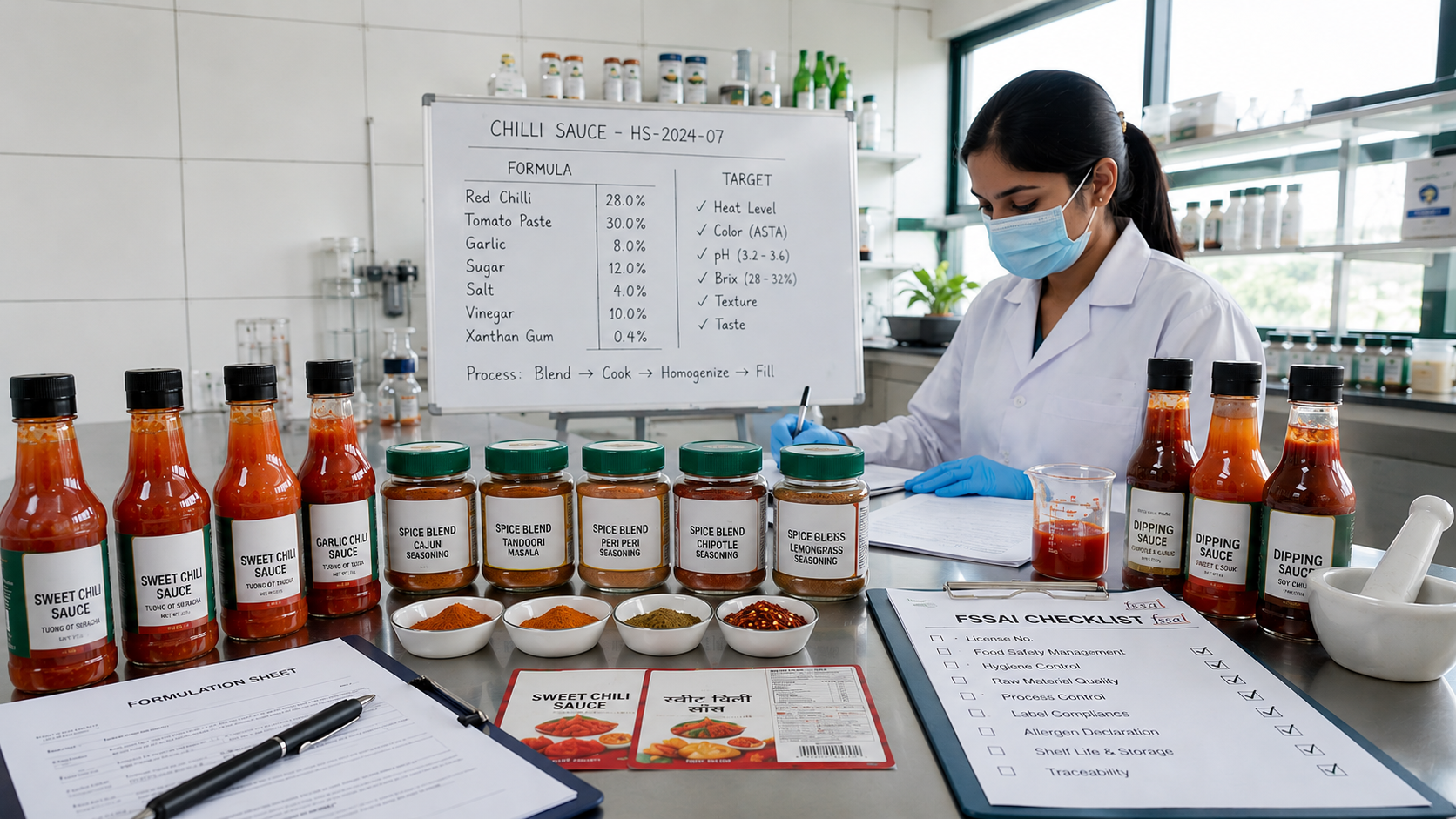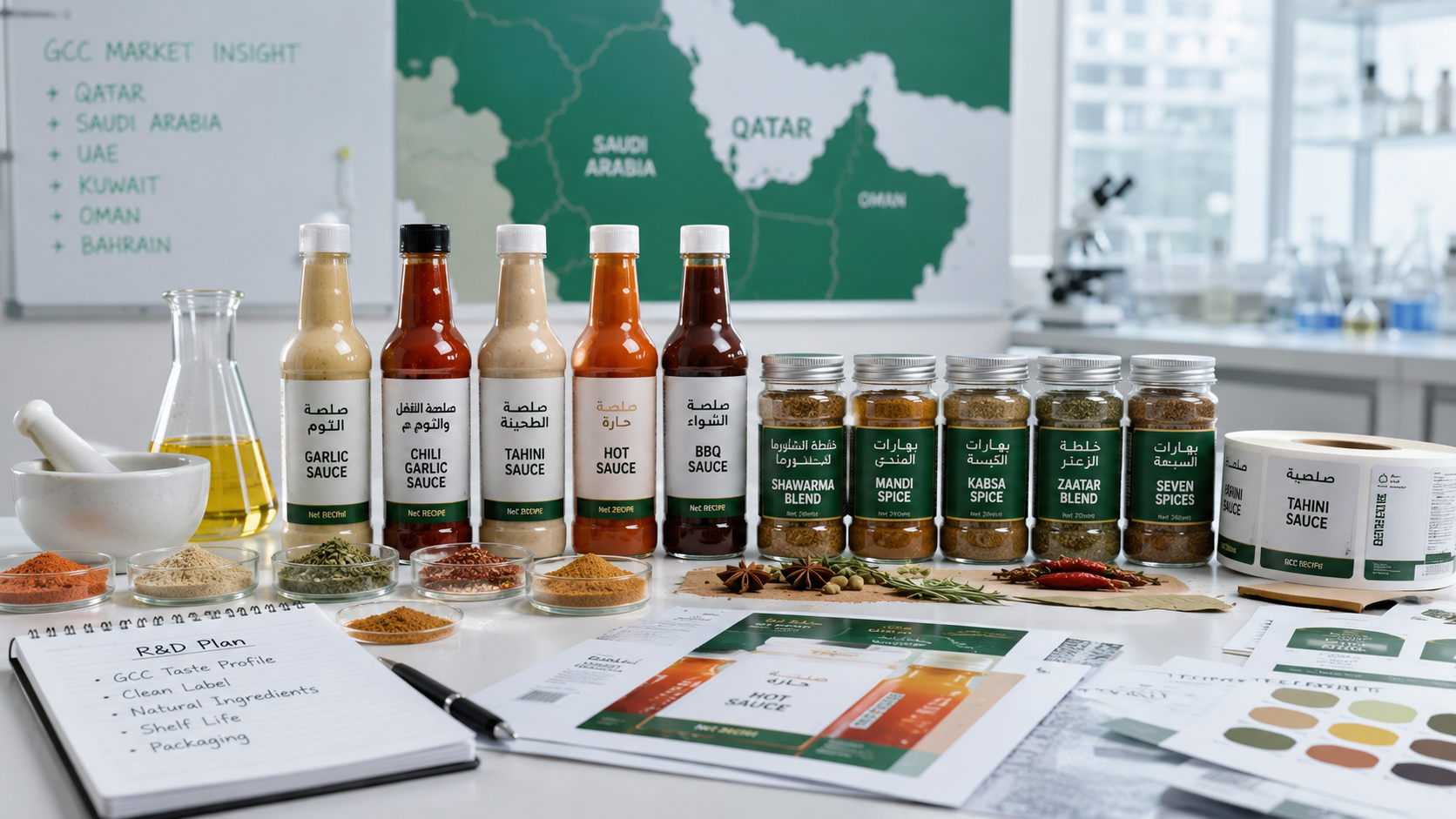


Lebanon can be a promising Levant market for sauces, dipping sauces, marinades, seasoning mixes, spice blends, and private-label food products. But businesses should not enter by assumption. A product must be clear in formula, ingredients, Halal logic, labeling, packaging, shelf life, pricing, importer requirements, and channel strategy before the first commercial shipment.
Why should Lebanon matter to seasoning and sauce businesses?
Lebanon is not the largest Middle Eastern market, but its food culture, restaurant scene, urban consumers, imported-food channels, and Levant cuisine make it worth studying. Vietnamese seasoning businesses should focus on one to three practical products that fit real dishes, not on bringing a full catalog into the market.
Lebanon has a strong culinary identity. Its food culture uses olive oil, lemon, garlic, tahini, sumac, za’atar, cumin, coriander, paprika, chili, pickles, bread, falafel, shawarma, grilled meat, grilled fish, mezze, and many side sauces. That creates room for dipping sauces, chili sauces, garlic sauces, marinades, spice blends, and food-service products.
The market is also diverse. Lebanon is not only a Muslim consumer market. It also has a large Christian community, international restaurants, urban consumers, and buyers who are familiar with imported food. That means a product strategy cannot rely on one Halal claim alone.
For Hoa Sen Foods, the first question is not simply: “Does Lebanon need Halal products?” The better question is: “Is the product clear enough in formula, ingredients, Halal evidence, taste direction, label, shelf life, packaging, price, and distribution channel to enter Lebanon with commercial potential?”
Which product groups can be considered for Lebanon?
A stronger entry point is a focused product set. Products should be easy to understand, easy to use in Levant dishes, realistic in price, and manageable in terms of Halal, labeling, packaging, and technical documentation.
- Chili sauce, garlic sauce, and Asian-style spicy sauces for grilled meat, chicken, fish, sandwiches, shawarma, fried foods, and snacks.
- Sweet-sour sauces, tamarind sauces, and dipping sauces for grilled dishes, poultry, seafood, and mezze-style meals.
- Marinades and seasoning mixes for grilled meat, chicken, seafood, vegetables, and food-service kitchens.
- Soy sauce, plant-based dipping sauces, and vegan sauces that may reduce Halal complexity.
- Spice blends, seasoning mixes, and convenient dry seasonings for retail or kitchen use.
- Food-service formats for restaurants, hotels, catering, central kitchens, and international food operators.
- Private-label products for Lebanese importers or distributors that need their own flavor, pack size, price point, or brand.
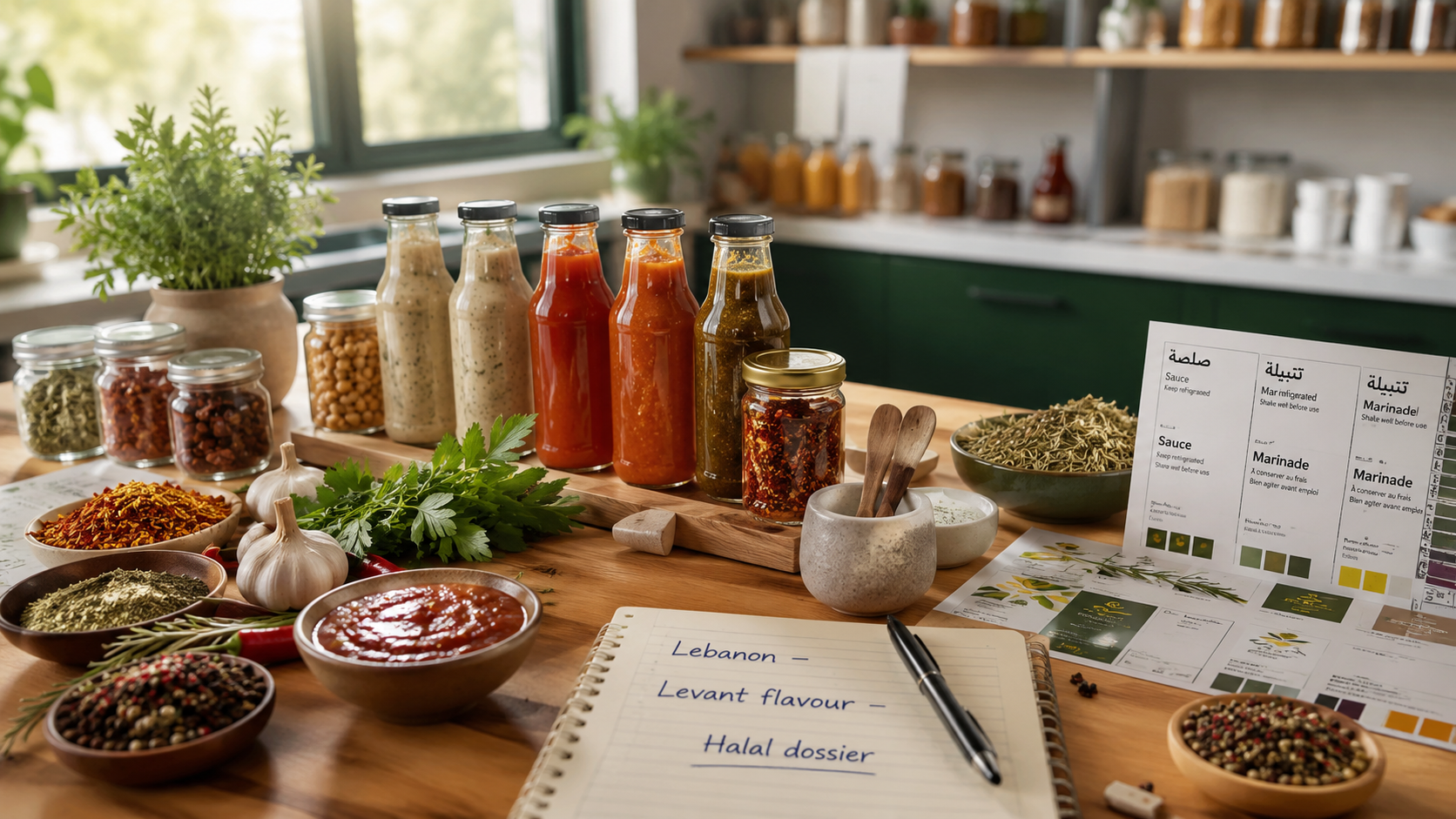
How should Halal be understood in Lebanon?
Halal in Lebanon should be handled by segment and channel, not treated as a single rule for every buyer. If a product targets Muslim consumers or Halal channels, the dossier must be strict. If it targets mixed HORECA channels, transparent ingredients still matter.
If the product is aimed at Muslim consumers, Halal restaurants, distributors serving Muslim communities, Halal food stores, or re-export routes to neighboring Islamic markets, Halal certification and a strong Halal dossier become important. In that case, Halal should not be treated as a packaging decoration.
If the product enters urban retail, international restaurants, imported-food stores, or mixed HORECA channels, Halal may still be a commercial advantage, especially for plant-based, alcohol-free, animal-free products with clear documentation. The final requirement, however, should be confirmed with the importer.
For seasoning products, Halal should be seen as a four-layer system: product formula, ingredient chain, production process, and certification-labeling-import dossier. Weakness in any layer can create risk later when an importer, inspection body, restaurant buyer, or end customer asks for evidence.
How is Lebanon different from Jordan, the UAE, and Morocco?
Lebanon shares Levant flavor logic with Jordan, but its restaurant and urban channels have their own character. It differs from the UAE because it is not a major re-export hub like Dubai. It differs from Morocco because the flavor base is Levant, not Maghreb.
Compared with Jordan, Lebanon shares many Levant dishes and flavor references, but some urban and restaurant channels are more internationalized. Asian sauces may enter through restaurants, imported-food stores, HORECA, or consumers who enjoy new taste experiences.
Compared with the UAE, Lebanon needs a more realistic view of price, supply, importer capability, and pack-size flexibility. A product that works in Dubai may not work in Lebanon if the cost is too high, the pack size is too large, or the market-test channel is unclear.
Compared with Morocco, Lebanon is not built around Maghreb cuisine. Products should be adjusted toward grilled dishes, shawarma, falafel, bread, mezze, salads, fish, chicken, fried foods, and family meals rather than copying a North African flavor strategy.
What should businesses pay attention to when adapting products for Lebanon?
The product should be built around real Levant usage, flexible labeling, practical pricing, food-service testing, importer confirmation, packaging stability, and a clear Halal logic for the intended customer group. Flexibility is more useful than a long product catalog.
- Levant flavor fit: garlic, lemon, olive oil, za’atar, sumac, tahini, paprika, cumin, grilled meat, fish, falafel, bread, and mezze are important references.
- Label language: Arabic should be prepared as a foundation; English and French may be useful for urban retail, B2B, and HORECA.
- Halal by segment: Muslim channels need stronger Halal evidence, while mixed channels still require transparency around alcohol, gelatin, enzymes, animal-derived flavorings, and additives.
- Food service as an entry route: restaurants, hotels, catering, Asian restaurants, and central kitchens can test products in real dishes before broader retail expansion.
- Practical pricing: imported products need a clear reason for their price, such as taste, quality, convenience, food safety, packaging, or HORECA fit.
- Packaging and shelf life: sauces, pastes, dipping sauces, and dry seasonings should be checked for leakage, separation, clumping, discoloration, aroma loss, and heat stability.
- Importer confirmation: importers help confirm labeling, certification, import documents, channels, pricing, and real market feedback.
- Operational flexibility: a focused lead product, suitable pack size, and fast sample adjustment are usually stronger than a large catalog.
Why must seasoning companies be especially careful before entering Lebanon?
Seasonings look simple, but their formulas can be complex. A sauce, paste, marinade, or spice blend may contain small ingredients that affect Halal status, labeling, import review, flavor stability, shelf life, and consumer trust.
A bottle of sauce or a packet of spice blend may include flavorings, food acids, stabilizers, flavor enhancers, preservatives, colorings, enzymes, fermented ingredients, thickeners, or packaging materials in direct food contact. These small components are often where the main risks sit.
Flavorings need careful review. A general name such as “flavour” is not enough. Businesses should know the origin, carrier, solvent, production process, and related certification of the flavoring, especially for meat flavor, chicken flavor, beef flavor, smoke flavor, seafood flavor, fermented flavor, or complex flavor bases.
Fermented ingredients such as soy sauce, vinegar, paste, fermented sauces, and yeast extract should not be judged by feeling. They may be suitable or unsuitable depending on the dossier. Specification, COA, certification if available, and supplier confirmation are needed.
Animal-derived ingredients are higher-risk. Gelatin, collagen, animal enzymes, meat extract, animal fat, or animal-derived flavorings need very clear evidence. For products targeting Muslim consumers, a plant-based formula or a formula with limited animal-derived components is often a safer starting point.
Packaging also matters. Bottles, caps, seals, pouches, jars, laminated films, printing inks, adhesives, and coatings that touch food can affect smell, color, leakage, shelf life, and perceived product quality. This should be reviewed before commercial production.
Which products should businesses choose first for Lebanon?
Businesses should not bring an entire catalog into Lebanon at the beginning. A more practical route is to select one to three lead products with lower Halal risk, clear Levant usage, stable packaging, and the ability to be tested through HORECA or an importer.
Chili sauce, garlic sauce, sweet-sour spicy sauce, or Asian-style spicy sauce may create differentiation if it works with chicken, fish, grilled meat, bread, sandwiches, snacks, shawarma, and fried dishes. The flavor should be clear, but not too distant from local eating habits.
Marinades and seasoning sauces for grilled dishes are also worth testing. Lebanon has a strong grilled-food and side-dish culture. Products can be adjusted around garlic, lemon, cumin, paprika, pepper, herbs, or olive-oil-friendly taste profiles.
Soy sauce, dipping sauces, and plant-based sauces may reduce Halal complexity and fit many customer groups. Still, businesses must review fermented ingredients, saltiness, additives, flavor enhancers, flavorings, shelf life, and packaging.
Private label can be a practical route. A Lebanese importer may need its own taste, pack size, price level, or brand. In that case, recipe R&D, recipe confidentiality, production consistency, and technical dossier support become clear advantages of a contract manufacturing partner.
Which entry channel should be chosen before certification?
The sales channel determines the formula, pack size, pricing, label, and type of dossier. Businesses should decide whether the product targets urban retail, HORECA, Asian restaurants, Muslim/Halal channels, private label, or online sales before certification and packaging printing.
If the product enters modern retail or imported-food stores, it needs a clear label, attractive packaging, suitable size, shelf life, barcode, retail price, and display plan. This channel requires strong product image and consumer trust.
If it enters food service, restaurants, hotels, or central kitchens, larger pack sizes, volume-based pricing, stable quality, and reliable delivery matter more than retail packaging. This can be a practical entry route for sauces, marinades, pastes, and Asian products that need to be tested in real dishes.
If it enters Muslim/Halal channels, the product needs suitable Halal certification, a clear formula, no alcohol, no pork-derived ingredients, transparent labeling, and a reputable distributor. If it is developed as private label, recipe ownership, certification responsibility, MOQ, sample timeline, and confidentiality should be clarified early.
Channel comparison: how should businesses enter Lebanon?
Each entry channel brings different requirements for formula, pack size, packaging, Halal dossier, and selling method. This table helps businesses avoid certification, labeling, or trial production decisions based only on assumptions.
| Priority channel | Suitable products | What to prepare | Commercial note |
|---|---|---|---|
| Urban retail | Dipping sauces, chili sauces, soy sauce, spice blends | Arabic / English / French label if required, attractive packaging, barcode, shelf life | Needs reasonable pricing and a clear product story |
| HORECA / food service | Sauces, pastes, marinades, larger formats | Stability, volume-based pricing, kitchen test samples | Can be easier to test before broad retail expansion |
| Asian / international restaurants | Asian sauces, dipping sauces, seafood seasonings | Flexible usage, medium pack sizes, technical information | Suitable for products that need real menu experience |
| Muslim / Halal channels | Plant-based, alcohol-free products with Halal records | Accepted certification, transparent ingredients, importer confirmation | Certification acceptance must be confirmed before printing |
| Private label | Custom flavors, custom labels, importer-specific products | Recipe confidentiality, MOQ, sample timeline, certification responsibility | Requires strong R&D and stable production control |
What is the 10-step roadmap for preparing seasoning products for Lebanon?
A strong roadmap starts with the sales channel and importer, not packaging printing. When the formula, ingredient dossier, label, certification path, and pilot batch are prepared properly, risk in the first commercial shipment is reduced.
- Define the region and sales channel: Beirut, Tripoli, Sidon, Tyre, Zahle, urban retail, HORECA, food service, Muslim/Halal channels, private label, or a local distributor.
- Work early with the Lebanese importer: confirm labeling, certification, import documents, pack size, shelf life, pricing, and distribution route before mass printing.
- Select lead products: prioritize lower-risk products that fit Levant dishes, remain commercially feasible, and can be tested through an importer or HORECA channel.
- Create a detailed formula table: list commercial name, technical name, supplier, country of origin, usage rate, function, origin, Halal status, specification, COA, and risk notes.
- Classify ingredient risk: identify low, medium, and high-risk ingredients, including gelatin, unclear enzymes, meat extracts, meat flavors, animal fats, alcohol, unclear solvents, or suppliers without enough documentation.
- Run recipe R&D again if needed: if an ingredient cannot be proven, replace it with a clearer alternative instead of keeping risk in the formula.
- Control production and cross-contamination: review raw material receiving, storage, weighing, mixing, heating, filling, packaging, batch coding, retained samples, sanitation, and traceability.
- Select a suitable certification body: do not choose certification only because it is cheaper or faster. Confirm whether the importer or target channel accepts it.
- Prepare market-ready labeling: include product name, ingredients, additives, allergens, net weight, country of origin, manufacturer, shelf life, storage, usage instructions, nutrition if applicable, batch code, barcode, and importer information if needed.
- Produce a pilot batch and track the first order: use the pilot batch to test sensory quality, stability, packaging, label, batch dossier, production process, and real cost. Treat the first shipment as a commercial test, not only an order.
What documents should seasoning companies prepare?
A strong dossier does more than support certification. It helps importers review the product faster, helps the sales team answer clearly, and reduces risk when a product travels across borders.
| Document group | What should be included |
|---|---|
| Product dossier | Product name in Vietnamese, English, Arabic, or French if available; product description; formula; production process; quality criteria; shelf life; storage conditions; product images; and packaging format. |
| Ingredient dossier | Ingredient list, specifications, COA if available, Halal certificates if needed, origin, additive details, supplier commitments, and alternatives for critical ingredients. |
| Factory dossier | Factory layout, production flow, sanitation, cross-contamination control, batch control, retained samples, deviation handling, complaints, recall process, and personnel training. |
| Packaging and label dossier | Label artwork, Arabic / English / French versions if required, nutrition information if applicable, claims and claim evidence, packaging specifications, barcode, cartons, batch code, and expiry date. |
| Commercial dossier | Importer, sales channel, priority region, target price, MOQ, delivery terms, volume plan, market-test strategy, and possible expansion to the Levant or GCC if suitable. |
What mistakes do Vietnamese seasoning businesses often make in Lebanon?
Most mistakes do not come from a weak product idea. They come from vague preparation: treating Lebanon as one uniform market, preparing labels late, selecting certification by assumption, or setting an MOQ that is too high for the first test order.
- Assuming Lebanon only needs Halal while taste, price, label, channel, shelf life, importer, and documentation still decide commercial success.
- Failing to clarify whether the product targets Muslim customers, mixed-faith channels, urban retail, or food service.
- Preparing Arabic labeling too late, leading to packaging revisions, reprinting, or shipment delays.
- Using a Halal certificate before the importer confirms whether it is accepted.
- Writing broad terms such as “flavouring,” “additive,” or “flavor enhancer” without a clear ingredient dossier.
- Not testing taste with the importer, chef, target consumer group, or food-service channel.
- Setting pricing or MOQ too high for the first market-test order.
- Ignoring the food-service opportunity even though Lebanon has a strong restaurant culture.
Where can Hoa Sen Foods support businesses preparing for Lebanon?
Hoa Sen Foods is not a Halal certification body. Its suitable role is as an R&D and production back-end partner: helping clients clarify ideas, formulas, samples, ingredient risks, pack sizes, packaging, and technical information before working with importers or certification partners.
- Consult on product ideas for the Lebanese market and the intended sales channel.
- Develop formulas for seasonings, dipping sauces, sauces, pastes, dipping salts, and packaged products.
- Prepare samples and adjust them based on feedback from importers, chefs, or target consumers.
- Optimize taste, pack size, packaging, and production cost.
- Review basic ingredient risks, especially flavorings, additives, fermented ingredients, and animal-derived sources.
- Control production, packaging, retained samples, batch codes, and technical information for dossiers.
- Protect clients’ formulas, production volumes, and commercial information.
For official certification requirements in Lebanon, businesses should work with an authorized certification body and confirm suitability with the importer or relevant authority. A product that wants to travel further still needs to begin with a clear formula, clear ingredients, a controlled process, and a proper dossier.
Quick map: what are the 5 control layers before entering Lebanon?
If one of these five layers is weak, the business should fix it before moving further. This map helps R&D, production, sales, and importer teams discuss the product using the same control framework.
| Control layer | Question to answer | Risk if ignored |
|---|---|---|
| 1. Formula | What is inside the product? Does it contain alcohol, gelatin, enzymes, animal-derived flavorings, or other risky ingredients? | The product may fail Halal review or require late-stage R&D. |
| 2. Ingredient dossier | Does each ingredient have specifications, COA, origin details, and certification if needed? | The importer may not be able to assess the product clearly. |
| 3. Production | Does the process control cross-contamination, sanitation, batch coding, retained samples, and traceability? | Quality, traceability, and certification risks increase. |
| 4. Label and packaging | Are Arabic / English / French labels, ingredients, nutrition, shelf life, allergen warnings, and claims clear? | The product may require relabeling, reprinting, or shipment delays. |
| 5. Commercial readiness | Are the customer, channel, price, pack size, MOQ, and importer clear? | The product may be technically good but hard to sell or reorder. |
Lebanon is a market worth testing, but it should be tested through preparation, not through expectation alone. Businesses should start with practical questions: who will buy the product, which channel will it enter, which segment needs Halal, whether the flavor fits, whether the label is ready, whether the packaging can travel far, and whether the MOQ fits a market-test order.
Hoa Sen Foods can support clients from the first preparation steps: formula consulting, sample development, basic ingredient-risk review, and a suitable contract manufacturing plan for seasoning and food products aimed at Lebanon. Visit hoasenfoods.vn to send your request and discuss the right production direction.
Download the in-depth Halal guide for the Lebanon market
FAQ
Do seasoning products entering Lebanon have to be Halal?
There is no single answer for every product and every channel. If the product targets Muslim consumers, Halal restaurants, or re-export routes to Islamic markets, the Halal dossier is important. If it enters mixed-faith HORECA, Halal may still be a trust advantage, but the requirement should be confirmed with the importer.
Which languages should be prepared for product labels in Lebanon?
Arabic should be prepared as a foundation. English and French may be useful for urban retail, HORECA, and B2B trade. Final label content should be confirmed by the importer before large-scale packaging printing.
Which Vietnamese seasoning products can be tested first in Lebanon?
Businesses can consider chili sauce, garlic sauce, Asian dipping sauces, grill marinades, soy sauce, plant-based dipping sauces, spice blends, or private-label products. The better approach is to select one to three lead products rather than bring the full catalog at once.
Does Hoa Sen Foods provide Halal certification for clients?
No. Hoa Sen Foods is not a Halal certification body. Its role is to support formula development, sample testing, R&D, production, packaging, and technical information so clients can work with an importer or suitable certification body.
Why should businesses test taste before producing a large batch?
Lebanese flavor preferences are tied to Levant references such as garlic, lemon, olive oil, za’atar, tahini, grilled dishes, and mezze. A product that tastes good in Vietnam may not fit local meals. Taste testing helps the business adjust before investing in packaging and commercial production.
Author and review information
Author: Hoa Sen Foods Content Team
Specialty: Spice and food contract manufacturing, seasoning R&D, sauces, dipping sauces, private-label food products
Trang chủ