

Uzbekistan is a Central Asian market with opportunities for sauces, dipping sauces, marinades, seasoning powders, spice blends, food-service products, and private-label development. However, businesses should not enter this market with Halal certification alone. They need clear formulas, ingredient dossiers, Uzbek/Russian labeling, durable packaging for long-distance transport, and a suitable local importer.
Quick answer: what must be ready before entering Uzbekistan?
Before exporting Halal seasonings to Uzbekistan, a business should prepare five foundations: a clear product formula, traceable ingredient records, Halal suitability evidence, Uzbek/Russian labeling, and a practical commercial plan with an importer, sales channel, price, pack size, shelf life, and logistics route.
| Preparation area | What to clarify | Why it matters |
|---|---|---|
| Formula | Ingredient origin, additives, flavorings, fermentation, alcohol risk, animal-derived components, and substitute options. | A good product still needs a formula that can be explained, documented, and adjusted for Halal and import review. |
| Ingredient dossier | Specifications, COA, Halal certificates if needed, supplier information, origin, and change-control commitments. | Seasoning risk often sits in small ingredients, not only in salt, sugar, chili, garlic, pepper, or onion. |
| Labeling | Uzbek/Russian language needs, ingredient declaration, additives, nutrition facts, shelf life, allergens, claims, importer data, and use instructions. | Labels should be checked before printing, not corrected after the product is ready to ship. |
| Packaging and logistics | Leakage, clumping, aroma loss, cap swelling, separation, direct food-contact packaging, shelf life, and temperature changes. | Uzbekistan is landlocked, so long-distance logistics and storage conditions must be planned early. |
| Commercial channel | Tashkent, Samarkand, Bukhara, food service, imported food stores, modern retail, grill channels, Halal channels, or private label. | The channel determines product taste, pack size, pricing, certification, documentation, and reorder potential. |
Why should Uzbekistan matter to seasoning businesses?
Uzbekistan is not usually the first market Vietnamese companies mention when discussing Halal food exports. Names such as the UAE, Saudi Arabia, Malaysia, Indonesia, and other larger Muslim-majority markets often come first. For the seasoning industry, however, Uzbekistan deserves careful study.
The reason lies in food habits. Uzbekistan connects Central Asia, Russia, China, and the broader Eurasian trade route. Its food culture is shaped by several influences: traditional Uzbek cuisine, Russian and Central Asian habits, Turkish flavors, Korean communities, Chinese food, and international dining in major cities.
Uzbek meals often involve meat, noodles, rice, bread, soups, grilled dishes, pickled foods, aromatic spices, side sauces, and condiments. Dishes such as shashlik, lagman, plov, manty, samsa, kebab, pilaf, grilled meat, and bread-based meals may create space for Vietnamese sauces, dipping sauces, marinades, soy-based sauces, spice blends, and seasoning mixes.
Yet Uzbekistan should not be approached by guesswork. A sauce that tastes good in Vietnam may not work in Uzbekistan if the flavor is too unfamiliar, the label is not prepared in the right language, the Halal certificate is not accepted by the importer, the packaging is unstable during long-distance transport, or the product does not meet the import and dossier requirements requested by the local partner.
The first question should not be: “Is Uzbekistan a Muslim market?” A stronger question is: “Is this product clear enough in formula, ingredients, Halal status, labeling, shelf life, packaging, logistics, and distribution channel to enter Uzbekistan?”
Which product groups may fit Uzbekistan?
The opportunity is not in sending a full catalog at the beginning. The practical opportunity is in selecting a few products that can be used with local meals, documented properly, transported safely, and sold at a realistic price.
- Chili sauce, garlic sauce, sweet-and-sour spicy sauce, or Asian-style hot sauce.
- Dipping sauces for grilled meat, chicken, fish, snacks, bread, shashlik, or kebab.
- Marinades, grill rubs, meat seasonings, chicken seasonings, seafood seasonings, and spice rubs.
- Spice blends, seasoning mixes, and convenient dry seasoning powders.
- Soy sauce, plant-based dipping sauces, and vegan sauces.
- Food-service formats for restaurants, hotels, central kitchens, and grill-focused operators.
- Private-label products for Uzbekistan importers, distributors, or retail partners.
The market becomes real only when the product can be imported, labeled, distributed, stored, traced, and sold without quality loss. For Uzbekistan, “able to travel far” is as important as “tastes good.”
How should Halal be understood in Uzbekistan?
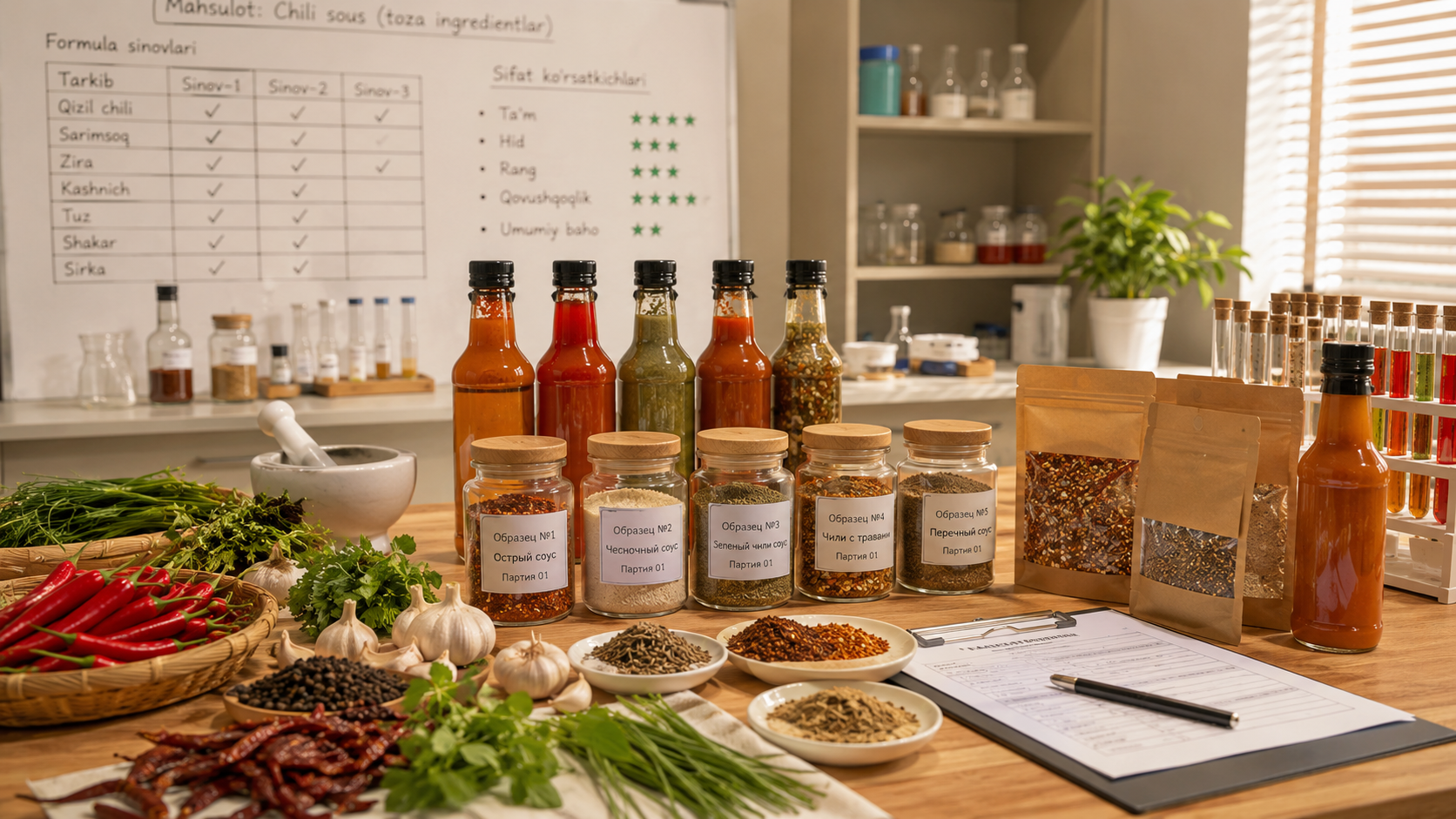
Uzbekistan has a large Muslim consumer base, but consumer life is diverse. Halal should be understood by product group, sales channel, target community, and importer requirement. For seasoning products, Halal is not only a logo on the package. It is proof across formula, ingredients, process, label, documentation, and traceability.
Uzbekistan should not be treated as a uniform Middle Eastern-style Halal market. Halal remains important for Muslim consumers, Halal restaurants, Halal food stores, products with animal-derived ingredients, and brands that want stronger origin trust. At the same time, the level of requirement may vary depending on the channel.
If a product targets multicultural urban channels, imported food stores, food service, or international restaurants, Halal can still become a commercial advantage. Plant-based, alcohol-free, and animal-free formulas with clean documentation are usually easier to handle. But businesses should not assume every product faces the same requirement. The importer should be consulted early.
| Halal control layer | Question to answer |
|---|---|
| Product formula | Does the formula include alcohol, pork derivatives, gelatin, enzymes, fats, emulsifiers, animal-based flavorings, or complex additives? If yes, is the source Halal-suitable? |
| Ingredient chain | Does each ingredient have a specification, COA, Halal certificate if needed, supplier details, country of origin, and change-control commitment? |
| Production process | Is there cross-contamination risk with non-Halal materials? Are sanitation, batch coding, retained samples, traceability, and change control clear? |
| Certification, label, and import | Will the importer accept the Halal certificate? Is the Uzbek/Russian label suitable? Are import, conformity, or technical dossiers required? |
The common mistake in the seasoning industry is looking only at visible ingredients such as salt, sugar, pepper, chili, garlic, or onion. Real risk often sits in smaller components: flavorings, carriers, solvents, flavor enhancers, enzymes, fermented ingredients, colors, preservatives, stabilizers, emulsifiers, processing aids, and direct food-contact packaging.
The right question is not simply: “Is this product Halal?” The more useful question is: “Does this product have enough evidence to prove Halal suitability when the importer, inspection body, or customer asks?”
How is Uzbekistan different from the UAE, Kazakhstan, and Turkey?
Uzbekistan has its own Central Asian character, Uzbek/Russian language requirements, landlocked logistics, local taste expectations, and importer-driven realities. A business should not copy a strategy used for the UAE, Kazakhstan, or Turkey without checking product fit.
| Comparison | Key difference | Implication for seasoning businesses |
|---|---|---|
| Compared with Kazakhstan | Both belong to the Central Asian space and carry Russian influence, but Uzbekistan has its own Islamic culture, local taste, and channel structure. | Do not reuse the same formula, label, or market strategy without taste testing and dossier review. |
| Compared with the UAE | Uzbekistan is not a Dubai-style re-export hub. It is a Central Asian consumer market with long logistics, local languages, and local taste needs. | Do not prepare only for Halal. Check Uzbek/Russian labeling, transport, shelf life, price, and local channel fit. |
| Compared with Turkey | Uzbekistan has Turkic cultural links, but it does not have the same scale of processed food production or international food brands. | Vietnamese products can differentiate through Asian dipping sauces, soy sauce, seafood seasonings, spicy sauces, and private label. |
Eight points deserve special attention when researching Uzbekistan: Central Asian taste, Uzbek/Russian labeling, the importance of Halal by product group, landlocked logistics, hot-cold climate variation, price by segment, food-service potential, and importer capability.
Language and logistics are often underestimated. Depending on the food category, the business should confirm how to declare ingredients, shelf life, manufacturer, importer, nutrition information, allergen warnings, and claims with the local importer. Assumptions taken from Middle Eastern markets should not be applied automatically.
Which risks should seasoning businesses review carefully?
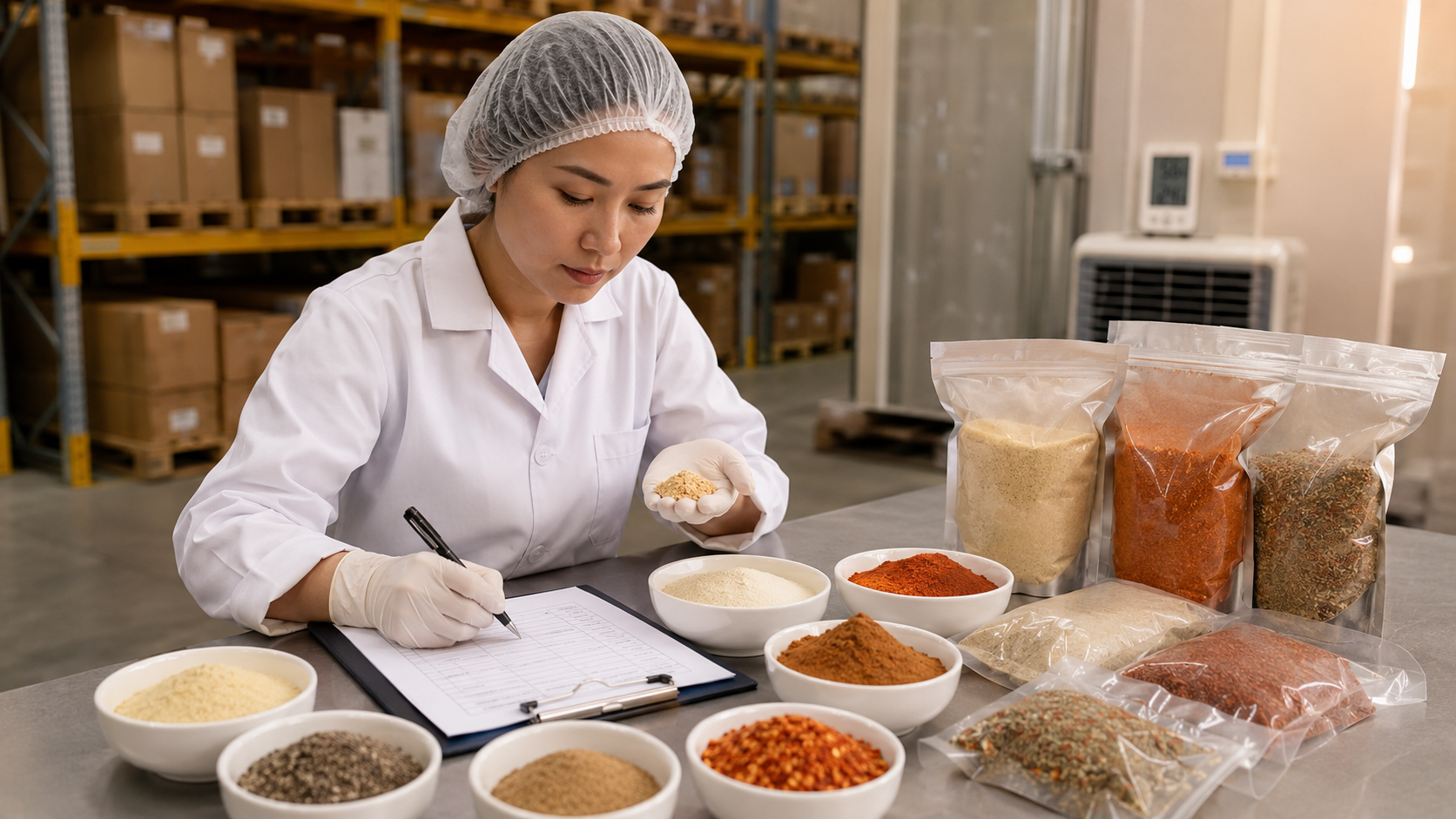
Seasonings may look simple, but the dossier can be complex. A bottle of sauce, a jar of paste, a seasoning pouch, or a spice blend may contain many small components. Each one can affect Halal status, labeling, import readiness, food safety, and product stability.
To achieve stable taste, attractive color, appealing aroma, suitable texture, shelf life, and feasible cost, seasoning formulas often include food acids, flavorings, stabilizers, flavor enhancers, preservatives, colors, enzymes, or fermented ingredients. These smaller components can create risk when the product enters a new market.
- Flavorings and aroma compounds: check origin, carriers, solvents, production process, and certificates for meat flavors, chicken flavors, beef flavors, smoke flavors, seafood flavors, fermented flavors, and complex flavor bases.
- Umami and flavor bases: monosodium glutamate, nucleotides, yeast extract, hydrolyzed protein, amino acids, soy sauce, and fermented pastes may affect Halal and labeling records.
- Fermented ingredients: soy sauce, vinegar, fermented pastes, and yeast extracts should not be judged by assumption. They require data, certificates, and supplier confirmation.
- Animal-derived ingredients: gelatin, collagen, animal fat, animal oil, meat powder, meat extract, or animal enzymes increase Halal risk and should be avoided or documented very clearly.
- Alcohol and solvents: some extracts or flavorings may involve alcohol or solvents, so they should be checked before dossier submission.
- Additives and labeling acceptance: the business must confirm not only whether the additive is Halal, but also whether it is documented, label-ready, and accepted by the importer.
- Direct food-contact packaging: bottles, caps, seals, laminated film, pouches, jars, adhesives, inks, and coatings may influence food safety and sensory quality.
- Stability during long transport and temperature changes: sauces may separate, thicken, leak, swell at the cap, or change flavor; dry seasonings may absorb moisture, clump, or lose aroma.
- Shared production processes: cross-contamination risk, sanitation procedures, batch coding, retained samples, and traceability should be reviewed before the first shipment.
For a market like Uzbekistan, taste is only the entry condition. The product must also survive a long logistics route, be readable on the label, prove its ingredients, and move through a real sales channel.
Which products should a business start with?
A business should not bring its entire catalog into Uzbekistan at the beginning. A safer approach is to select one to three lead products with lower Halal risk, practical use in Central Asian meals, durable packaging, feasible landed cost, and clear Uzbek/Russian label readiness.
| Product group | Opportunity | Control point |
|---|---|---|
| Chili sauce, garlic sauce, and Asian-style hot sauce | Can stand out when used with grilled meat, chicken, fish, bread, snacks, shashlik, or kebab. | Control heat level, sourness, sweetness, leakage resistance, shelf life, and ingredient labeling. |
| Marinades, grill sauces, and spice rubs | Suitable for grill channels, restaurants, food service, and central kitchens. | Test garlic, pepper, cumin, onion, chili, herbs, and use in Central Asian dishes. |
| Spice blends and seasoning mixes | Good for transport and shelf life; can be developed for private label. | Differentiate clearly from local, Russian, Turkish, and Central Asian competitors. |
| Soy sauce, dipping sauces, and plant-based sauces | Can reduce Halal complexity and serve multiple customer groups. | Review fermentation, additives, flavor enhancers, salt level, label wording, and packaging. |
| Food-service sauces and pastes | Can enter restaurants, central kitchens, and hotels before retail expansion. | Prioritize larger formats, stable quality, volume-based pricing, and consistent supply. |
| Private-label products for importers | Practical if the importer wants its own label, flavor profile, pack size, or price point. | Clarify recipe confidentiality, brand ownership, MOQ, certification responsibility, and sample adjustment terms. |
Product selection should be based on practical commercial criteria: lower Halal risk, documented ingredients, flavor that can be used with Central Asian dishes, strong packaging for long-distance transport and temperature change, sufficient shelf life, clear additive/flavor records, feasible landed cost, and a first-order MOQ that lets the importer test the market.
Should the sales channel be chosen before certification?
Yes. The channel and importer should be selected before certification or packaging print. The sales channel decides formula direction, pack size, label language, price, certification, dossier, and quality requirements. Choosing the wrong channel can lead to correct paperwork but weak market fit.
Modern retail requires attractive packaging, barcode, clear labeling, nutrition information, shelf life, and a retail price that makes sense. Imported food stores may suit products with a clear Asian story, but they still require a realistic price. Food service requires larger formats, stable quality, and volume-based pricing more than beautiful retail packaging.
For Uzbekistan, grill, kebab, and shashlik channels are also worth studying. If the product is a dipping sauce, marinade, spice rub, or hot sauce, these channels may offer a practical entry because the product can be tested in real dishes.
If the product targets Muslim consumers, Halal restaurants, or Halal food stores, certification, clear formulas, and transparent labeling become more important. Private label can also be a realistic route for brands that do not yet have awareness in Uzbekistan. The importer may request a specific label, flavor, pack size, or price point. In that situation, R&D capability, formula confidentiality, stable production, and technical dossier support become advantages.
Online channels may help test customer response, but they are not a shortcut around import, labeling, claims, food safety, or Halal requirements when a product makes those claims. Online selling is still selling, and it still needs proper documentation.
10-step roadmap for preparing Halal seasonings for Uzbekistan
The roadmap should move from market and channel back to formula, not the other way around. A business should define the channel, speak with the importer, choose lead products, create a formula table, check labeling and import needs, rework the formula if needed, control production, and treat the first shipment as a commercial test.
- Define the target region and sales channel: Tashkent, Samarkand, Bukhara, Namangan, Andijan, urban retail, imported food stores, restaurants, food service, grill channels, private label, or domestic distributors.
- Work early with the Uzbekistan importer to confirm Halal expectations, Uzbek/Russian label requirements, import dossier needs, pack size, shelf life, pricing, and distribution channel.
- Select one to three lead products with good Halal controllability, understandable taste, feasible pricing, and reorder potential.
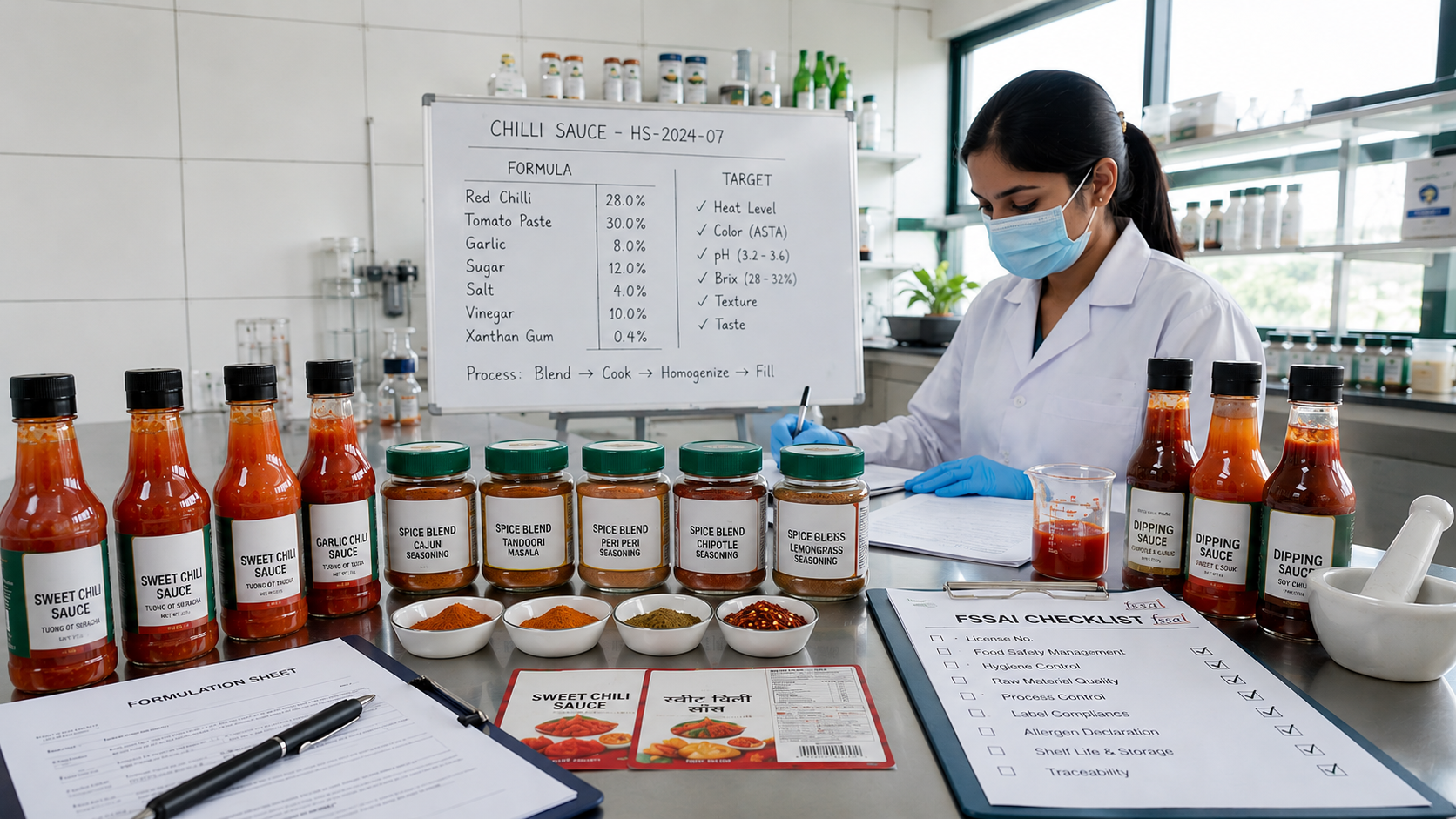
- Create a detailed formula table: commercial name, technical name, material code, supplier, origin, usage rate, function, source, Halal status, COA, specification, and risk note.
- Classify ingredient risk into low, medium, and high before submitting documents or printing labels.
- Check label and import requirements: additives, nutrition information, Uzbek/Russian language, allergen warnings, claims, and technical dossier requirements from the importer.
- Rework the formula through R&D if an ingredient is not Halal-suitable, lacks records, or is difficult to accept for additives or flavorings.
- Control production and cross-contamination: ingredient receiving, storage, weighing, mixing, heating, filling, packing, batch code, and retained samples.
- Select a suitable Halal certification body that is accepted by the importer and matches the product scope.
- Run trial production, check the batch dossier, and export the first shipment as a commercial test. Track taste feedback, packaging performance, price acceptance, complaints, stock rotation, and reorder potential.
What documents should seasoning companies prepare?
A strong dossier helps businesses negotiate more professionally and reduce risk when goods travel far. For Uzbekistan, documentation is not only for Halal. It also supports Uzbek/Russian labeling, testing, traceability, importer review, and B2B communication.
| Document group | What to prepare |
|---|---|
| Product dossier | Product name in Vietnamese, English, and Uzbek/Russian if available; product description; detailed formula; production process; quality criteria; shelf life; storage conditions; packaging images; pack size; intended use; and expected sales channel. |
| Ingredient dossier | Ingredient list, specifications, COA if available, Halal certificates if available, plant/animal/microbial/synthetic origin, additive information, supplier commitments, and replacement records for critical ingredients. |
| Factory and process dossier | Factory layout, production flow, sanitation, cross-contamination control, batch control, retained samples, deviation handling, complaints, recall process, staff training, water control, pest control, hygiene, and maintenance. |
| Packaging and label dossier | Label artwork, Uzbek/Russian version if required, nutrition information, ingredient and additive declarations, claims and evidence, food-contact packaging specifications, barcode, and importer-required information if applicable. |
| Commercial dossier | Importer, sales channel, priority region, target price, MOQ, delivery terms, volume plan, reorder plan, market-test strategy, and possible expansion to Kazakhstan, Kyrgyzstan, Tajikistan, or other Central Asian markets if suitable. |
Documents are not only for certification. They also support selling. When the importer asks about ingredients, shelf life, storage, packaging, pricing, MOQ, or alternative options, the company can answer clearly and quickly.
Common mistakes when Vietnamese businesses enter Uzbekistan
The biggest mistake is thinking Uzbekistan only needs Halal. In reality, businesses may also need to handle import requirements where applicable, Uzbek/Russian labels, Central Asian taste, landlocked logistics, temperature variation, first-order MOQ, and B2B documents in a suitable language.
- Assuming Uzbekistan only needs Halal while the product still needs taste fit, price fit, label fit, shelf life, logistics, and importer readiness.
- Not preparing Uzbek/Russian labels early, which can lead to packaging revisions or shipment delays.
- Ignoring label and import language requirements because the team only prepared documents with a Middle East mindset.
- Using a Halal certificate that has not been confirmed by the importer.
- Keeping formulas unclear by writing “flavoring,” “additives,” or “flavor enhancers” without supporting records.
- Not testing Central Asian taste with the importer, chef, food-service partner, or local user group.
- Setting a price that does not work after logistics, certification, testing, labeling, distribution, and stock costs.
- Using packaging that cannot handle long-distance transport or temperature changes, leading to leakage, separation, abnormal thickening, clumping, or aroma loss.
- Setting the first-order MOQ too high, making the importer hesitant to test the market.
- Preparing only English-language B2B materials when Russian and Uzbek may be helpful in commercial work.
Where can Hoa Sen Foods support businesses?
Hoa Sen Foods is suitable as an R&D and production back-end partner. The company can help clients develop formulas, create samples, optimize taste, adjust packaging and cost, control production, and prepare technical information. Hoa Sen Foods is not a Halal certification body or a legal/export advisory firm for Uzbekistan.
Businesses that already have their own factory, R&D team, quality management system, export legal team, Halal experience, and export experience may handle many parts internally. But startups, food brand owners, F&B businesses, and distributors developing their own product lines can reduce risk by working with a suitable contract manufacturing partner.
- Product idea consultation for the Uzbekistan market.
- Formula development for seasonings, dipping sauces, sauces, pastes, dipping salts, and packaged food products.
- Sample testing and adjustment based on feedback.
- Taste, pack size, packaging, and production-cost optimization.
- Basic ingredient-risk review.
- Product stability checking for long-distance transport conditions.
- Production control, packaging, retained samples, and batch coding.
- Technical information preparation for clients working with importers, testing partners, Halal certification bodies, or legal/export advisory firms.
- Confidentiality for client formulas, production volume, and commercial information.
Important note: Hoa Sen Foods is not a Halal certification body or a legal/export advisory firm for Uzbekistan. For official requirements, businesses should work with an authorized certification body and confirm acceptance with the importer or relevant authority.
Quick map: 5 control layers before entering Uzbekistan
Before exporting, check the product through five layers: formula, ingredient dossier, production, label-packaging-import readiness, and commercial readiness. If one layer is weak, it should be corrected before moving further.
| Control layer | Self-check question | Expected result |
|---|---|---|
| Layer 1: Formula | What is inside the product? Are there Halal-risk ingredients? Are additives and flavorings suitable? Can risky ingredients be replaced with clearer alternatives? | The formula is transparent and ready for technical review. |
| Layer 2: Ingredient dossier | Does each ingredient have a specification, COA, Halal certificate if needed, supplier details, and origin information? | The business can explain the ingredient chain clearly. |
| Layer 3: Production | Does the process control cross-contamination, sanitation, batch coding, retained samples, packaging, and traceability? | The factory has operational evidence, not only verbal assurance. |
| Layer 4: Label, packaging, and import readiness | Does the product have Uzbek/Russian labeling, ingredients, nutrition data, shelf life, batch number, storage instructions, allergen warnings, claims, and importer-required information if applicable? | The product is easier to review, import, and sell. |
| Layer 5: Commercial readiness | Are target customer, sales channel, price, pack size, importer, MOQ, and market-test plan clear? | The first shipment is treated as a controlled commercial test. |
Conclusion: enter Uzbekistan with preparation, not broad expectations
Uzbekistan is worth studying for Vietnamese seasoning businesses. It has a food culture connected to meat, noodles, rice, bread, grilled dishes, aromatic spices, and products used alongside meals. If approached properly, sauces, dipping sauces, marinades, spice blends, food-service products, and private-label products may find opportunities.
But Uzbekistan is not an easy market if a business looks only at Halal and ignores taste, label language, price, shelf life, logistics, packaging, food service, and importer capability. A product that wants to travel far needs five foundations: clear formula, clear Halal and technical dossier, clear label, clear quality stability, and clear commercial planning.
Start with practical questions: Who will buy the product in Uzbekistan? Which channel will it use? Should the first focus be Tashkent, Samarkand, or another city? Is the product for retail or food service? Does the formula have Halal risk? Is the Uzbek/Russian label ready? Are the label and import documents suitable? Can the packaging handle long transport and temperature changes? Is the MOQ suitable for a market test? Which certification body does the importer require?
When these questions are answered clearly, the journey into Uzbekistan becomes less risky. Hoa Sen Foods can support businesses from the earliest preparation stages so a flavor idea does not stop at a good sample, but becomes a safe, stable, distinctive product with enough foundation to approach an important Central Asian market.
If you are developing sauces, dipping sauces, marinades, spice blends, or private-label food products for Uzbekistan, start with formula, ingredient records, labeling, packaging, and channel planning. Visit hoasenfoods.vn to discuss formula development, sample testing, and a suitable contract manufacturing plan for seasoning and food products oriented toward Uzbekistan.
Download the Halal seasoning guide for Uzbekistan
Author and E-E-A-T note
This English version is prepared for Hoa Sen Foods based on the original Vietnamese article. It is intended for food brand owners, F&B businesses, import partners, distributors, and private-label teams researching Halal seasoning development for Uzbekistan. The article focuses on practical product readiness: formula clarity, ingredient records, Halal evidence, packaging stability, labeling, importer coordination, and first-shipment planning.
FAQ
Are Halal seasonings mandatory for Uzbekistan?
There is no single answer for every product. If the product targets Muslim consumers, Halal channels, or formulas with animal-derived ingredients, Halal becomes highly important. Businesses should confirm requirements with the importer and a suitable certification body.
Does Uzbekistan require Russian-language labeling?
Russian and Uzbek are both important in real commercial work. Businesses should ask the importer about required label language, ingredient wording, shelf life, manufacturer information, importer information, nutrition information, and claims before printing packaging.
What should businesses check about labels and import requirements?
Depending on the product, the business may need to review technical regulations, conformity documents, label language, additives, food-contact packaging, and importer-required records. This should be confirmed with the importer or a qualified advisory partner instead of guessed internally.
Which products should be tested first in Uzbekistan?
A practical starting point is one to three lead products with low Halal risk, strong use in Central Asian dishes, durable packaging, and feasible landed cost. Spicy sauces, grill marinades, spice blends, plant-based dipping sauces, and private-label formats can be considered.
Can Hoa Sen Foods issue Halal certification?
No. Hoa Sen Foods can support R&D and production, including formula development, sample testing, taste optimization, production control, and technical information preparation. Official certification must be handled by an authorized certification body and confirmed with the importer or relevant authority.