

Looking at the dining data from bustling outdoor cafés in Riyadh this past winter, a fascinating pattern emerges. From what we’ve seen, almost every single dish served—from traditional grilled meats to modern fusion burgers—now comes accompanied by not just one, but three or four different dipping cups. The regional food and beverage (F&B) industry is currently experiencing a massive, highly profitable sauce boom.
To truly understand the current sauce trends Middle East consumers are obsessed with, you must look far beyond basic ketchup and simple mayonnaise.
Because the region boasts a highly diverse, rapidly growing, expatriate-heavy population, culinary boundaries are blurring at an unprecedented speed. But here’s the thing. While exciting global flavors are entering the region quickly, the most popular sauces GCC market buyers want always carry a distinct, localized, cultural twist. You can’t simply import a generic American or European sauce and expect it to dominate the grocery shelves in Dubai or Jeddah without a fight.
When you analyze the modern dining culture across the Gulf Cooperation Council (GCC), condiments are no longer just an afterthought on the side of the plate. They’re the actual star of the meal. A unique signature sauce is exactly what makes a restaurant go viral on TikTok. It’s the secret weapon that makes a retail brand stand out on crowded supermarket shelves.
Read this thorough listicle and data analysis carefully. We’ll break down the top five distinct categories dominating sauce trends Middle East right now. By understanding exactly what the most popular sauces GCC market consumers are buying, you can position your food brand for massive, sustainable success.
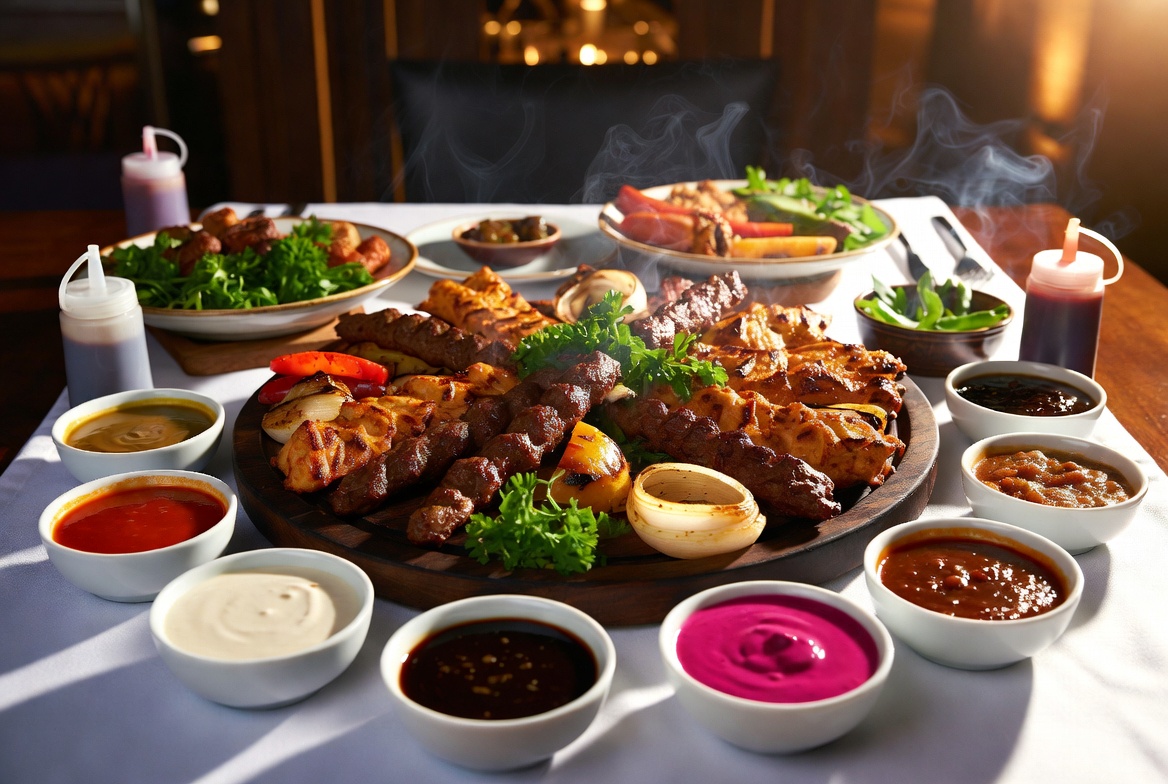
- Placement: Right after the introduction.
- Visual: A vibrant overhead shot of a Middle Eastern dining table featuring a massive grilled platter surrounded by colorful dipping sauces in small bowls (red chili, creamy tahini, dark soy glaze).
- Alt Text: Exploring the top sauce trends Middle East and popular sauces GCC market.
1. Chili & Hot Sauce: Igniting Sauce Trends Middle East
Analyze the recent regional market data closely to see exactly where the money is flowing. The hot sauce segment is currently growing at an incredible Compound Annual Growth Rate (CAGR) of over 7% across the Gulf.
When evaluating the most popular sauces GCC market leaders produce, intense heat is absolutely the number one driver of volume. Because younger demographics completely dominate the populations of Saudi Arabia and the UAE, their intense craving for extreme, challenge-level heat is actively reshaping supermarket shelves. They don’t just want a mild tingle on their tongue; they want complex, deeply layered spice that elevates their food.
Look at the specific types of heat consumers demand today. Over the last three years, the sauce trends Middle East buyers follow have moved rapidly away from simple, acidic, vinegar-based hot sauces. Today, consumers actively seek out thick, rich chili pastes that feature roasted garlic, smoked paprika, and localized spices like cumin and coriander mixed directly into the chili base.
To be fair, this isn’t always the case with older, highly traditional demographics who still prefer mild, comforting flavors. However, the youth market dictates the financial future of the food industry, and they want it incredibly hot.
Build a custom hot sauce line to capture this massive, highly profitable demographic. Because the demand is so incredibly high, dark kitchens and fast-food franchises desperately need proprietary hot sauces to stand out from their competitors.
When you track popular sauces GCC market data, you quickly realize that restaurants desperately need a signature “house heat.” Partner with an OEM manufacturer to build a custom Sriracha-style blend or a fiery Habanero-mango dip. This strategy helps you scale your brand safely without investing heavily in expensive factory machinery. Hot sauce is undeniably the undisputed king of sauce trends Middle East F&B right now.
2. Tahini & Sesame-Based Sauces: Reinventing Popular Sauces GCC Market
Respect the ancient culinary traditions of the region deeply. Tahini—a rich, dense paste made from crushed, toasted sesame seeds—has been a foundational staple in Arab cuisine for centuries.
However, modern sauce trends Middle East chefs are completely reinventing this ancient classic for the digital age. They’re taking a beloved, traditional base and elevating it into exciting new retail formats to capture the modern, fast-paced palate.
Check the premium supermarket aisles in Doha and Kuwait today. You won’t just find plain, heavy jars of raw tahini sitting quietly on the bottom shelf anymore.
Today, the most popular sauces GCC market brands offer ready-to-pour, heavily flavored tahini dressings. We’re seeing a massive, highly profitable surge in “Lemon-Garlic Tahini,” “Spicy Chili Tahini,” and even visually striking “Beetroot Tahini” that pours a bright, Instagram-friendly pink. Because convenience is king for busy, dual-income households, pre-mixed tahini sauces that can be squeezed directly onto a falafel wrap or a fresh salad are flying off the shelves daily.
Consider the massive health benefits naturally associated with sesame seeds. As health-consciousness sweeps rapidly across the GCC, tahini is perfectly positioned to dominate the health food sector. It’s naturally vegan, completely gluten-free, and rich in healthy, plant-based fats.
When you evaluate sauce trends Middle East consumers trust implicitly, clean-label tahini blends rank incredibly high. Put in place a manufacturing process that stabilizes tahini naturally. By preventing the oil from separating heavily at the top of the jar without using artificial chemical emulsifiers, you possess a highly lucrative product for the popular sauces GCC market.
- Placement: After the Tahini section.
- Visual: A modern squeeze bottle pouring a vibrant, thick pink beetroot tahini over a fresh green falafel salad, emphasizing modern convenience and color.
- Alt Text: Modern flavored tahini driving popular sauces GCC market demand.
3. BBQ & Grilling Marinades: The Weekend Sauce Trends Middle East
Take a drive deep into the desert during the cooler winter months in the UAE or Saudi Arabia. You’ll see thousands of families and friends gathered happily around open charcoal grills.
Because outdoor grilling and desert camping are deeply ingrained cultural weekend habits, thick, highly flavorful marinades are consistently among the most popular sauces GCC market shoppers buy. The sheer demand for meat preparations here is absolutely staggering year-round.
Analyze the specific physical texture requirements for this specific product category carefully. A good Middle Eastern BBQ marinade can’t just be a thin, watery liquid. It must be thick enough to heavily coat a skewer of chicken shish tawook or a massive cut of lamb, adhering perfectly to the meat over an open, roaring fire without burning or dripping off.
According to current sauce trends Middle East data, there is a massive shift toward ready-to-use, wet marinades in jars or convenient stand-up pouches. In our experience, busy home cooks don’t want to spend two hours measuring out fifteen different dry spices. They want to open a premium pouch, pour a rich, garlic-and-herb infused BBQ sauce over their meat, and let it marinate effortlessly in the fridge.
Explore the diverse flavor profiles dominating the popular sauces GCC market grills today.
While traditional Arabic spices (like cardamom, black lime, and tangy sumac) remain incredibly popular, Western-style BBQ flavors are booming right alongside them. Hickory-smoked BBQ sauces, sweet honey-garlic glazes, and spicy Tex-Mex marinades are massive retail sellers. If you want to capture the lucrative sauce trends Middle East weekend shoppers generate, develop a dedicated line of thick, robust grilling sauces. Your product must promise restaurant-quality flavor right in the middle of a desert camp.
4. Asian-Inspired Dipping Sauces: The New Popular Sauces GCC Market
Thanks to the profound, undeniable influence of Korean pop culture (K-Pop/K-Dramas) and the massive popularity of authentic Vietnamese street food, the Gulf’s palate has changed permanently.
When tracking major sauce trends Middle East developments, the rapid rise of the Asian flavor profile is absolutely undeniable and highly lucrative. Asian sauces perfectly balance sweet, salty, sour, and spicy notes, hitting every single taste receptor on the tongue simultaneously for maximum impact.
Look at the condiment station of any modern fast-food joint in Dubai. Alongside standard ketchup, you’ll inevitably find Sriracha and Thai Sweet Chili sauce on tap.
These two specific Asian sauces have completely crossed over into the mainstream popular sauces GCC market. They aren’t considered rare or “exotic” anymore by local teens. Diners use them heavily on everything from traditional fried chicken to French fries and even local shawarma wraps. Because they offer a highly accessible, sweet-heat profile, they appeal strongly to almost every demographic in the region.
Put in place a smart strategy to capture the exploding umami trend before your competitors do. Deep, savory sauces based on soy, dark teriyaki, and even refined fish sauce are becoming essential, everyday pantry staples for Gulf consumers.
Modern sauce trends Middle East data highlights a massive demand for sticky, sweet soy glazes used specifically for chicken wings or quick stir-fry dishes. These Asian-inspired condiments provide a massive financial opportunity for brands looking to diversify their portfolio. When you formulate these Asian profiles for the popular sauces GCC market, ensure you adjust the sweetness slightly higher. Gulf consumers generally prefer a sweeter, richer finish than consumers living in East Asia.
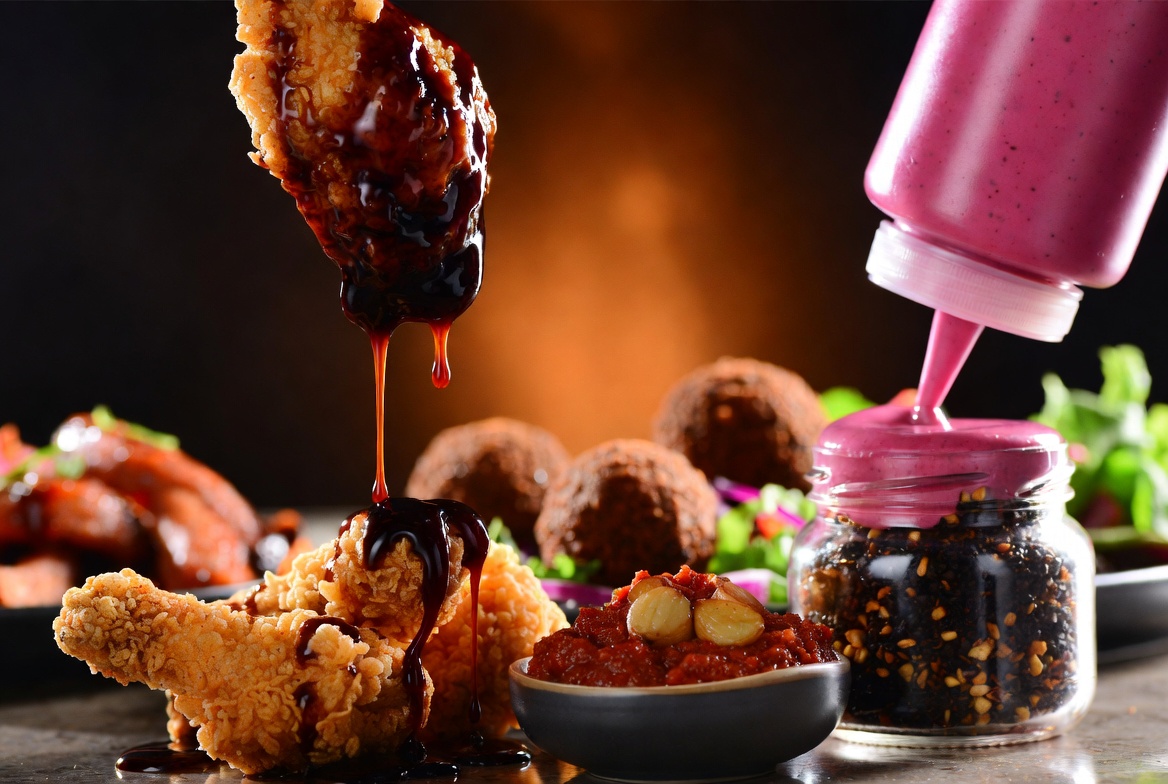
- Placement: Inside the Asian-Inspired section.
- Visual: A close-up of crispy fried chicken wings being heavily glazed with a shiny, sticky, dark soy and sesame sauce.
- Alt Text: Asian-inspired glazes are dominating sauce trends Middle East right now.
5. Specialty & Fusion: The Premium Sauce Trends Middle East
But here’s the thing. Modern consumers get bored incredibly easily.
To keep them excited and constantly engaged, premium food brands are aggressively launching highly creative, boundary-pushing fusion concepts. When you study the high-end popular sauces GCC market, you see a massive willingness to pay a premium price for absolute uniqueness. This specific category is driven heavily by the “Instagrammable” food culture highly prevalent in affluent cities like Dubai, Abu Dhabi, and Riyadh.
Review the menus of high-end, independent burger boutiques. Truffle-infused hot sauce and truffle mayonnaise are currently dominating the premium sauce trends Middle East segment. The earthy, luxurious aroma of truffle mixed expertly with the sharp bite of chili creates a highly addictive flavor profile. Consumers are incredibly happy to pay extra for this luxurious experience.
Similarly, the Asian “Chili Crisp” (a highly textured oil filled with crunchy fried garlic, shallots, and roasted chili flakes) has gone completely viral across the GCC. It offers a unique textural crunch that traditional smooth sauces lack, making it one of the fastest-growing popular sauces GCC market items in the premium aisle.
Use local, ancient heritage ingredients in entirely new, unexpected ways.
Savvy brand owners are mixing traditional Middle Eastern sweeteners with global formats. Think about a thick, sticky Pomegranate Balsamic Glaze for premium salads, or a spicy Date-Habanero BBQ sauce for grilled beef. By fusing a familiar, beloved local ingredient (dates or pomegranate molasses) with a trendy international format, you create an instant, highly profitable hit for the popular sauces GCC market.
Tracking these specific, high-end sauce trends Middle East foodies love helps you position your brand as a modern culinary innovator. You aren’t just another generic condiment company; you are a flavor pioneer.
6. How Hoa Sen Foods Capitalizes on Sauce Trends Middle East
Understand that identifying a massive trend is only the very first step of building a business. Actually manufacturing these complex liquid sauces safely, consistently, and profitably is an entirely different, massive challenge.
If you want to dominate the popular sauces GCC market, you desperately need a manufacturing partner who completely understands viscosity, strict pH balance, and absolute Halal compliance. At Hoa Sen Foods, we view our corporate role as your deeply committed Caregiver on the loud, busy factory floor.
Bring us your wildest, most ambitious flavor concepts today.
Because we operate a highly advanced, massively scalable OEM manufacturing facility in Vietnam, we help you produce all five of these trending categories effortlessly.
- Grind fresh, incredibly potent chilies to build intense, vibrant hot sauces.
- Use high-shear industrial mixers to create perfectly smooth, shelf-stabilized tahini dressings.
- Source the absolute best raw spices directly from farmers to build thick, authentic BBQ marinades.
- Leverage our deep Southeast Asian culinary roots to craft perfectly balanced Sriracha and sweet chili glazes.
- Use our brilliant food science laboratory to engineer complex fusion sauces that resist separating on the hot retail shelf.
Build your custom sauces on a foundation of absolute purity.
To win the fiercely competitive popular sauces GCC market, your raw ingredients must be absolutely spectacular. Because we source our raw garlic, black pepper, and fiery chilies directly from the incredibly rich, volcanic soil of Vietnam’s central highlands, our baseline flavors are unmatched. We don’t need to use cheap, artificial chemical enhancers to make our sauces taste good. The pure, natural agriculture does the heavy lifting for your brand.
Conclusion: Capitalizing on the Popular Sauces GCC Market
Let’s summarize the harsh reality of the modern condiment industry clearly.
The days of surviving by selling only plain tomato ketchup and generic yellow mustard are completely over. The modern sauce trends Middle East consumers demand are highly complex, intensely flavorful, and culturally diverse.
Review your current product catalog honestly today. If you aren’t actively tapping into these top five categories—fiery chili sauces, reinvented tahini, thick BBQ marinades, Asian-inspired glazes, and luxurious fusion concepts—you’re leaving massive amounts of money on the table. The popular sauces GCC market is expanding at a breakneck pace, creating highly profitable empires for agile, forward-thinking brands who move quickly.
Don’t let the fear of complex manufacturing hold you back from this massive commercial opportunity.
Hoa Sen Foods is entirely ready to be your secure bệ phóng (launchpad). We possess the deep food science expertise, the massive raw material access, and the strict operational integrity required to bring your liquid sauce vision to life safely and profitably. We handle the heavy lifting of the factory floor so you can focus entirely on building your brand.
Frequently Asked Questions (FAQ)
1. What is the absolute fastest-growing segment in sauce trends Middle East right now?
Without a doubt, the complex chili and hot sauce segment is growing the fastest. Driven heavily by a young, highly adventurous demographic, consumers are constantly seeking out new, extreme heat levels paired with rich, savory undertones like roasted garlic or truffle.
2. Are Asian-inspired sauces really popular in the GCC market?
Yes, they’re massively popular. Thanks to the massive cultural impact of K-Pop and the heavy influx of authentic Southeast Asian street food concepts in cities like Dubai and Riyadh, sauces like Sriracha, Sweet Chili, and Soy Glazes have become essential, everyday items in the popular sauces GCC market.
3. Can Hoa Sen Foods help me develop a completely custom fusion sauce?
Absolutely. Put our expert R&D team to work immediately. If you have a unique culinary concept—like a Date-Habanero BBQ sauce or a Truffle-Za’atar mayonnaise—we’ll scientifically formulate the recipe, perfectly balance the pH for shelf stability, and provide physical samples in just 7 to 14 days.
4. How do you ensure the sauces meet strict halal food safety requirements?
Every single ingredient we use, from the raw chili paste to the natural thickeners, is strictly vetted for Halal compliance. Our entire facility operates under rigorous, GCC-recognized Halal certifications, ensuring your product clears Saudi and UAE customs flawlessly.
5. What type of packaging is best for liquid sauces in the Middle East?
Because the Middle Eastern climate is incredibly hot, protecting the sauce from heat and rapid oxidation is vital. We heavily recommend using dark, UV-protected glass bottles for premium fusion sauces, or high-barrier, multi-layered squeeze bottles for convenient, family-friendly items like popular sauces GCC market BBQ marinades.