

Standing nervously at the incredibly busy Jeddah Islamic Port last summer, a new client called me in an absolute panic. His entire shipping container of premium dry spice rubs was being detained indefinitely by strict Saudi customs officials. When we investigated the root cause of the delay, it wasn’t the quality of the food or a failed laboratory test. It was a completely avoidable, tiny error on the outer packaging. The Arabic translation of the ingredients list was missing a single allergen warning. The expiration date was printed on a removable adhesive sticker instead of directly on the foil pouch.
From what we’ve seen, this exact nightmare happens to ambitious food brands almost every single day.
They spend thousands of dollars perfecting their recipes and securing their difficult religious certifications. But here’s the thing. If your physical packaging violates the strict halal packaging requirements Saudi Arabia enforces, your high-quality product is essentially worthless. It will never reach the supermarket shelf, and you will lose your entire investment instantly.
Because the Kingdom of Saudi Arabia operates as the largest and most strictly regulated economy in the Gulf, the Saudi Food and Drug Authority (SFDA) sets the ultimate benchmark for the entire region. Navigate food labeling GCC rules carefully, as it is a rigid, unforgiving legal science, not just a casual graphic design task.
To be fair, this isn’t always the case with smaller, less regulated global markets where a simple English label might slide through customs effortlessly. However, the GCC actively protects its consumers and its deep religious values through uncompromising, heavy packaging laws.
If you truly want to build a highly profitable, secure export business, you must master the art and science of compliant packaging. Read this thorough regulatory guide carefully. We will break down exactly how to design, print, and track your products to clear Saudi customs flawlessly every single time.
- Placement: Right after the introduction.
- Visual: A split-screen graphic showing a “Rejected” spice pouch with a sticker date vs. an “Approved” pouch with a laser-printed date and clear bilingual text.
- Alt Text: Understanding strict halal packaging requirements Saudi Arabia and food labeling GCC laws.
1. Mandatory Labeling: The Core of Halal Packaging Requirements Saudi Arabia
Look closely at the front and back of your current product packaging. When you export to the Middle East, the printed label serves as your primary legal contract with the government.
Because the SFDA strictly follows the Gulf Standardization Organization (GSO) framework—specifically the demanding GSO 9/2013 regarding prepackaged foodstuffs—your label must contain highly specific, non-negotiable information. Meet halal packaging requirements Saudi Arabia by getting every single detail right before you send the artwork to the expensive printing press.
The Strict Bilingual Translation Requirement
Translate your label accurately and professionally. English alone is completely unacceptable in this region. Every single piece of mandatory information must appear clearly in both English and accurate, culturally appropriate Arabic.
Do not rely on cheap automated translation software under any circumstances. In our experience, using Google Translate for complex culinary and chemical terms will result in embarrassing, highly confusing Arabic text that inspectors will instantly reject. Hire a professional, native-speaking food industry translator. Ensure the Arabic text is equal to or larger than the English text in font size, standing out prominently on the back panel.
Essential Information You Must Include Clearly
Include these exact elements on your primary packaging to comply fully with basic food labeling GCC laws.
- Accurate Product Name: The name must clearly describe the true nature of the food. You can’t simply call a product “Magic BBQ Mix” and leave the customer guessing. You must label it clearly as “Barbecue Seasoning Powder” so the inspector knows exactly what is inside the pouch.
- Full Ingredient List: List every single ingredient in descending order of weight. If you use a compound ingredient (like a pre-mixed curry powder within your recipe), you must break down its specific sub-ingredients entirely in parentheses.
- Allergen Declarations: Highlight any common allergens (like sesame, mustard, or celery) clearly in bold text or a contrasting color. The GCC takes allergen warnings incredibly seriously to prevent public health crises.
- Country of Origin: State the exact geographical origin clearly. “Product of Vietnam” must be highly visible, permanently printed, and match your official Certificate of Origin document perfectly.
- Nutritional Information Panel: Provide a highly structured nutritional facts table. The SFDA demands specific numerical values for total calories, proteins, total carbohydrates, total sugars, added sugars, total fat, saturated fat, and sodium.
Expiry and Production Date Formatting Rules
Pay extreme attention to the strict date marking rules. This specific technicality is exactly where most international brands fail.
According to strict halal packaging requirements Saudi Arabia, you must print both the Production Date and the Expiration Date permanently on the packaging material itself. You absolutely can’t use removable adhesive stickers for dates; customs officials assume stickers can be illegally altered or swapped by bad actors.
Print the dates using permanent continuous ink jet (CIJ), laser engraving, or thermal hot stamping. For food products with a shelf life of fewer than three months, use the exact Day/Month/Year format. For dry spices with a robust shelf life exceeding three months, you may legally use the simpler Month/Year format.
Halal Logo Placement and Verification
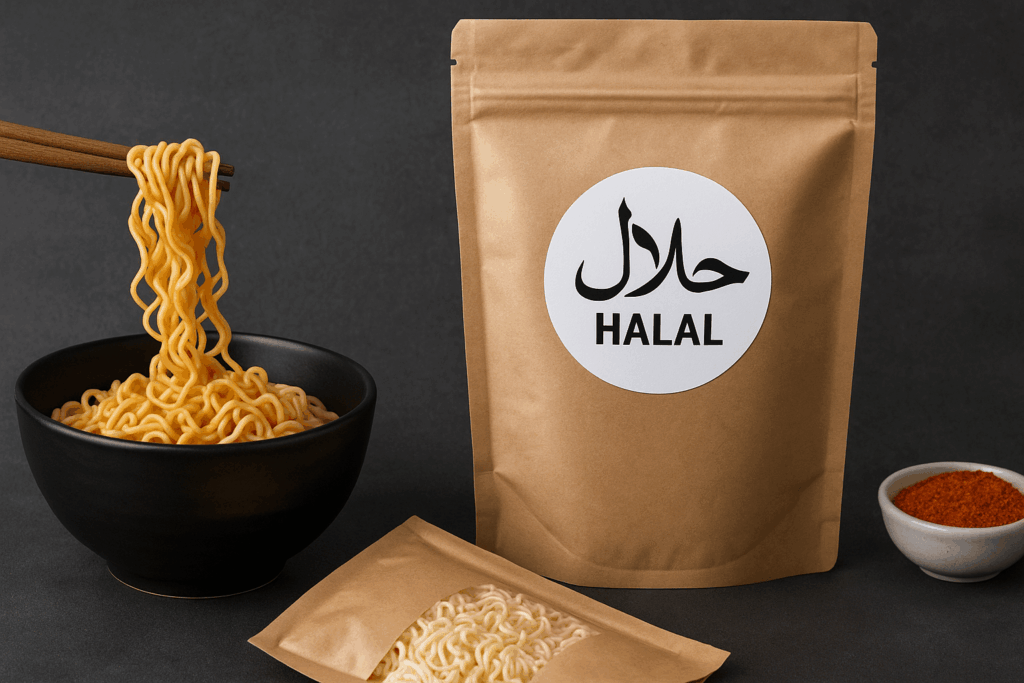
Place your authorized Halal logo prominently on the front display panel to build immediate consumer trust.
However, understand that the SFDA doesn’t accept just any generic Halal symbol downloaded blindly from the internet. The printed logo must correspond directly to the specific Halal Certification Body (HCB) that physically audited the factory. This specific HCB must be officially recognized and registered on the SFDA’s authorized global list. If the printed logo doesn’t match the accompanying export documents perfectly, the shipment will be detained at the port. Proper logo usage is a massive pillar of halal packaging requirements Saudi Arabia.
2. Material Safety: Meeting Physical Food Labeling GCC Standards
Step away from the graphic design files and look critically at the actual physical materials holding your food.
When you navigate complex food labeling GCC requirements, you must also prove that the physical pouch, jar, or rigid box is entirely safe for human contact. The GCC climate is incredibly harsh, and your chosen packaging must survive extreme summer temperatures without poisoning the food inside with microplastics or toxic ink.
Food-Grade and BPA-Free Mandates
Use only globally certified food-grade packaging materials for your production run. The SFDA requires manufacturers to provide a formal Declaration of Compliance (DoC) proving the packaging materials don’t transfer toxic chemicals or heavy metals into the food.
If you use plastic jars or inner film linings, they must be strictly BPA-free (Bisphenol-A free). Because natural spices contain volatile essential oils, these oils can act as mild chemical solvents over time. If you use cheap, non-compliant plastics, the spice oils will slowly dissolve the plastic chemicals into the seasoning during long, hot ocean transits. Comply with halal packaging requirements Saudi Arabia by ensuring the physical container is exactly as pure and safe as the food inside it.
Cultural Sensitivity in Artwork and Imagery
Review your graphic design through a strict, uncompromising cultural lens. The Middle East operates under deeply conservative Islamic values, and your packaging artwork must respect these ethical boundaries entirely.
Avoid any images of revealing clothing, inappropriate behavior, or symbols affiliated with other religions (such as crosses, stars, or specific mythological figures) absolutely. If your seasoning powder is artificially flavored to taste like chicken, you can’t put a massive, highly realistic photo of a roasted chicken on the front cover. The SFDA considers this highly deceptive to the consumer. You must use stylized vector graphics or clearly state “Chicken Flavored” directly next to the image.
Never use words like “Wine”, “Rum”, or “Beer” in the flavor descriptions, even if the product contains zero actual alcohol. The mere printed reference on the packaging violates strict halal packaging requirements Saudi Arabia instantly.
Heavy Protection Against the Harsh Gulf Climate
Consider the brutal logistics journey your product will endure. A heavy shipping container sitting at the port in Dammam during August can easily reach internal temperatures exceeding 60°C (140°F) for days.
If you package your premium spice blends in cheap, single-layer PE plastic bags, the intense ambient heat will destroy the essential oils rapidly. The spices will lose their flavor, color, and aroma entirely before they ever reach the air-conditioned retail shelf. Use high-barrier, multi-layered packaging to prevent this disaster. We strongly recommend thick PET/ALU/PE laminated foil pouches or dark, UV-protected glass jars to block intense sunlight, oxygen, and moisture completely.
- Placement: Inside the Material Safety section.
- Visual: A technical cross-section of a high-barrier foil pouch, highlighting the layers (PET, Aluminum, LLDPE) that protect against moisture, UV light, and oxygen, ensuring compliance with food labeling GCC standards.
- Alt Text: Safe, multi-layered materials required for strict halal packaging requirements Saudi Arabia.
3. Barcodes and Traceability in Halal Packaging Requirements Saudi Arabia
Prepare for the modern, highly digitized era of international trade and rapid customs clearance.
The Saudi government, alongside the wider GCC authorities, is rapidly modernizing its entire supply chain tracking systems. Meet the latest food labeling GCC standards by building robust digital traceability directly into your physical packaging design.
The Mandatory GS1 Barcode System
Generate legitimate, globally recognized barcodes for every single SKU. You can’t simply make up a random barcode number for your retail packaging or buy cheap, recycled codes online.
The SFDA requires all imported consumer retail products to carry a valid Global Trade Item Number (GTIN) issued officially by the GS1 organization. This standard EAN-13 barcode must be printed clearly on the back of the packaging with exceptionally high contrast (usually solid black bars on a pure white background) to ensure supermarket scanners and customs cameras can read it flawlessly on the first try. Following these food labeling GCC rules prevents massive headaches at the distributor level.
Batch and Lot Number Tracking for Recalls
Print the specific Batch or Lot Number clearly next to the expiration date.
Because dangerous product recalls occasionally happen in the global food industry, the SFDA demands total, unbreakable traceability. If a specific batch of black pepper is found to be contaminated with Salmonella, you must be able to identify exactly which jars contain that specific pepper immediately.
By printing a highly visible lot number on the packaging, you fulfill a crucial aspect of halal packaging requirements Saudi Arabia. This printed number directly links the physical jar sitting on the supermarket shelf in Riyadh to the exact digital production logs, raw material sourcing documents, and Halal sterilization records held securely at the factory in Vietnam.
The Rise of QR Codes for Consumer Transparency
Put in place scannable QR codes to build deep, unshakable consumer trust.
While a standard GS1 barcode is used primarily for checkout scanners and inventory management, modern Gulf consumers love scanning QR codes with their smartphones. Forward-thinking food brands now include a dynamic QR code on the packaging that links directly to a digital copy of the Halal certificate, recipe ideas written in Arabic, and the brand’s transparent origin story.
Provide this massive level of transparency to satisfy strict food labeling GCC inspectors effortlessly. It also actively proves to the end consumer that your brand has absolutely nothing to hide regarding sourcing or manufacturing processes.
4. Product Registration Systems: Integrating Physical Labels with Digital Portals
Understand that your physical label does not exist in a vacuum. It must match government databases perfectly.
When you export to the Middle East, the physical artwork on your package must align flawlessly with the digital data you submit to government portals. Meeting halal packaging requirements Saudi Arabia means bridging the physical and digital worlds seamlessly.
The SFDA Electronic Registration Portal
Register every single product electronically before you ship. The Saudi Food and Drug Authority operates a massive digital portal where all imported foods must be listed.
When your local distributor submits your product for approval, they must upload high-resolution images of the packaging artwork, the exact ingredient list, and the nutritional panel. If the physical product arrives at the port and the printed label differs even slightly from the approved digital file in the SFDA system, the shipment will be flagged for investigation. Consistency across all mediums is a core pillar of food labeling GCC compliance.
The ZAD System in the UAE
Recognize that other GCC countries operate similar systems. If you plan to expand from Saudi Arabia into the United Arab Emirates, you must use the federal ZAD portal or Dubai’s local FIRS system.
Because these portals require detailed ingredient breakdowns and clear proof of Halal certification, your physical packaging must reflect the exact same data. Prepare your regulatory documents carefully alongside your packaging design. If your pouch claims “No Added Sugar,” but your lab report submitted to ZAD shows added sucrose, your product will be banned. True halal packaging requirements Saudi Arabia and the UAE demand absolute, verifiable honesty.
5. Hoa Sen Foods: Your Backend Partner for Food Labeling GCC Compliance
Understand that designing export-ready packaging is an incredibly heavy administrative burden for new brand owners. You shouldn’t have to spend your valuable time studying endless, dry pages of GSO technical regulations.
At Hoa Sen Foods, we view our highly specific corporate role as your dedicated ‘hậu phương’—the completely reliable, deeply supportive backend for your brand. We don’t just blend world-class spices; we actively manage your business risk on the loud, busy factory floor. When you trust us with your production, we guide you safely through the complex maze of halal packaging requirements Saudi Arabia.
Our Thorough Design Review Process
Send your initial packaging artwork to our team before you spend thousands of dollars on physical printing plates.
Because our regulatory compliance team interacts with Middle Eastern export laws daily, we review your Adobe Illustrator files meticulously. We check the Arabic translations. We verify the exact font sizes required by GSO 9/2013. We ensure the nutritional panel matches the SFDA’s highly specific layout perfectly. We confirm that the Halal logo used perfectly matches the official certificate we provide for that specific batch.
We catch the tiny, expensive errors before they ever happen. This proactive approach ensures your food labeling GCC compliance is absolutely flawless, saving you from disastrous port rejections.
Sourcing Premium, Compliant Packaging Materials
Rely on our massive, heavily vetted supply chain network. If you need help finding the right physical packaging, we provide direct access to our trusted network of packaging suppliers.
Whether you want heavy-duty, BPA-free plastic shaker jars, elegant glass bottles, or custom-printed, high-barrier foil stand-up pouches, we help you source them quickly. We guarantee that all packaging materials used in our facility come with the mandatory Food Grade and Declaration of Compliance (DoC) certificates required heavily by Saudi customs.
The Caregiver Commitment
Act as a true ‘Người chăm sóc’ (Caregiver) for your growing brand. We care deeply about your ultimate commercial success because we believe in building long-term, highly profitable partnerships grounded securely in ‘Sự tử tế’ (kindness, empathy, and absolute integrity).
We know intimately that a detained shipment can ruin a young business overnight. Therefore, we treat your compliance paperwork with the exact same level of obsessive care as we treat your physical spice recipes. We ensure that every single item leaving our loading dock meets the absolute highest halal packaging requirements Saudi Arabia demands.
Conclusion: Your Saudi Arabia Packaging Checklist
Review the critical facts clearly before you launch your brand globally.
Exporting to the Middle East is incredibly lucrative, but it requires absolute, unshakable precision. The halal packaging requirements Saudi Arabia enforces are explicitly designed to protect millions of consumers. You must respect those laws deeply and thoroughly.
To help you stay safely on track, use this quick, thorough checklist before approving your final packaging design for mass production:
- Strict Bilingual Text: Are all mandatory fields printed clearly in both English and accurate, non-machine translated Arabic?
- Clear Product Name: Is the name descriptive, honest, and non-deceptive to the consumer?
- Detailed Ingredients: Are all ingredients listed strictly in descending order of weight, including specific allergen warnings in bold?
- Permanent Dates: Are the Production and Expiration dates formatted correctly and ready to be printed permanently directly on the material (no stickers allowed)?
- Verified Halal Logo: Is the logo prominent and explicitly tied to an SFDA-approved certification body?
- Accurate Origin: Is “Product of Vietnam” (or your specific origin) clearly visible and matching your CO?
- Compliant Nutrition Panel: Does the layout and math match the SFDA/GSO mandatory format exactly?
- Valid Barcode: Do you have a legitimate, scannable GS1 GTIN barcode?
- Safe Materials: Is the packaging entirely BPA-free, high-barrier, and certified food-grade with a DoC?
- Cultural Check: Does the artwork heavily respect conservative Islamic cultural norms without exception?
Master food labeling GCC standards as the final, crucial step in turning your culinary vision into a massive international success. Do not leave this highly technical step to chance or guesswork.
Hoa Sen Foods is entirely ready to be your secure bệ phóng (launchpad). We provide the deep regulatory expertise, the massive raw material access, and the strict operational integrity required to bring your vision to life safely. When you master halal packaging requirements Saudi Arabia, you unlock the entire Gulf market.
Ready to ensure your brand clears customs without a hitch?
Frequently Asked Questions (FAQ)
1. Can I use a sticker to add Arabic text to my English-only packaging?
While some extremely lenient, older markets might still allow this practice, strict halal packaging requirements Saudi Arabia generally prohibit the use of supplementary stickers for mandatory information like ingredients or expiration dates. All mandatory bilingual information must be printed directly and permanently on the primary packaging material to avoid tampering.
2. What happens if my packaging design accidentally features a culturally inappropriate image?
If Saudi customs officials or religious police deem any artwork, logo, or text to be offensive to Islamic values or local culture, the entire shipment will be rejected immediately at the port. It will either be destroyed on-site, or you will be forced to pay exorbitant freight fees to ship it back to the origin country.
3. Do I need a completely different label design for the UAE compared to Saudi Arabia?
Generally, if you strictly follow the GSO 9/2013 standard and the stringent SFDA regulations, your packaging will be accepted smoothly across the entire GCC (including the UAE, Qatar, Oman, Kuwait, and Bahrain). Saudi Arabia maintains the absolute strictest food labeling GCC rules, so designing for Saudi compliance usually ensures safe compliance everywhere else in the region automatically.
4. How does Hoa Sen Foods print the expiry dates reliably on custom pouches?
We actively use high-resolution, industrial continuous inkjet printers (CIJ) or precise laser coders directly on our automated packaging lines. This advanced technology ensures the batch numbers and expiration dates are printed permanently, clearly, and directly onto the packaging material, fully complying with SFDA anti-tampering laws.
5. Are nutritional testing and panel creation incredibly expensive for startups?
Creating an accurate, legally compliant nutritional panel requires specialized laboratory testing. However, when you partner closely with an OEM manufacturer like Hoa Sen Foods, we help manage this highly technical process for you. We work with accredited ISO 17025 laboratories to generate accurate nutritional data quickly, ensuring your panel meets all food labeling GCC legal requirements efficiently.