

Quick answer: To develop a chili sauce sample that fits your brand’s desired flavor profile, prepare a product brief covering how the sauce will be used, heat level, sweet–sour–salty balance, color, consistency, reference samples, packaging format, target market and sample evaluation criteria. These details help the R&D team understand your goals and make each revision more focused.
Why is a general flavor description not enough for sampling?
Terms such as “medium heat” or “smooth and thick” can mean different things to different people. A useful brief explains where the product will be used, what experience customers expect and which attributes are essential. Flavor involves more than heat intensity: it includes how quickly the heat develops, its aftertaste, the sweet–sour–salty balance, aroma, color and overall eating experience.
1. Define how the chili sauce will be used
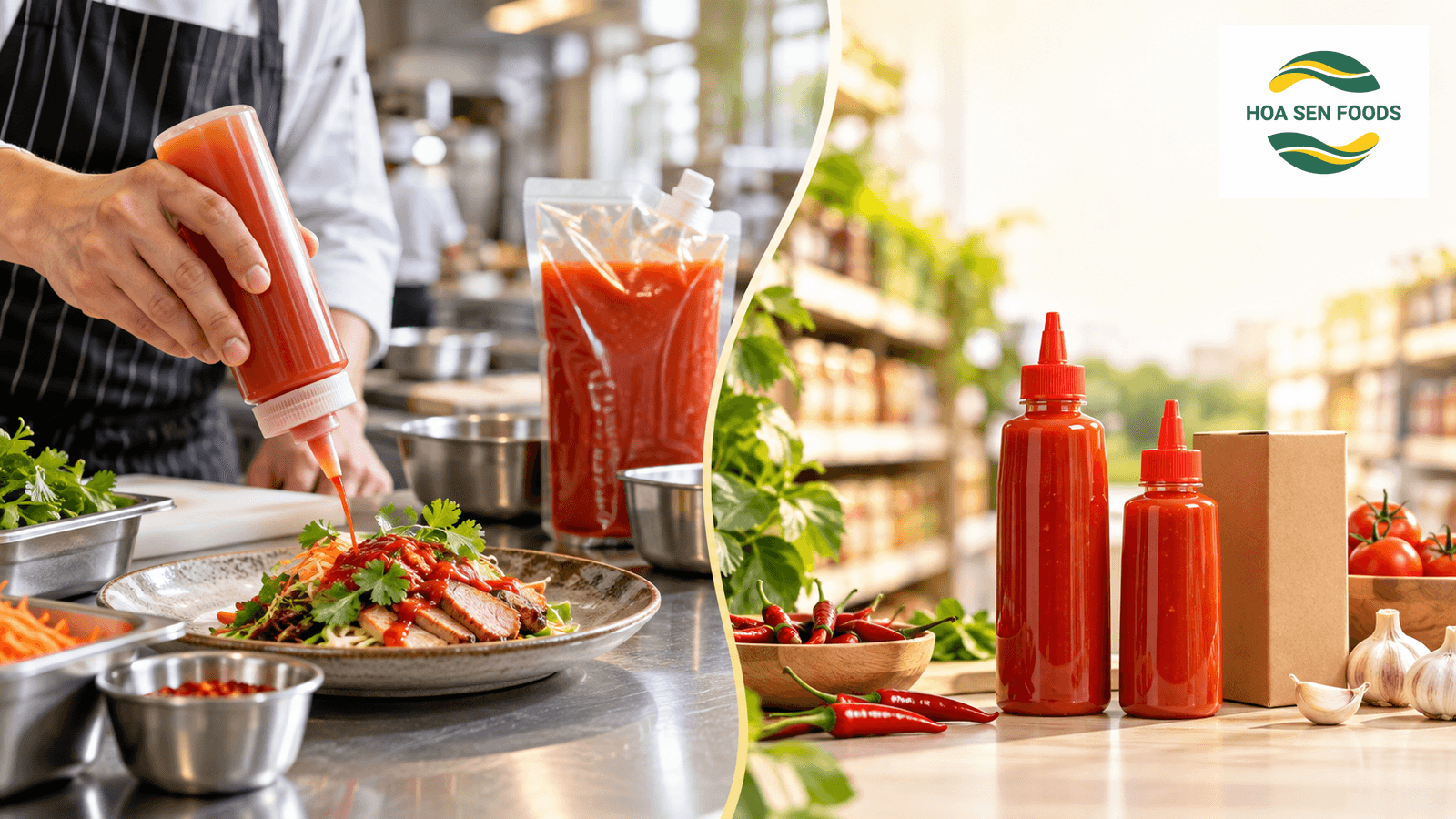
- As a table condiment in restaurants, eateries or foodservice chains.
- As a retail product for consumers to take home.
- As an ingredient in a kitchen or a base for another sauce.
- For the domestic market or a specific export destination.
Intended use affects how a sample should be evaluated. Do not assume one formulation will suit every sales channel without testing it in its intended setting.
2. Turn heat preferences into practical evaluation criteria
| Attribute | Question to include in the brief |
|---|---|
| Intensity | Should the heat be milder than, similar to or stronger than the reference sample? |
| Onset | Should the heat appear immediately or build gradually after tasting? |
| Finish | Should the heat fade quickly or linger? |
| Chili aroma | Should the sauce emphasize fresh chili, dried chili, aromatic spices or a restrained aroma? |
3. Describe the balance of acidity, sweetness, saltiness and aroma
Explain whether sweetness should soften the heat or define the sauce’s character; whether acidity should brighten the flavor or provide a background note; and whether saltiness should enhance flavor without overpowering the food. Clarify the roles of garlic, pepper and other seasonings. Identify which attributes must stay fixed and which can be explored through alternative samples.
4. Document reference samples clearly
- Record the sample name and the date it was obtained.
- Note how it was used and what you liked or would change.
- Identify the attributes to retain and those to develop differently.
- Include packaging details if they affect how the sauce is used.
A request to “make it exactly the same” gives an R&D team little direction. Explain what the reference demonstrates and where your product should differ. The reference may have been made with a different formula, ingredients and storage conditions.
5. Specify color, consistency and packaging experience
Evaluate color and consistency in the context of actual use: pouring, squeezing, dipping or coating food. Describe the target color, texture, packaging type, storage conditions and any known labeling constraints. Hoa Sen Foods describes packaging services in various formats and sizes; the final choice should be assessed alongside the formula, packaging material, sales channel and target market.
6. Agree on how to give feedback after receiving samples
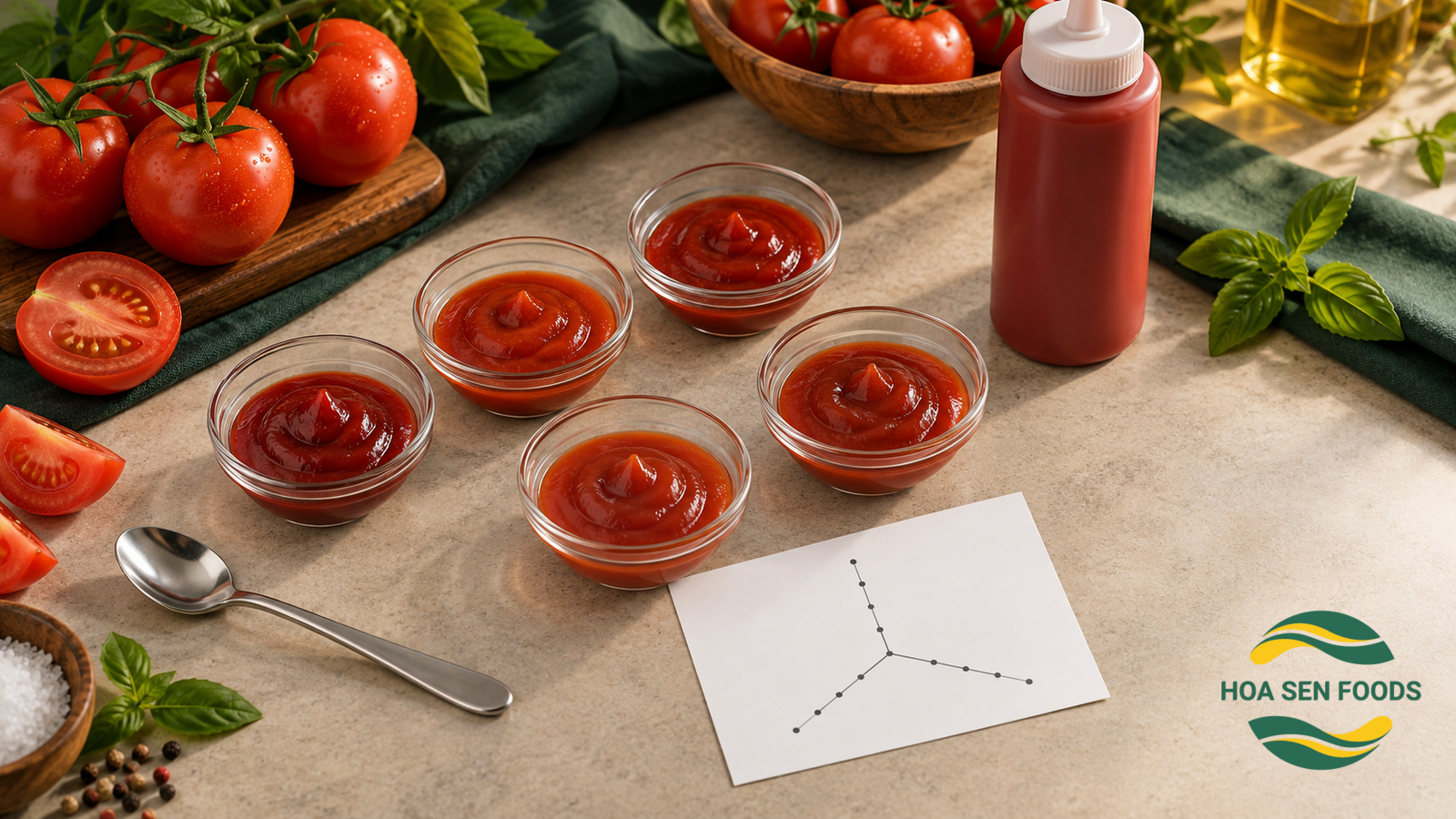
Make feedback specific: “the heat arrives quickly but lingers too long,” “the sweetness works as a dip but overpowers the main dish,” or “the consistency works for drizzling but makes the sauce difficult to dispense from the planned package.” Avoid changing too many variables in one round if you want to understand what caused the result.
7. Include the destination market from the start for export products
The target market may affect label language, mandatory information, ingredients, allergens, additives, packaging, shipping and technical documentation. Codex CXC 1-1969 provides general principles of food hygiene and a HACCP framework; it does not replace market-specific legal requirements. Confirm applicable requirements with the importer, certification body and relevant authorities before proceeding.
Checklist before requesting a chili sauce sample
- Where will the product be used, and who is the target customer?
- What heat intensity, onset and finish do you want?
- How should acidity, sweetness, saltiness and aroma be balanced?
- Which reference samples illustrate the desired color and consistency?
- Which packaging formats and pack sizes are under consideration?
- Will the product be sold in Vietnam or another market?
- Who will approve the sample, and against which criteria?
- Which specifications, shelf-life targets, minimum order quantities, timelines and certifications still need confirmation?
When should you contact Hoa Sen Foods?
Share the type of chili sauce you want to develop, its intended use, desired flavor profile, reference samples, target market, packaging format and estimated volume to discuss the next steps. Hoa Sen Foods describes services covering ingredient consultation, formula development, seasoning research, processing and packaging. The scope of work should be agreed for each project.
Explore Hoa Sen Foods’ seasoning and food manufacturing services.
Frequently asked questions
Do I need a finished formula before requesting a sample?
Not necessarily. A clear brief describing your flavor goals, intended use, reference samples and target market gives the R&D team a starting point for discussion.
Can the same chili sauce sample work for both restaurants and retail?
It may need separate evaluations because usage, pack size and the packaging experience can differ between the two channels.
Can shelf life or technical specifications be finalized at the sampling stage?
They should not be fixed prematurely. These specifications depend on the formula, production process, packaging, storage conditions and suitable test data.
What additional information is needed for an export chili sauce sample?
Specify the destination market, importer if known, label language, ingredient, allergen and additive requirements, packaging format and expected documentation.