

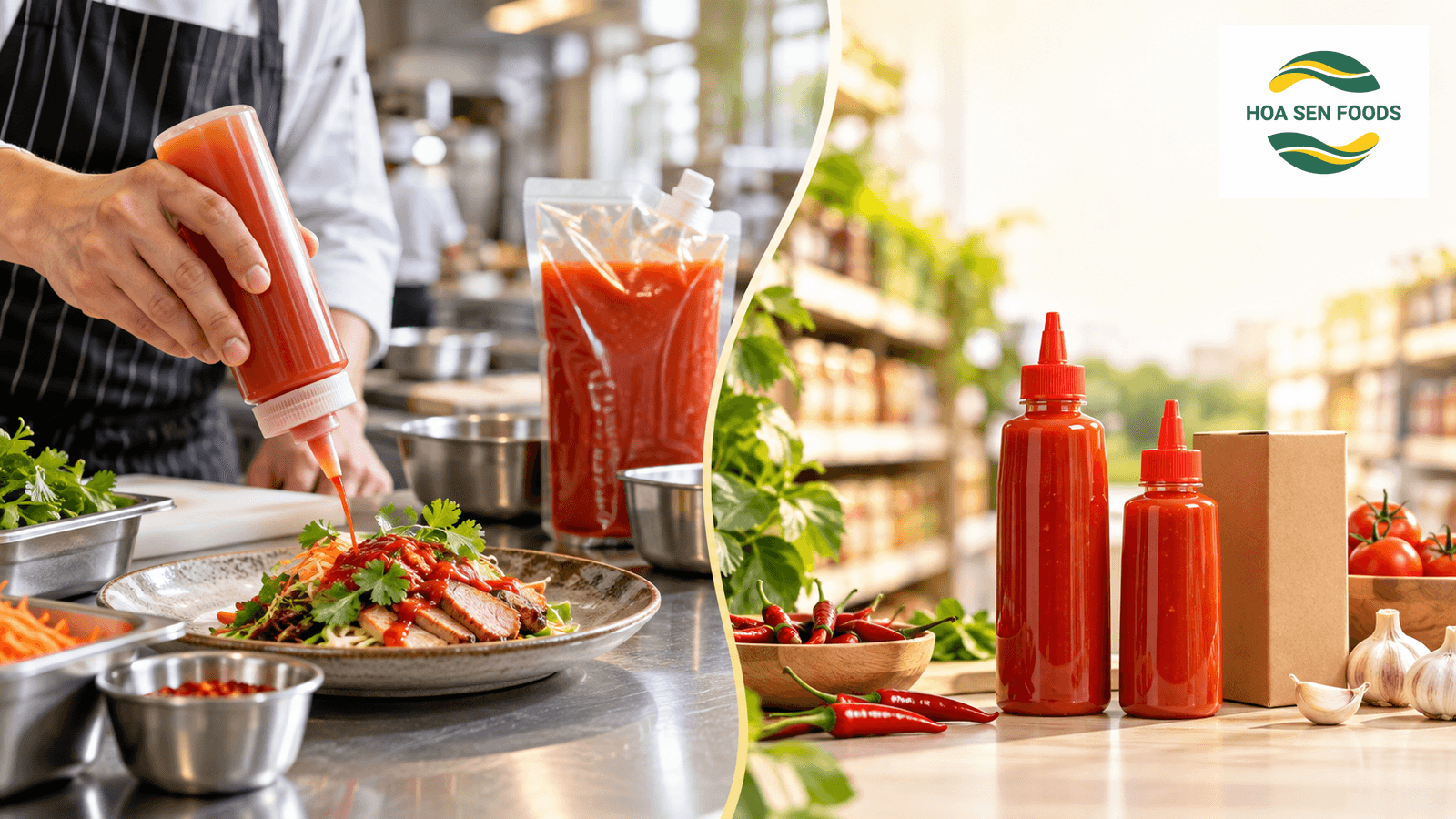
One chili sauce, two different jobs
In a restaurant, chili sauce is part of the service workflow. Staff need to dispense it quickly, control portions, keep the work area tidy, and handle packaging easily during a shift.
In retail, shoppers see, pick up, read, and choose the product themselves. It must communicate the right information, suit how people use sauce at home, be easy to store, and deliver a consistent experience throughout its use.
So the useful question is not “large bottle or small bottle?” It is “what job must this product do in each channel?” The answer then guides the formula, consistency, dispensing method, packaging, label, case packing, and testing plan.
Foodservice vs. retail chili sauce: a comparison matrix
| Consideration | Restaurants and foodservice | Retail | What to confirm |
|---|---|---|---|
| User | Kitchen staff, servers, or diners at the table | Shoppers and households | Who opens the pack, who dispenses the sauce, and where |
| Usage pattern | Repeated use during a shift; speed may matter | Use at mealtimes; frequency varies by household | Expected frequency and serving quantity |
| Portioning | Consistency helps control dishes and costs | Convenience, cleanliness, and adjustable portions matter | Whether sauce is poured, squeezed, pumped, or served in portions |
| Packaging | Larger packs, refills, or portion packs may be preferred | Branded consumer units are often preferred | Pack size, material, closure, and filling compatibility |
| After opening | Linked to operating procedures, equipment, and kitchen conditions | Depends on consumer-facing instructions | Storage and use-after-opening guidance must be validated |
| Label and information | May pass through a warehouse, central kitchen, or outlet | Consumers read the pack directly | Destination-market and supply-chain requirements |
| Logistics | Case packing, storage, and outlet replenishment efficiency | Protection against dents and leaks; shelf suitability | Sales unit, outer case, pallet, and identification codes |
Eight decisions to make in the product brief
1. Start with the actual user
A tabletop chili sauce bottle is different from a refill pouch used at a preparation station. A single restaurant may need several formats: table bottles, portioning tools in the kitchen, or single-use packs for delivery. The brief should map the journey from receiving and opening the pack through dispensing, reclosing, storing, and disposing of the empty packaging.
2. Match viscosity to the dispensing method
Viscosity affects how chili sauce flows through a nozzle, valve, flip-top cap, pump, or dispensing machine. Companies should test the formula with the intended packaging. There is no universal viscosity target; R&D and QA should set criteria based on the formula, packaging, and conditions of use.
3. In foodservice, prioritize portion control and lower waste
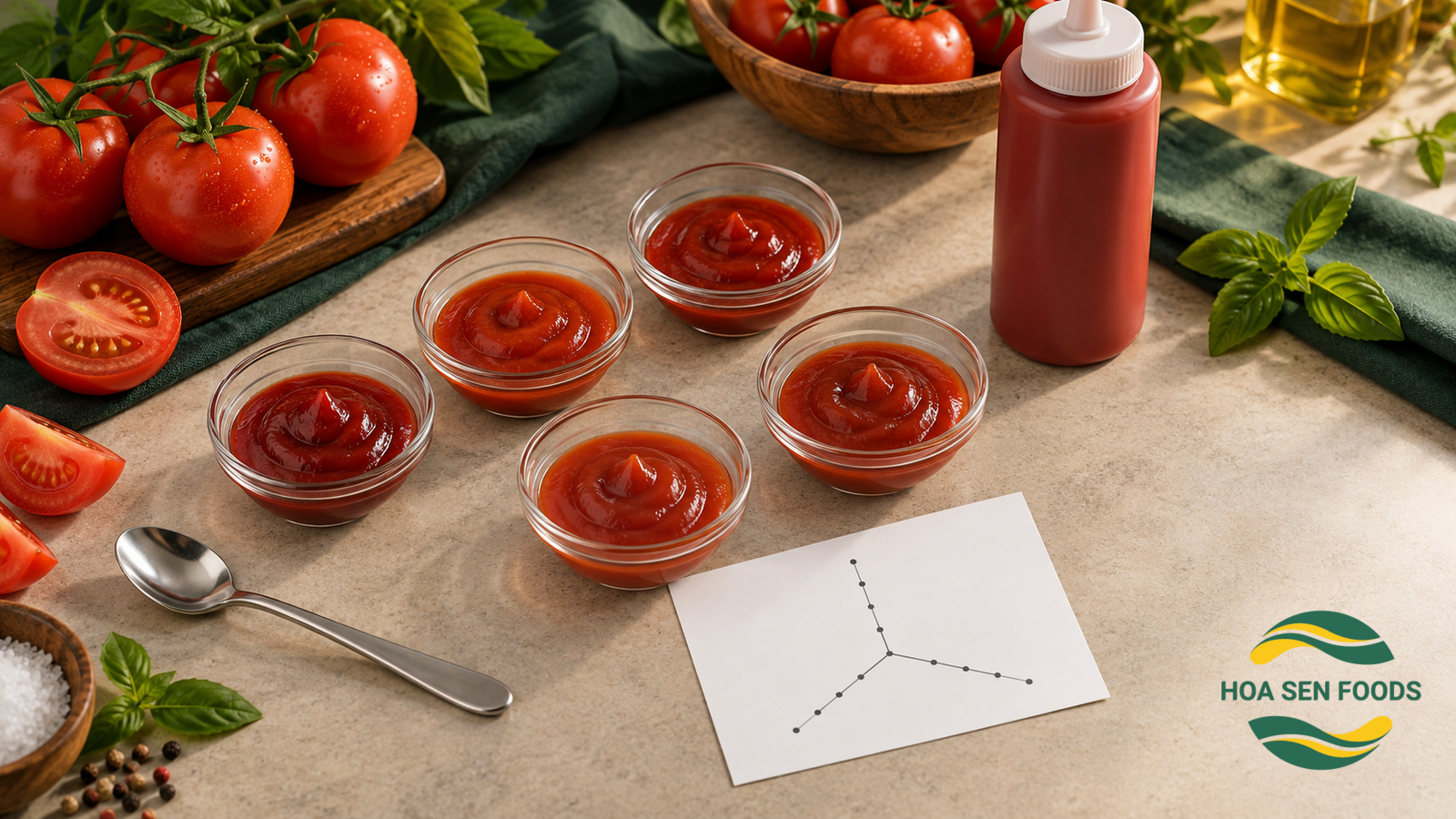
In restaurants, portion size affects the flavor of a dish, service speed, and cost per serving. During sampling, record handling time, cleanliness, portion control, and the amount left in the pack.
4. Retail packaging must help shoppers understand and use the product
Retail packaging protects the sauce and serves as a brand touchpoint. Mandatory information should be developed for the destination market and product category. Regulation (EU) No 1169/2011 applies to food intended for the final consumer, including food delivered by or supplied to mass caterers. Legal counsel, the importer, and labeling specialists should check the specific application.
5. A larger pack is not automatically cheaper to use
Unit price by weight is only part of the picture. Compare total cost of use, including product price, waste, handling time, secondary packaging, storage, and disposal.
6. Case packing and identification codes depend on the packaging level
If using GTINs or a trade-item identification system, identify which packaging levels are trade items and check the current rules with GS1. Do not use one code for every format without confirmation from the person responsible for product data.
7. Validate conditions of use after opening
Storage instructions and use-after-opening periods should not be copied mechanically between channels. They should be based on the formula, process, packaging, shelf-life assessment data, and QA-approved guidance.
8. Can both channels use the same formula?
Possibly, if one formula meets the sensory, dispensing, packaging, usage, and market requirements of both channels. Test that decision and document a clearly approved sample version.
Four formats to evaluate before sampling
| Format | Use case | Question to test |
|---|---|---|
| Tabletop bottle | Diners dispense sauce at the point of service | Is it clean, easy to handle, and easy to control? |
| Kitchen bottle or pouch | Staff use it repeatedly during a shift | Does it work with the equipment and reduce waste? |
| Portion pack | Delivery, prepared meals, or single-use service | Is the serving size appropriate and the pack easy to open? |
| Retail bottle | Consumers buy it for home use | Is the label clear, and does the size suit household habits and shelf display? |
Frequently asked questions
Is foodservice chili sauce simply retail sauce in a larger bottle?
No. Foodservice also involves handling speed, portioning, equipment, waste, storage, hygiene, and conditions of use after opening.
Should a restaurant choose bottles, refill pouches, or portion packs?
It depends on where the sauce is used, volume, service style, portioning needs, storage space, and operating procedures. Test options during an actual service shift before deciding.
Can the same formula serve both channels?
Yes, if it meets both channels’ sensory, packaging, dispensing, and usage needs. Test it in the actual packs and obtain R&D and QA approval.
Do single-use packs always reduce waste?
That cannot be assumed. Portion packs can control how much is issued but may increase the number of packaging units, inventory requirements, and packaging waste.
Are foodservice labeling requirements always lighter than retail requirements?
Requirements depend on the market, packaging type, information recipient, and supply chain. Confirm them with the importer, legal advisers, and relevant authorities.
When should we create separate SKUs?
Consider separate SKUs when differences in formula, packaging, portioning, labeling, identification codes, or use conditions are substantial enough that a shared configuration creates inconvenience or risk.
Prepare a brief for each channel
Share the type of chili sauce, intended user, dishes, portioning method, reference sample, packaging format, destination market, and expected volume. Hoa Sen Foods will need to confirm filling capability, minimum order quantity, materials, testing, timelines, and documentation for each project.
Explore contract manufacturing products