

India is not a market where a seasoning product can be sold simply by adding the word “Halal.” Seasoning businesses need to define the target region, customer segment, sales channel, FSSAI requirements, Halal or vegetarian positioning where relevant, lower-risk formulas, transparent ingredient dossiers, packaging that can handle India’s diverse climate, and a realistic price point that can compete with a very strong domestic spice ecosystem.
Halal Seasonings for India: What Should Vietnamese Businesses Prepare Before Exporting?
India is attractive because consumers have a deep habit of using spices and seasonings in everyday cooking. But that same advantage also makes the market harder. India already has a dense local seasoning ecosystem, from masala, chutney, pickle, spice mix, sauce, and ready-to-cook paste to everyday cooking seasonings.
A Vietnamese product entering India cannot rely only on being “delicious,” “new,” or “already Halal.” It must answer practical market questions: Who is the product for? Which region will it enter? Which channel will sell it? Does it serve Muslim consumers? Does it need vegetarian or vegan positioning? Can it meet food safety and labeling requirements? Does it give the importer a strong enough commercial reason to choose it?
For Hoa Sen Foods, when supporting clients with product development for India, the first question is not “Does India have a large population?” The better question is: Is this product clear enough in formula, ingredients, Halal status, vegetarian status, FSSAI readiness, labeling, price, shelf life, packaging, and sales channel to enter the market?
Why Should India Matter to the Seasoning Industry?
India is a market where seasonings are deeply embedded in daily life. Seasoning is not merely a cooking supplement; it is part of culinary identity. Each region has its own flavor base: North India, South India, West India, East India, coastal areas, major cities, Muslim communities, vegetarian communities, restaurant channels, and household channels all have different needs.
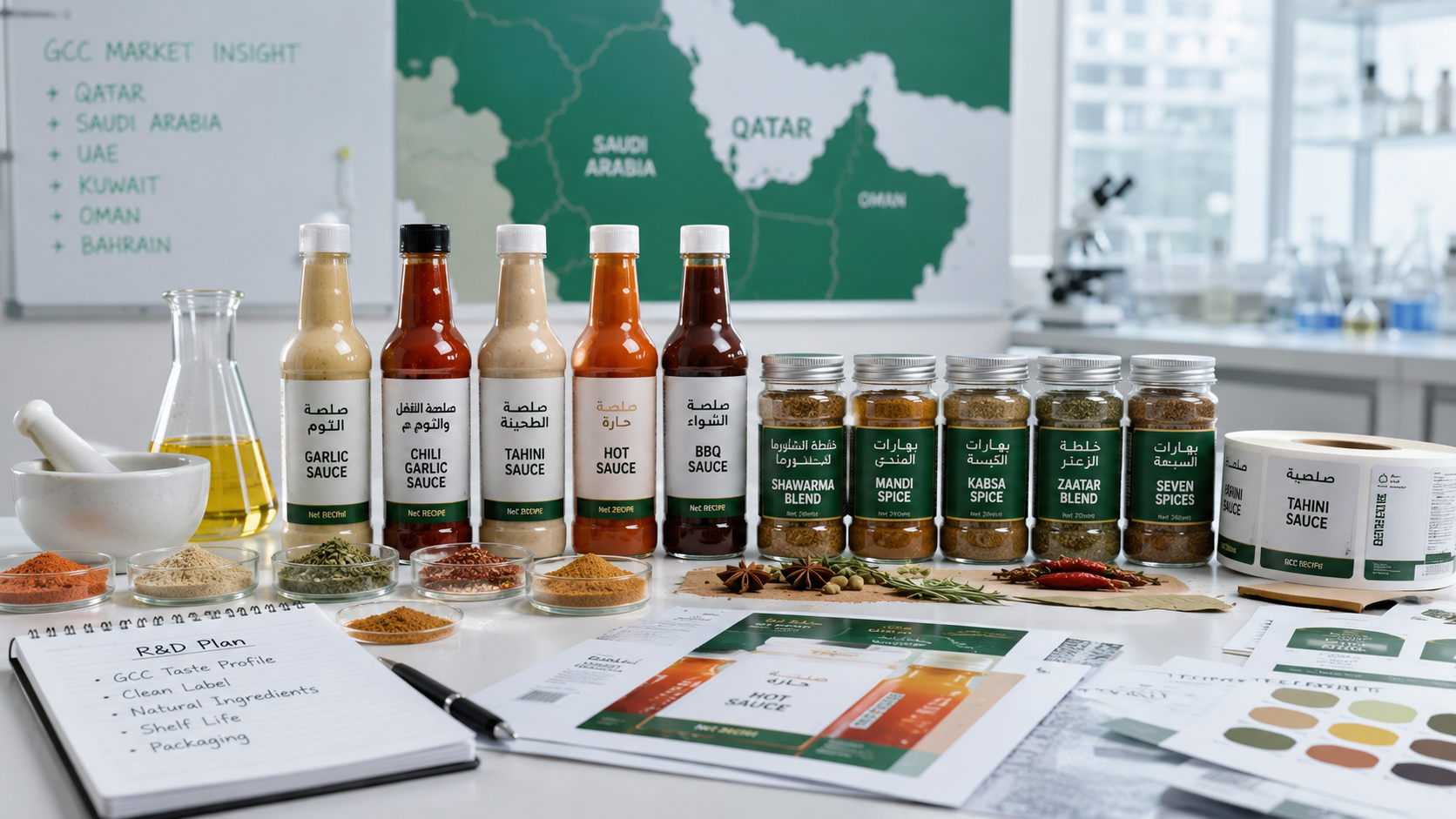
For Vietnamese businesses, the opportunity is not about bringing “a new flavor” to India for a simple market test. The more realistic opportunity lies in products with a clear difference: Asian dipping sauces, chili sauces, garlic sauces, tamarind sauces, sweet-and-sour sauces, soy sauce, vegetarian dipping sauces, marinades, seafood seasonings, Southeast Asian spice blends, plant-based products, food-service formats, or private-label products for local distributors.
However, opportunity only becomes a real order when the product is ready in terms of documentation, labeling, food safety, price, taste, sales channel, and supply capability. India is a large market, but it is not a simple one.
- Consumption scale is large, but the segment must be selected carefully.
- Consumers are familiar with spices, sauces, pastes, chutneys, pickles, and seasonings.
- The large Muslim community makes Halal important for certain channels and regions.
- Vegetarian, vegan, and Jain-friendly communities create very specific formula and labeling requirements.
- Food service, cloud kitchens, F&B chains, and e-commerce can be practical entry points for new products.
- Private label can be a realistic route when distributors need their own formula, pack size, or price point.
Understanding Halal Correctly in the Indian Context
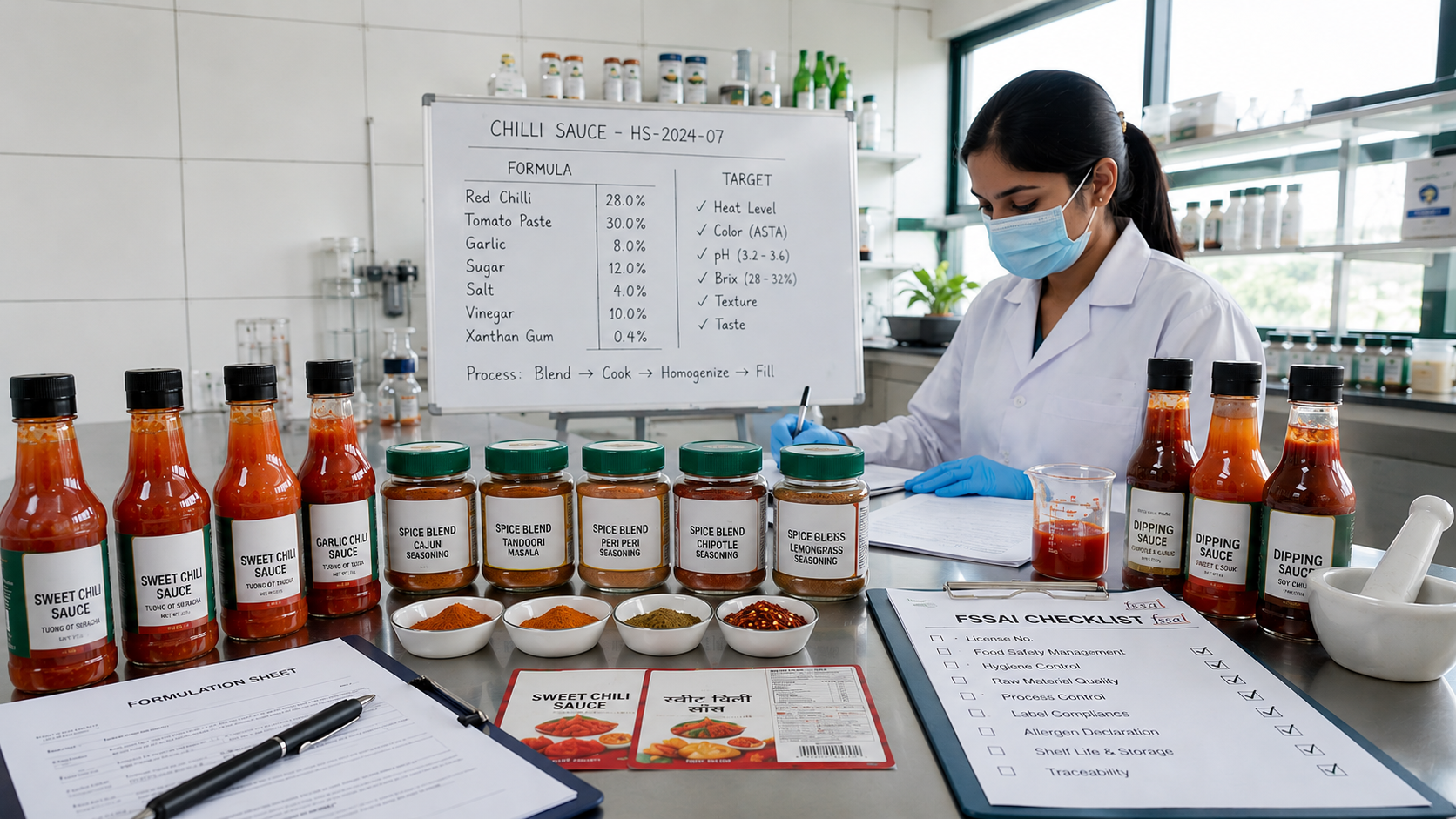
India is a multi-religious market. Therefore, Halal in India should not be understood as a uniform requirement for every product, every region, and every channel.
If a product targets Muslim consumers, Halal restaurants, meat-based food chains, distributors serving Muslim communities, or products that may later move into Islamic markets, Halal certification and a Halal dossier are very important.
If a product targets multi-religious urban channels, vegetarian communities, plant-based products, supermarkets, e-commerce, or non-Halal-specialized food service, Halal may be an additional trust advantage, but it should not be treated as the only key. In many cases, vegetarian, vegan, Jain-friendly, no onion/garlic, no alcohol, allergen-free, clean label, or FSSAI compliance can be equally important, depending on the target segment.
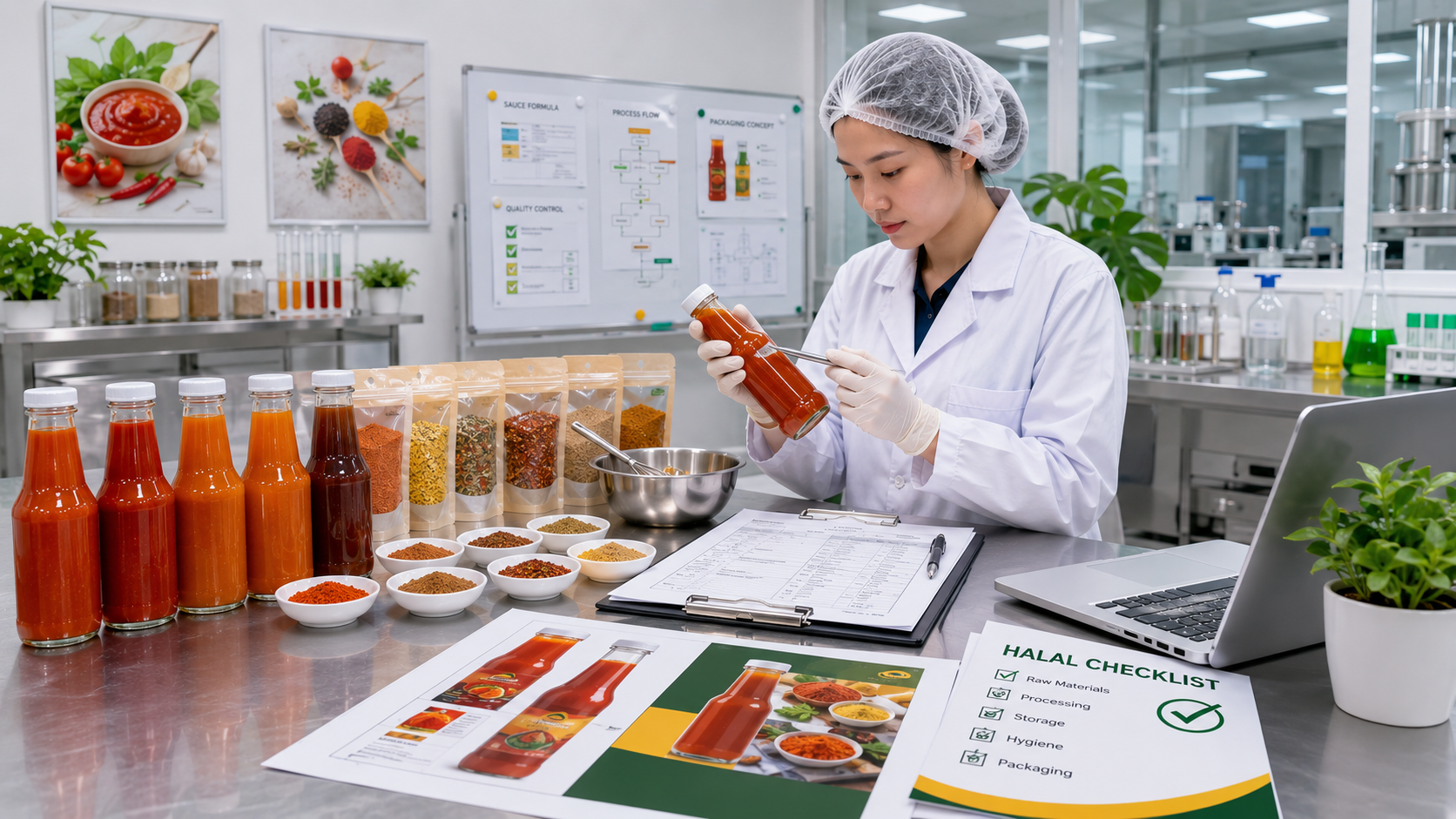
For seasoning products, Halal should be seen as a control system with four layers.
| Control layer | Question the business must answer |
|---|---|
| Formula | Does the product contain alcohol, pork derivatives, gelatin, enzymes, emulsifiers, fats, colors, flavors, or additives of animal origin? |
| Ingredient chain | Does each ingredient have a specification, COA, relevant certificate, origin information, supplier commitment, and vegetarian or vegan information if needed? |
| Production | Is there any risk of Halal, vegetarian, or allergen cross-contamination? Are sanitation, retained samples, batch codes, and traceability clear? |
| Certification, labeling, and import | Will the Halal certificate be accepted by the target channel? Does the label meet FSSAI, allergen, claim, and vegetarian/non-vegetarian symbol requirements where applicable? |
One important point: Halal risk in seasoning products is often not in chili, garlic, pepper, salt, or sugar. The risk usually lies in flavors, carriers, solvents, flavor enhancers, enzymes, fermented ingredients, food colors, preservatives, stabilizers, emulsifiers, processing aids, and direct-contact packaging.
Therefore, the question should not be asked emotionally as “Is this product Halal?” The better question is: Does this product have enough evidence to prove Halal suitability, food safety, and label positioning when an importer, sales channel, or consumer asks?
How Is India Different from Pakistan, Bangladesh, and the UAE?
If a business has already prepared market guides for Pakistan, Bangladesh, or the UAE, it should understand that India requires its own approach.
| Comparison | What to understand when developing products |
|---|---|
| Compared with Pakistan | India is more multi-religious, more regionally diverse, and Halal is not a default factor for the whole market. Segmentation must be clear by Muslim community, vegetarian community, urban channel, region, and sales channel. |
| Compared with Bangladesh | India has a stronger domestic spice ecosystem, thicker brand competition, and wider regional taste differences. A general South Asian formula should not be used for both Bangladesh and India. |
| Compared with the UAE | India is not as dependent on imported food as the UAE. A Vietnamese product needs a very clear reason to be selected: differentiated taste, reasonable price, stable quality, food-service relevance, private-label potential, or a specific target segment. |
Ten Points Businesses Must Pay Special Attention To
- There is no single Indian taste. A product that fits Mumbai may not fit Chennai; a product that fits Hyderabad may not fit Delhi.
- Domestic competition is very strong, especially in masala, chutney, sauce, pickle, and ready-to-cook products.
- Price is very important. If an imported product is expensive, it must target a segment that can pay for its difference.
- Halal must be linked to Muslim consumers, meat-based food service, or a plan to re-export to Islamic markets.
- Vegetarian, vegan, and Jain-friendly positioning can be very important, but these claims should be used only with evidence and process control.
- FSSAI compliance is the foundation for imported products, labels, additives, claims, and food safety.
- Labeling must be handled carefully, especially ingredients, additives, allergens, nutrition, shelf life, and claims.
- India’s climate and logistics vary widely: hot-humid areas, dry areas, coastal regions, and inland regions can all affect the product.
- Food service can be a good entry point before broad retail expansion.
- Private label is practical when distributors want their own taste, packaging format, or price point.
Why Should the Seasoning Industry Be Especially Careful When Entering India?
Seasonings are already familiar in India, and that is precisely why the market is difficult. A Vietnamese seasoning product must compete with local choices that are deeply rooted in cooking habits, taste preferences, and consumer price expectations.
A bottle of sauce, a jar of paste, a marinade pouch, or a spice blend may contain many small components. To create stable taste, attractive color, appealing aroma, suitable texture, good shelf life, and feasible cost, formulas often need additives, flavors, food acids, stabilizers, flavor enhancers, preservatives, colors, enzymes, or fermented ingredients.
For India, these small components are not related only to Halal. They also relate to vegetarian/non-vegetarian classification, allergens, permitted additives, label claims, and religious trust.
| Risk group | What must be controlled |
|---|---|
| Flavors | Origin, carrier, solvent, production process, and certification must be clear. Meat flavor, smoke flavor, seafood flavor, and fermented flavor need closer review. |
| Flavor enhancers | MSG, nucleotides, yeast extract, hydrolyzed protein, amino acids, soy sauce, or fermented paste need clear records on source and process. |
| Fermented ingredients | They should not be assumed suitable or unsuitable. Enzymes, additives, possible alcohol formation, and Halal or vegetarian status must be checked if claims are used. |
| Animal-origin ingredients | Gelatin, collagen, animal fat, animal enzymes, meat flavors, or meat extract increase Halal, vegetarian, and consumer-trust risk. |
| Alcohol and solvents | These must be verified from the beginning, especially when targeting Muslim consumers, vegetarian consumers, or ingredient-sensitive groups. |
| Allergens | Peanuts, sesame, soy, gluten, milk, tree nuts, mustard, and cross-contamination risks should be documented in both dossier and label. |
| Additives and colors | They should be checked according to FSSAI requirements and the specific product category, instead of copying a formula from another market. |
| Label claims | Halal certified, vegetarian, vegan, natural, no MSG, organic, gluten-free, and Jain-friendly claims all require evidence. |
| Packaging | Dry seasonings can absorb moisture; sauces and dipping sauces can separate, change color, swell at the cap, or leak if packaging is not suitable. |
| Shared production | Halal, vegetarian, and allergen cross-contamination must be controlled through sanitation records, batch codes, retained samples, and traceability. |
Which Products Should Businesses Start With in India?
Businesses should not bring the entire catalog to India at the beginning. They should select one to three lead products to learn the market, control documentation, and reduce commercial risk.
- Chili sauce, garlic sauce, tamarind sauce, sweet-and-sour sauce, or Asian-style spicy sauce for snacks, rolls, sandwiches, momo, noodles, rice, chicken, fish, paneer, or fried dishes.
- Soy sauce, dipping sauces, and plant-based sauces for broader customer reach and reduced animal-origin risk.
- Marinades and marinade sauces for food service, Asian restaurants, central kitchens, F&B chains, cloud kitchens, or hotels.
- Southeast Asian spice blends with clear points of difference: seafood, hotpot, grilling, dipping, sour-spicy applications, or restaurant use.
- Sauces or pastes for restaurants and central kitchens to standardize taste and save preparation time.
- Private-label products for distributors or retail chains that need their own label, taste, price, or packaging format.
Criteria for Selecting the First Product
- The formula has low Halal risk and low vegetarian risk.
- Ingredients have clear records, traceability, and alternative sourcing options.
- The taste is different from local products but still easy to apply.
- The product can be tested in food service or urban retail.
- Packaging can withstand hot-humid conditions and varied logistics.
- Shelf life remains sufficient after production, transport, customs clearance, warehousing, and distribution.
- Additives, flavors, labels, and claims can potentially meet FSSAI requirements after importer confirmation.
- Cost remains feasible after certification, testing, labeling, shipping, importer margin, and distribution.
- MOQ is suitable for a first market-test shipment.
Choose the India Entry Channel Before Certification
The sales channel should be selected before certification decisions, packaging artwork, or sample development are finalized. Each channel requires a different formula, label, pack size, price, claim structure, and documentation approach.
| Market entry channel | What to prepare |
|---|---|
| Modern retail | Clear label, attractive packaging, nutrition information, shelf life, barcode, evidence-backed claims, retail price, and display plan. |
| E-commerce | Can be tested quickly in major cities, but still needs FSSAI readiness, label compliance, claim evidence, food safety, and Halal evidence if claimed. |
| Food service / cloud kitchens | Larger pack sizes, volume-based pricing, consistent quality, and stable delivery are more important than retail packaging. |
| Muslim / Halal channel | Halal certification, clear formula, no alcohol, no pork derivatives, transparent labels, and a reputable distributor are needed. |
| Vegetarian / vegan channel | Ingredient origin, enzymes, additives, flavors, cross-contamination, and claims must be tightly controlled. |
| Private label | Recipe ownership, packaging design, testing and certification responsibility, MOQ, sample-development timeline, and confidentiality must be clear. |
10-Step Roadmap for Preparing Seasoning Products for India
- Define the region, segment, and sales channel: Mumbai, Delhi NCR, Bengaluru, Hyderabad, Chennai, Kolkata, Pune, Ahmedabad, food service, e-commerce, Muslim/Halal, vegetarian/vegan, or private label.
- Work early with the importer or Indian partner to confirm FSSAI, labeling, claims, testing, Halal certification if required, packaging format, shelf life, price, and distribution.
- Select lead products that can best control Halal and vegetarian risk, have a clear point of difference, and are easy to test in the target channel.
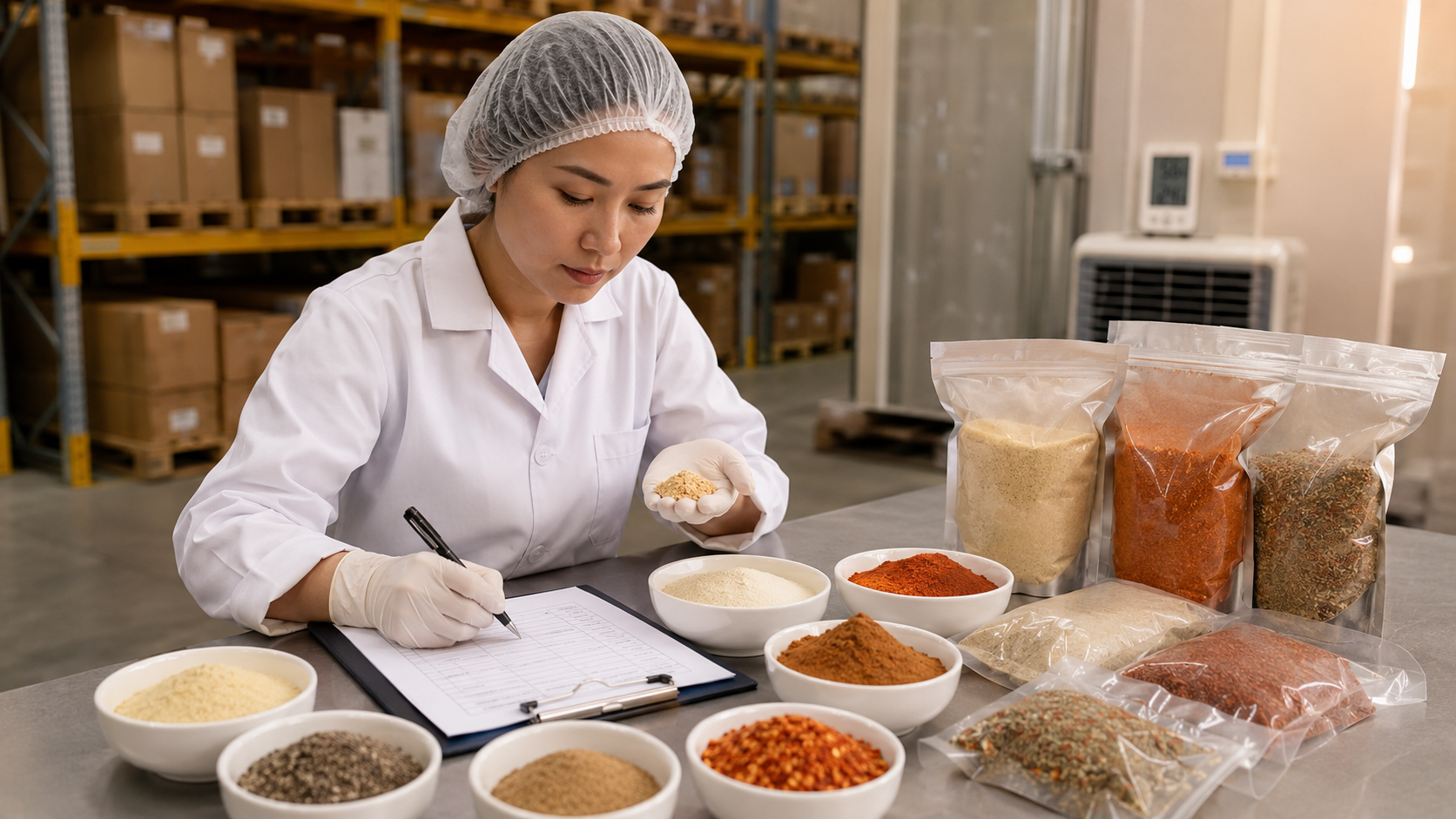
- Create a detailed formula table: ingredient name, code, supplier, country of origin, percentage, function, source, Halal/vegetarian status, certificate, specification, COA, and risk notes.
- Classify ingredient risks into low, medium, and high before dossier submission or packaging print.
- Check FSSAI, additives, labels, and claims with the importer or a local consultant before finalizing artwork.
- Rework the formula through R&D if an ingredient is not suitable for Halal, vegetarian positioning, FSSAI readiness, or clear documentation.
- Control production, cross-contamination, and allergens from raw material receiving to finished-product packing.
- Select a suitable Halal certification body if the target channel requires it, and confirm acceptance with the importer or sales channel in advance.
- Run trial production, check the shipment dossier, and treat the first export shipment as a commercial test while tracking feedback on taste, packaging, price, sales channel, complaints, and reorder potential.
Document Checklist for Seasoning Businesses
Before approaching India, a business should prepare documentation that proves the formula, ingredient chain, production process, label, packaging, and commercial plan are not based on assumptions. The checklist below is organized from the control points described in the article.
| Checklist group | Information to prepare |
|---|---|
| Product formula | Ingredient names, codes, suppliers, origin, percentage, function, Halal status, vegetarian status, certificates, specifications, COA, and risk notes. |
| Ingredient evidence | Specification, COA, relevant certificates, allergen information, supplier commitment, country of origin, and vegetarian/vegan information if used. |
| Production control | Cross-contamination control, sanitation records, allergen control, batch coding, retained samples, packing records, and traceability. |
| Label and packaging | Ingredient declaration, nutrition information, shelf life, lot number, storage conditions, allergen warnings, claims, vegetarian/non-vegetarian symbols if applicable, and packaging specifications. |
| Commercial readiness | Target region, customer segment, sales channel, target price, pack size, MOQ, importer requirements, and market-test plan. |
Common Mistakes Vietnamese Seasoning Businesses Make When Entering India
- Thinking India only needs Halal. Halal matters for certain segments, but it is not the answer for the whole market.
- Failing to segment the market. One general strategy for all of India is usually too broad and inaccurate.
- Not preparing vegetarian or vegan positioning when the product may fit, or making claims without sufficient evidence.
- Using a Halal certificate that the target partner does not accept.
- Keeping the formula unclear, especially around flavors, additives, flavor enhancers, and fermented ingredients.
- Not testing taste with the importer, chefs, target consumers, or food-service users.
- Setting a price that does not fit the segment, especially when competing against strong domestic products.
- Using packaging that cannot handle heat, humidity, long-distance transport, or real storage conditions.
- Setting an MOQ that is too large for the first shipment and makes the importer hesitate to test the market.
- Using strong claims such as natural, healthy, no MSG, no preservative, organic, vegan, Jain-friendly, or Halal certified without enough evidence.
Where Can Hoa Sen Foods Support Businesses?
As an R&D and production back-end partner for seasoning and food brands, Hoa Sen Foods can support clients from the foundational steps: product idea consulting, formula development, sample testing, taste adjustment, packaging format optimization, and production-cost optimization.
Hoa Sen Foods can also support basic ingredient-risk review, product-stability checks for long-distance transport, production and packing control, and preparation of technical information so clients can work with importers, testing partners, Halal certification bodies, or suitable FSSAI consultants.
One point should be clear: Hoa Sen Foods is not a Halal certification body and is not a legal FSSAI consultancy. For official certification or import requirements, businesses need to work with competent organizations, importers, and suitable advisors.
However, a product that wants a smoother certification and import process must begin with formula, ingredients, process, packaging, and documentation. These are areas where Hoa Sen Foods can support clients very early.
Quick Map: 5 Control Layers Before Entering India
| Control layer | Quick check question |
|---|---|
| 1. Formula | Does the product contain Halal, vegetarian, allergen, additive, or flavoring risks that are difficult to prove? |
| 2. Ingredient dossier | Does each ingredient have specifications, COA, origin, relevant certificates, allergen information, and vegetarian or vegan information if needed? |
| 3. Production | Does the process control cross-contamination, sanitation, allergens, batch codes, retained samples, packing, and traceability? |
| 4. Label, packaging, and FSSAI | Does the label correctly show ingredients, nutrition, shelf life, lot number, storage, allergen warnings, claims, and suitable symbols where applicable? |
| 5. Commercial plan | Are the customer segment, target region, sales channel, price point, pack size, importer, and market-test plan clear? |
Conclusion: Enter India Through Selection, Not Generic Expectations
India is a very large market, but it is not an easy market. For the seasoning industry, the opportunity is strong, but competition is also intense. Vietnamese businesses that want to enter India must understand who the product is for, which channel it will use, which region it will serve, and how it differs from domestic products.
A seasoning product entering India needs five foundations: clear formula, clear Halal and food-safety dossier, clear labeling, clear quality control, and clear commercial planning. If one of these foundations is missing, risk may appear during import, sales, market feedback, or reorder negotiation.
For Hoa Sen Foods, every seasoning idea is more than a formula. It may be the ambition of a brand owner who wants to bring a distinctive flavor into a new market, a distributor who wants to develop a private label, or an F&B business that wants to standardize a packaged product.
India is worth testing, but it should be tested with selection and preparation. Start with practical questions: Who is the product for? Which region will it enter? Which channel will sell it? Does it fit the taste? Does it carry Halal, vegetarian, or allergen risk? Are the label and claims ready? Does it need specific FSSAI checks? Can the packaging withstand heat and humidity? Does the price remain competitive? Which certification body does the importer require?
When these questions are answered clearly, the journey into India becomes much less risky.
Hoa Sen Foods is ready to support clients from the first preparation steps, so a flavor idea does not stop at a good sample but has the chance to become a safe, stable, distinctive product with enough foundation to enter a large and complex market like India.
Download the in-depth Halal guide for the Indian market
FAQ
Do Vietnamese seasonings have an opportunity in India?
Yes, but businesses should not enter with generic expectations. The product needs a clear point of difference, fit for a specific region or channel, good dossier control, and a realistic price that can compete with local products.
Is Halal certification enough to sell in India?
No. Halal is important for Muslim consumers and Halal-focused channels, but the product still needs to meet food safety, labeling, additive, claim, packaging, pricing, and distribution requirements.
Are plant-based products easier to enter India?
They may have trust advantages with many customer groups, but the business still needs evidence for ingredients, additives, flavors, production processes, allergens, and vegetarian or vegan claims if used.
Which products should a business start with?
A business should begin with one to three lower-risk products that are easier to document, have clear differentiation, and can be tested through food service, e-commerce, Asian restaurants, or private label.
Does Hoa Sen Foods provide Halal or FSSAI certification for clients?
No. Hoa Sen Foods is not a Halal certification body and is not a legal FSSAI consultancy. Hoa Sen Foods can support the R&D foundation, formula, production, technical dossier, and preparation of information for clients to work with certification bodies, importers, or suitable consultants.