

A good chili sauce in Vietnam does not automatically qualify for Algeria. Before export, businesses need clear formulas, traceable ingredients, Halal evidence, Arabic/French labeling, durable packaging, realistic pricing, and importer confirmation. Algeria should be treated as a serious product-development project, not only as a first export order.
Is Algeria worth considering for Vietnamese seasoning businesses?
Yes, Algeria is worth considering because it has a strong seasoning culture, a clear Muslim consumer context, and demand for packaged foods. But businesses should not enter with a ready-made product. They need to adjust taste, Halal documentation, labeling, pricing, packaging, and sales channels for the Algerian market.
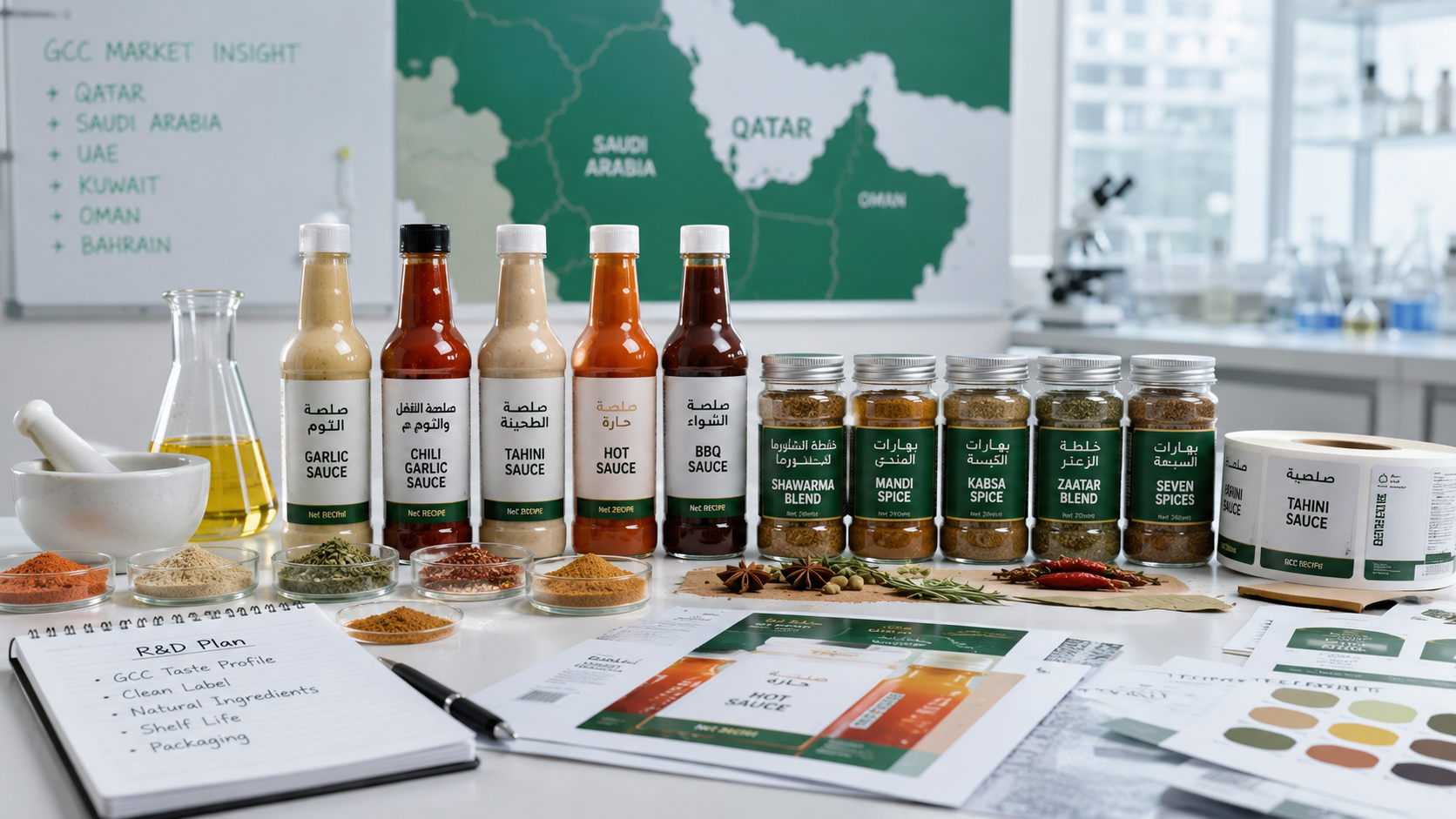
Algeria belongs to North Africa and the Maghreb region, where family meals often use chili, garlic, onion, cumin, coriander, paprika, tomato, olive oil, herbs, marinades, side sauces, grilled dishes, and stews. This culinary base is close to the product categories that Vietnamese seasoning companies can develop.
Possible product directions include chili sauce, garlic sauce, sweet-sour spicy sauce, seafood marinades, grilled-meat seasonings, spice blends, soy sauce, plant-based dipping sauces, and vegan sauce lines. The opportunity does not come from selling a “strange flavor” for curiosity. It comes from making a product that is easy to use in local dishes, supported by a clear Halal dossier, reasonably priced, and stable enough for long-distance transport.
Businesses should remember one direct point: buyers in Algeria are not purchasing only taste. Importers are also buying customs readiness, technical records, batch consistency, correct labeling language, and trust in the manufacturer.
How should Halal for seasoning products entering Algeria be understood?
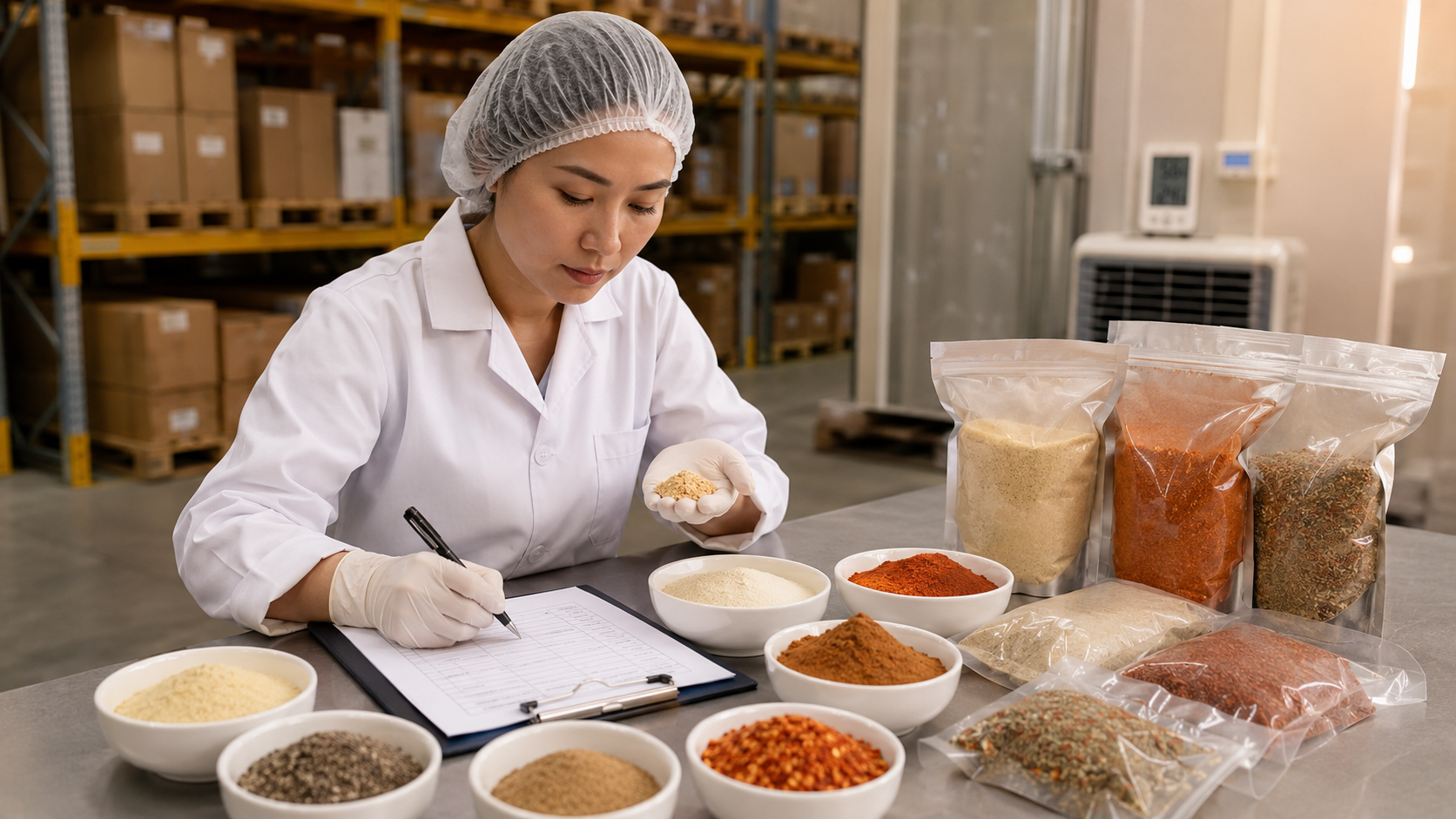
For seasonings, Halal is not just a logo on packaging. It should be understood as a control system covering formula, ingredient sources, production process, cross-contamination risk, certification, labeling, and records that an importer can check when needed.
In the seasoning industry, Halal risk is usually not found in simple ingredients such as salt, sugar, pepper, chili, garlic, or onion. The risk often sits in small but influential components: flavorings, carriers, solvents, enzymes, emulsifiers, additives, fermented ingredients, colors, preservatives, stabilizers, processing aids, and even food-contact packaging.
A formula may use only a tiny percentage of flavoring, but if that flavoring contains an unclear solvent or origin, the Halal dossier becomes weak. A dipping sauce may contain no obvious animal ingredient, yet if fermented ingredients, flavor enhancers, or additives do not have clear specifications and COA records, the business will struggle when an importer asks deeper questions.
Quick checklist: which Halal control layers should be reviewed?
The practical way to review Halal is to look at each control layer before certification, label printing, or shipment. This reduces late formula changes and helps the business answer importer questions with evidence instead of assumptions.
| Control layer | What to check | Risk if handled casually |
|---|---|---|
| Formula | Prohibited ingredients, alcohol, animal derivatives, flavorings, additives, enzymes, and stabilizers. | The product may need explanation or a late formula change. |
| Ingredients | Specification, COA, origin, Halal certificate if needed, and supplier information. | There may be insufficient evidence for an importer or certification body. |
| Production | Cross-contamination, sanitation, batch coding, retained samples, traceability, and raw-material change control. | Batch consistency becomes weak and complaints become harder to handle. |
| Labeling and import | Arabic/French language, Halal claim, ingredients, expiry date, importer information, and current requirements. | The label may need reprinting or the product may be delayed in market entry. |
One point should be stated clearly: the more complex the formula is, the clearer the documentation must be. Businesses should not wait until certification submission or shipment preparation to discover that a small ingredient cannot prove its origin.
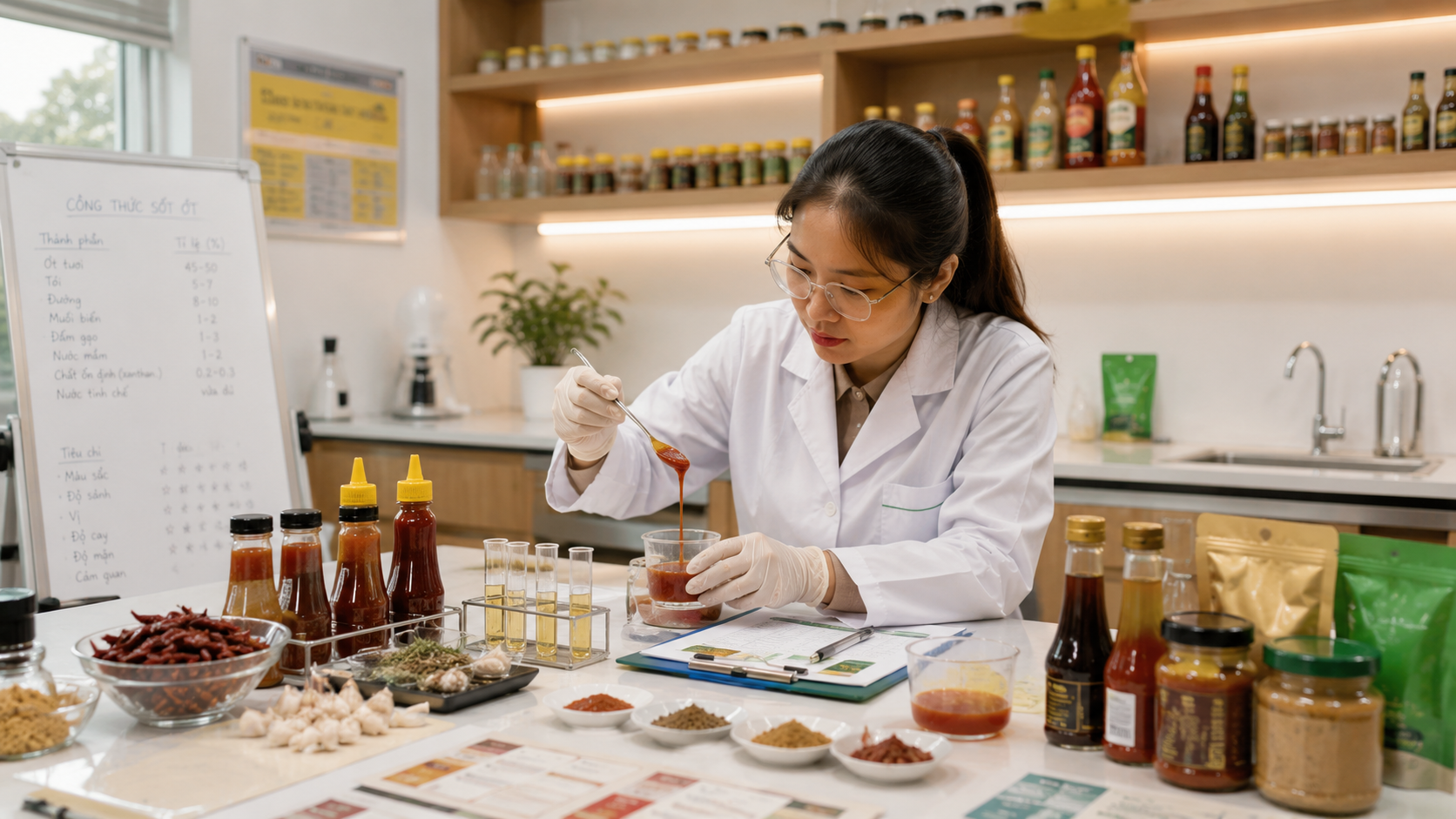
How should businesses review formulas and ingredients?
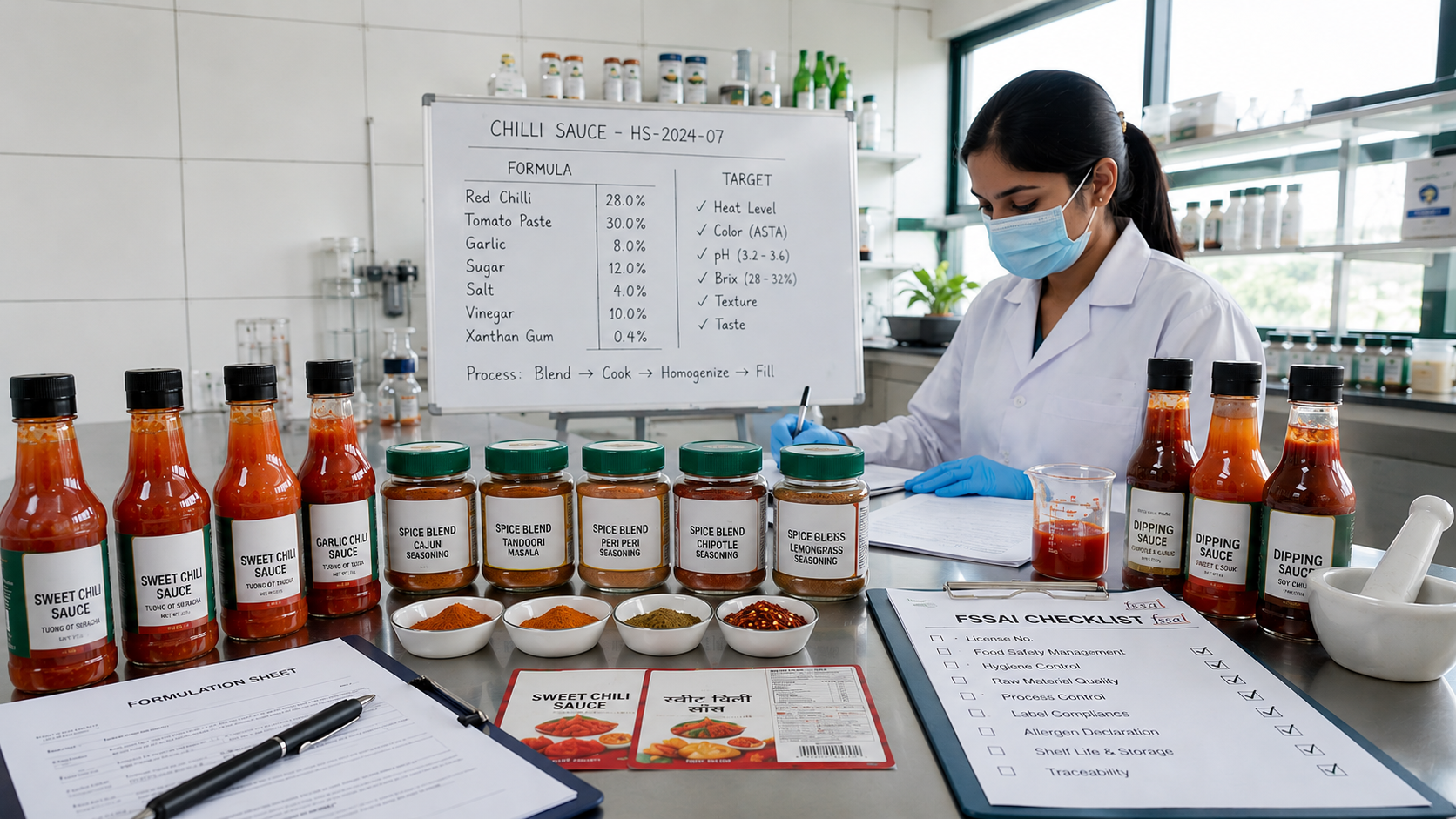
Before packaging or commercial planning, businesses should create a detailed formula table and classify ingredient risk. This step helps detect sensitive components early, reduces late reformulation, and provides the foundation for testing, labeling, certification, and costing.
The formula table should not simply list “flavoring,” “additives,” or “flavor enhancer.” For a product intended for Algeria, each ingredient should include commercial name, technical name, raw-material code, supplier, country of origin, function in formula, usage rate, Halal status, related certification, specification, COA, and risk notes.
After the formula table is prepared, ingredients should be grouped by priority:
- Low risk: simple plant-based ingredients with clear origin, such as salt, sugar, pepper, chili, garlic, onion, and basic spice powders.
- Medium risk: additives, flavorings, flavor enhancers, preservatives, stabilizers, food colors, fermented ingredients, and food-contact packaging.
- High risk: gelatin, enzymes with unclear origin, meat extracts, meat flavorings, animal fats, alcohol, unclear solvents, or suppliers with weak records.
If an ingredient cannot be proven, the stronger approach is not to protect the old formula at any cost. Businesses should consider R&D adjustment using ingredients with better records. Sometimes replacing one flavoring, adjusting the taste base, or changing a stabilizer can make the product easier to prove while keeping the intended flavor direction.
This is where an R&D and contract manufacturing partner brings real value. Not by promising to “make anything,” but by showing which ingredients should stay, which should be replaced, whether taste will change, whether cost remains feasible, and whether a controlled trial batch can be produced.
Which products should be tested first for Algeria?
Businesses should not send a full product catalog to Algeria at the beginning. A stronger first step is to select one to three lead products with lower Halal risk, clear use in North African food, stable packaging, feasible pricing after logistics, and MOQ suitable for market testing.
A common mistake is choosing products based only on domestic sales performance. A product that sells well in Vietnam may still miss the Algerian market because taste, labeling language, import cost, certification, packaging, and channel expectations are different. The first product should be easy to explain, easy to test, easy to use in daily meals, and supported by a clean ingredient dossier.
Which product groups can be considered first?
The best starting products are usually clear in use, manageable in formula risk, and relevant to Maghreb-style eating occasions. The table below helps businesses choose a sharper pilot portfolio instead of spreading effort across too many SKUs.
| Product group | Opportunity | What to adjust | Suggested channel |
|---|---|---|---|
| Chili sauce, garlic sauce, Asian-style spicy sauce | Distinct taste and easy pairing with grilled foods, fish, chicken, and snacks. | Balance heat, acidity, garlic note, viscosity, and shelf life. | Retail, imported-food stores, food service. |
| Marinades and grilling sauces | Suitable for grilled meat, chicken, fish, and seafood. | Adapt cumin, paprika, lemon, herbs, and North African taste direction. | Food service, restaurants, private label. |
| Spice blend and seasoning mix | Transport advantage and longer shelf-life potential. | Create a clear difference so the product does not blend into local alternatives. | Distributors, private label, retail. |
| Soy sauce and plant-based dipping sauces | Lower animal-origin risk and versatile use as side sauces. | Review fermented ingredients, saltiness, flavor enhancers, and packaging. | Retail, food service, side-sauce applications. |
For the first shipment, small but clear is often better than large but vague. One lead product with strong documentation, stable packaging, and real market feedback helps the business learn faster than sending a full catalog and not knowing where the problem lies.
Which sales channel should be selected before certification and packaging?
The sales channel affects formula, pack size, label content, pricing, MOQ, certification scope, and technical records. Businesses should choose the Algeria entry channel before certification or mass packaging print to avoid expensive corrections later.
If the product enters supermarkets or imported-food stores, it needs clear retail packaging, persuasive design, complete information, suitable shelf life, and a reasonable price basis. If the product enters food service, larger pack sizes, consistent quality, and volume-based pricing may matter more than retail design.
If the project is private label for an importer, formula ownership, certification responsibility, MOQ, sample-development timeline, and confidentiality must be agreed from the start.
- Modern retail: requires clear labels, convincing packaging, full product information, and pricing that fits the point of sale.
- Imported-food and urban stores: suitable for Asian products with a distinct story, but the taste still needs to be easy to use.
- Food service: prioritizes larger formats, stable quality, volume-based pricing, and reliable delivery.
- Private label: requires clarity on custom label, custom flavor, certification responsibility, sample adjustment, MOQ, and confidentiality.
- Online channels: can be used for testing, but they do not remove labeling, food safety, claim, or import requirements.
Language should be handled early. Algeria has a commercial context where Arabic and French are both important in practice. Product documents, summarized specifications, catalogs, and labels should be prepared so importers can review and respond, instead of receiving English-only materials.
What is the practical roadmap for preparing seasoning products for Algeria?
A realistic roadmap starts with sales channel and importer confirmation, then moves to lead products, formula review, ingredient risk, R&D, production control, certification, labeling, and trial shipment. Following this order reduces costly rework.
- Define the target area and channel: supermarket, imported-food store, restaurant, food service, private label, or local distributor.
- Work early with the Algerian importer to confirm practical requirements for Halal, labeling, import dossier, pack size, shelf life, and pricing.
- Select one to three lead products with low Halal risk, easy-to-use taste, stable packaging, and feasible pricing.
- Create a detailed formula table for each ingredient, including origin, function, certification, specification, and COA if available.
- Classify ingredient risk into low, medium, and high so the team can solve issues in the right order.
- Rework the formula through R&D if an ingredient is unsuitable or cannot provide enough evidence.
- Control production: raw-material receiving, storage, weighing, mixing, heating, filling, packing, retained samples, batch coding, and traceability.
- Select a suitable certification body after confirmation with the importer. Do not choose only because it is cheaper or faster.
- Prepare Arabic/French labeling with ingredients, additives, allergens, expiry date, storage conditions, batch code, claims, and importer information if required.
- Run a pilot or trial production before the commercial shipment to check formula, sensory quality, stability, packaging, label, batch records, and market feedback.
The first shipment should not be treated simply as the first order. It is a commercial test. Businesses should monitor taste acceptance, packaging performance, pricing, product rotation, complaints, storage conditions, and reorder potential.
What documents should be prepared before working with an Algerian importer?
A good dossier helps the business communicate professionally with importers, certification bodies, and testing partners. It should cover the product, ingredients, factory, packaging, labeling, and commercial plan so answers do not have to be assembled later in fragments.
- Product dossier: product name, description, detailed formula, production process, quality criteria, expected shelf life, storage conditions, product images, and packaging format.
- Ingredient dossier: ingredient list, specifications, COA if available, ingredient Halal certificates if needed, plant/animal/microbial/synthetic origin, additive information, and processing aids.
- Factory dossier: production flow, sanitation process, cross-contamination control, batch control, retained samples, deviation handling, complaints, recall process, and staff training.
- Packaging and label dossier: artwork, Arabic/French version as required, nutrition information if applicable, claims and claim evidence, food-contact packaging specification, barcode, and carton information.
- Commercial dossier: importer, sales channel, priority area, target price, MOQ, delivery terms, market-test plan, and reorder possibility.
The dossier is not only for certification. It also helps the business negotiate with more credibility. When the importer sees that the manufacturer controls formula, ingredients, packaging, and batch records, trust changes.
Which mistakes do Vietnamese seasoning businesses often make when entering Algeria?
Common mistakes come from underestimating details: thinking Halal alone is enough, handling labels too late, using a certificate without importer confirmation, keeping formulas vague, undercalculating total cost, choosing weak packaging, and skipping local taste testing.
- Thinking Algeria only requires Halal, while the product still needs the right taste, price, label, channel, shelf life, and importer.
- Leaving Arabic/French label preparation until the end, after artwork or packaging has already been printed.
- Choosing Halal certification based on assumption, without confirming what the importer or target channel accepts.
- Using vague formula descriptions such as “synthetic flavoring,” “food additives,” or “flavor enhancer” without attached records.
- Setting a first-shipment MOQ that is too high for market testing.
- Ignoring long-distance transport, storage conditions, and packaging durability.
- Skipping taste tests with the importer, local users, or food-service users before larger production.
Where can Hoa Sen Foods support Algeria-focused projects?
Hoa Sen Foods can support the foundation of the product: idea consulting, formula R&D, sample testing, taste adjustment, pack-size optimization, production, packaging, batch control, and technical information preparation so clients can work with importers, testing partners, and certification bodies.
As a production and R&D back-end partner for seasoning and food brands, Hoa Sen Foods is suitable for clients who want to develop their own products but do not yet have enough formulation resources, factory capability, quality control, or experience in standardizing products for a new market.
- Product-idea consulting based on the Algeria direction and expected sales channel.
- Formula development for seasonings, dipping sauces, sauces, pastes, dipping salts, or packaged products.
- Sample testing and adjustment based on feedback from clients, importers, or taste-test groups.
- Optimization of taste, pack size, packaging, and production cost by business stage.
- Basic ingredient-risk review to identify components that need clearer documentation.
- Production control, packaging control, retained samples, batch codes, and technical information for the product dossier.
- Confidentiality of formulas, volumes, and client commercial information.
Hoa Sen Foods is not a Halal certification body. Official certification requirements for Algeria should be confirmed with an authorized certification body, the importer, and relevant authorities. However, a product that wants a smoother certification path should start from formula, ingredients, process, and records. This is where Hoa Sen Foods can support clients early.
What is the final preparation logic before exporting Halal seasonings to Algeria?
Algeria is a promising market for Vietnamese seasoning businesses, especially sauces, dipping sauces, marinades, spice blends, plant-based products, and private-label lines. But it should not be approached by assumption. The right starting point is product clarity, not optimism alone.
Before exporting, businesses should answer practical questions: Who will the product serve? Which channel will it enter? What risks exist inside the formula? Are ingredient records clear? Is Arabic/French labeling ready? Can the packaging handle long-distance transport? Which certification does the importer require?
If you are developing seasoning, dipping sauce, sauce, or packaged food products for Algeria, Hoa Sen Foods can support from formula consulting and sample testing to pack-size optimization and a suitable contract manufacturing plan.
Visit hoasenfoods.vn to submit your request and discuss a safe, stable, distinctive product-development plan.
Download the in-depth Halal guide for the Algerian market
FAQ
Are Vietnamese seasonings suitable for the Algerian market?
They can be suitable if the product is adjusted for local taste and the right sales channel. Algeria is familiar with seasonings, sauces, chili, garlic, cumin, paprika, tomato, grilled dishes, and stews. Vietnamese products should still be tested for taste, Halal suitability, labeling, and packaging before larger production.
Does a plant-based seasoning product automatically qualify as Halal?
No. A plant-based formula can reduce risk, but it does not prove Halal suitability by itself. Businesses still need to review flavorings, fermented ingredients, additives, flavor enhancers, solvents, production process, and cross-contamination risk.
Should a business obtain Halal certification before finding an Algerian importer?
Businesses should avoid choosing certification based on assumption. They can prepare the formula and technical dossier first, but the certification body and certification scope should be confirmed with the importer to avoid repeating the work later.
What should be checked on labels for Algeria?
Businesses should prepare Arabic labeling and consider French according to practical requirements. The label should clearly show product name, ingredients, additives, allergens if any, net weight, origin, manufacturer, expiry date, storage conditions, batch code, and evidence-backed claims.
What can Hoa Sen Foods do for a Halal seasoning project targeting Algeria?
Hoa Sen Foods can support idea consulting, formula R&D, sample testing, taste adjustment, pack-size optimization, production, packaging, and basic technical information preparation. Hoa Sen Foods does not replace a Halal certification body or export legal adviser.
Author /h2>
Author: Hoa Sen Foods Content Team [to be added]
Professional focus: Spice and food contract manufacturing, seasoning R&D, private label, co-packing, packaging, and product preparation for export-oriented projects.