

Sitting in a strategy meeting with a new client from Doha last month, I listened quietly as he explained a massive budget loss. He had spent six months and fifty thousand dollars trying to build a custom, proprietary hot sauce from scratch. After analyzing his actual market needs, we realized he could have launched a ready-made, high-quality formula under his own brand in just three weeks.
From what we’ve seen, this is a tragically common mistake in the fast-paced condiment industry.
Avoid choosing the wrong manufacturing model at all costs, as it equals a massive waste of precious time, money, and emotional energy. But here’s the thing. You absolutely don’t have to make that expensive mistake.
When you enter the highly competitive food industry, you immediately face a massive alphabet soup of factory acronyms. Understand the precise nuances of OEM vs ODM food manufacturing to build a profitable brand safely. If you don’t fully grasp the exact OEM ODM difference spice businesses rely on, you’ll likely choose the wrong path for your specific budget and timeline.
Because we want to act as the reliable launchpad for your ambitions, we’ve created this thorough comparison guide. Look closely at how these two distinct production models operate in the real world. Evaluate your current business resources honestly before signing any contracts.
By the end of this deep-dive into OEM vs ODM food manufacturing, you’ll know exactly which manufacturing route will build your flavor empire securely.
- Placement: Right after the introduction.
- Visual: A clean, split-screen infographic. The left side shows “OEM” with a custom recipe blueprint. The right side shows “ODM” with a ready-made spice bottle getting a new label.
- Alt Text: Understanding OEM vs ODM food manufacturing for new and growing spice brands.
1. What Exactly is OEM in OEM vs ODM Food Manufacturing?
Let’s define the OEM model clearly before making any head-to-head comparisons.
In the context of OEM vs ODM food manufacturing, OEM simply means the factory builds a product based exactly on your proprietary formula and your specific instructions. You own the recipe entirely. You dictate the exact flavor profile from start to finish. The factory simply acts as your massive, highly efficient, silent kitchen.
To be fair, this isn’t always the case if you use a sketchy, unverified factory that steals your intellectual property. However, when you partner with a reputable manufacturer bound by strict Non-Disclosure Agreements (NDAs), you maintain 100% control over your intellectual property.
When discussing the vast world of OEM vs ODM food manufacturing, OEM represents the ultimate path to complete market exclusivity.
The Pros of OEM Manufacturing
- Absolute Control: Manage the exact salt content, the specific origin of the black pepper, and the precise heat level of the chili.
- Total Exclusivity: Ensure no other brand in the world sells your exact flavor profile. Your unique taste becomes your competitive moat.
- Higher Brand Equity: Build a highly valuable corporate asset over time. If you ever want to sell your company, owning proprietary formulas increases your valuation massively.
The Cons of OEM Manufacturing
- Heavy R&D Required: Bring a working formula to the table, or pay the factory’s food scientists to develop one for you from scratch.
- Longer Time to Market: Expect a testing period of weeks or months to perfect the custom prototype before mass production can even begin.
- Higher Initial Investment: Prepare to pay for custom packaging plates, R&D testing fees, and potentially higher Minimum Order Quantities (MOQs).
2. What Exactly is ODM? The OEM ODM Difference Spice Brands Face
Now, let’s look at the ODM model, which is frequently referred to as “Private Labeling” or “White Labeling” in the food industry.
Under the ODM model, the manufacturer already possesses a proven, taste-tested, and fully certified product formula sitting ready on the shelf. You simply buy that existing product, put your own brand’s custom label on the packaging, and sell it directly to your consumers.
Think about the incredible speed of this specific model. Because the extensive R&D is already completely finished, you skip the lengthy testing phase entirely.
However, understanding the true OEM ODM difference spice brands face means accepting certain structural trade-offs. You don’t own the base formula. When evaluating the OEM ODM difference spice businesses must consider, realizing that your competitor could potentially sell a similar flavor is the biggest hurdle.
The Pros of ODM Manufacturing
- Lightning Fast Launch: Go from signing a contract to having a shelf-ready product in a matter of weeks, rather than months.
- Zero R&D Costs: Save thousands of dollars in laboratory fees and prototype shipping costs.
- Lower Financial Risk: Sell a product that has already been extensively market-tested by the factory for general consumer appeal.
- Lower MOQs: Start with significantly smaller order volumes, helping startups test the market without drowning in excess inventory.
The Cons of ODM Manufacturing
- Zero Exclusivity: Accept that your direct competitors could potentially buy the exact same sauce formula from the same factory and sell it under a different name.
- Limited Customization: Forget about tweaking the recipe to perfection. If you want the ODM garlic sauce to have 5% less sugar, you can’t change it without shifting into an OEM contract.
- Lower Long-Term Valuation: Build a brand based solely on marketing and distribution, rather than unique intellectual property.
- Placement: After defining both models.
- Visual: A professional factory setting showing a diverse range of blank, unlabelled spice jars ready for custom branding, illustrating the ODM model.
- Alt Text: The ODM model offers fast speed to market in OEM vs ODM food manufacturing.
3. The Thorough 8-Point Matrix for OEM vs ODM Food Manufacturing
Analyze the OEM ODM difference spice businesses must consider by looking at multiple distinct factors simultaneously.
Use this highly detailed comparison table to weigh your strategic options accurately. We’ve broken down the entire OEM vs ODM food manufacturing debate into eight critical business criteria.
| Evaluation Criteria | OEM (Original Equipment Mfg) | ODM (Original Design Mfg / Private Label) |
| 1. Upfront Cost | Higher (Requires R&D, custom plates, lab testing fees). | Lower (No R&D fees, uses existing factory resources). |
| 2. Time to Market | Slower (Typically 60 to 120 days from brief to final shelf). | Much Faster (Often ready in 21 to 30 days depending on packaging). |
| 3. Formula Exclusivity | 100% Exclusive. You own the specific intellectual property. | 0% Exclusive. The factory owns the master recipe. |
| 4. Minimum Order (MOQ) | Usually higher to justify the custom setup and specific raw material sourcing. | Usually lower, as the factory already produces the bulk batch regularly. |
| 5. R&D Effort Required | Heavy. You must provide a recipe or work closely with food scientists. | None. You simply choose an existing flavor from a catalog. |
| 6. Product-Market Risk | Higher. Your new custom flavor might not resonate with local consumers. | Lower. The formula is usually a proven, widely accepted mass-market flavor. |
| 7. Scalability | Excellent. You can move the recipe to another factory if needed later. | Good, but you’re permanently tied to that specific manufacturer for that flavor. |
| 8. Long-Term Brand Value | Extremely High. You build a completely unique culinary legacy. | Moderate. Your brand value relies entirely on your marketing and sales channels. |
Deep Dive into the Criteria
Cost and Time:
If you have a tight budget and an urgent deadline, ODM wins effortlessly. When analyzing OEM vs ODM food manufacturing, speed is often the deciding factor for young startups.
Exclusivity and Risk:
Understand the precise OEM ODM difference spice brands face regarding risk. OEM carries a higher risk of market rejection because the flavor is totally new, but it offers the massive reward of exclusivity. ODM carries almost zero flavor risk, but you ultimately sacrifice your unique selling proposition (USP).
Scalability and Value:
Build for the long term if you have the resources. While ODM gets you into the supermarket quickly, OEM ensures that when you capture a massive market share, no one can easily replicate your specific taste.
4. Navigating the OEM ODM Difference Spice Market: When to Choose Which?
In our experience, founders often freeze when faced with this specific decision.
To help you break through the analysis paralysis, let’s look at highly specific use cases for the condiment and seasoning industry. Knowing the OEM ODM difference spice nuances helps you match the model to your exact scenario.
Scenario A: You Must Choose OEM When…
- You possess a famous family recipe. If your grandmother’s Kabsa spice blend is locally legendary, don’t compromise. Use OEM to scale that exact flavor perfectly.
- You operate a highly successful restaurant. If your customers come to your burger joint specifically for your unique signature spicy mayo, you absolutely must use OEM. If you use an ODM product, another restaurant across the street can buy the exact same mayo and steal your customers.
- You are targeting a highly specific, underserved niche. If you want to create a completely sodium-free, organic, keto-friendly shawarma rub, an off-the-shelf ODM product likely won’t exist. You must formulate it custom.
Scenario B: You Must Choose ODM When…
- You are launching your very first food business. If you have zero experience in the food industry, don’t complicate your life with food science. Use a proven ODM product to learn the basics of retail distribution, branding, and supermarket listing fees safely.
- You have an incredibly strong marketing channel. If you are a massive social media influencer with a million followers, your audience buys the product because of you, not the specific recipe. Grab a high-quality ODM hot sauce, put your beautiful face on the label, and monetize your audience immediately.
- You need to expand your SKU catalog rapidly. If you already sell premium olive oil and want to add a basic “Italian Herb Mix” to your catalog to increase your average order value, use ODM. It saves you months of unnecessary development for a standard product.
Evaluate the OEM ODM difference spice startups encounter by asking one simple question. Do you want to sell a flavor, or do you want to sell a brand?
- Placement: Inside the Scenarios section.
- Visual: A flowchart helping users decide between OEM and ODM based on their budget, timeline, and need for exclusivity.
- Alt Text: How to decide between OEM vs ODM food manufacturing for your brand.
5. Hoa Sen Foods: Mastering OEM vs ODM Food Manufacturing
Understand these complex models fully before making a move. However, finding a manufacturing partner who actually executes both flawlessly is incredibly rare in Southeast Asia.
At Hoa Sen Foods, we view our corporate role as your dedicated Caregiver. We don’t force you into a model that serves our factory. We guide you into the model that serves your ultimate brand ambitions within the OEM vs ODM food manufacturing landscape.
Our Thorough Approach to Custom OEM Spice Blends
Bring your wildest flavor concepts to us directly.
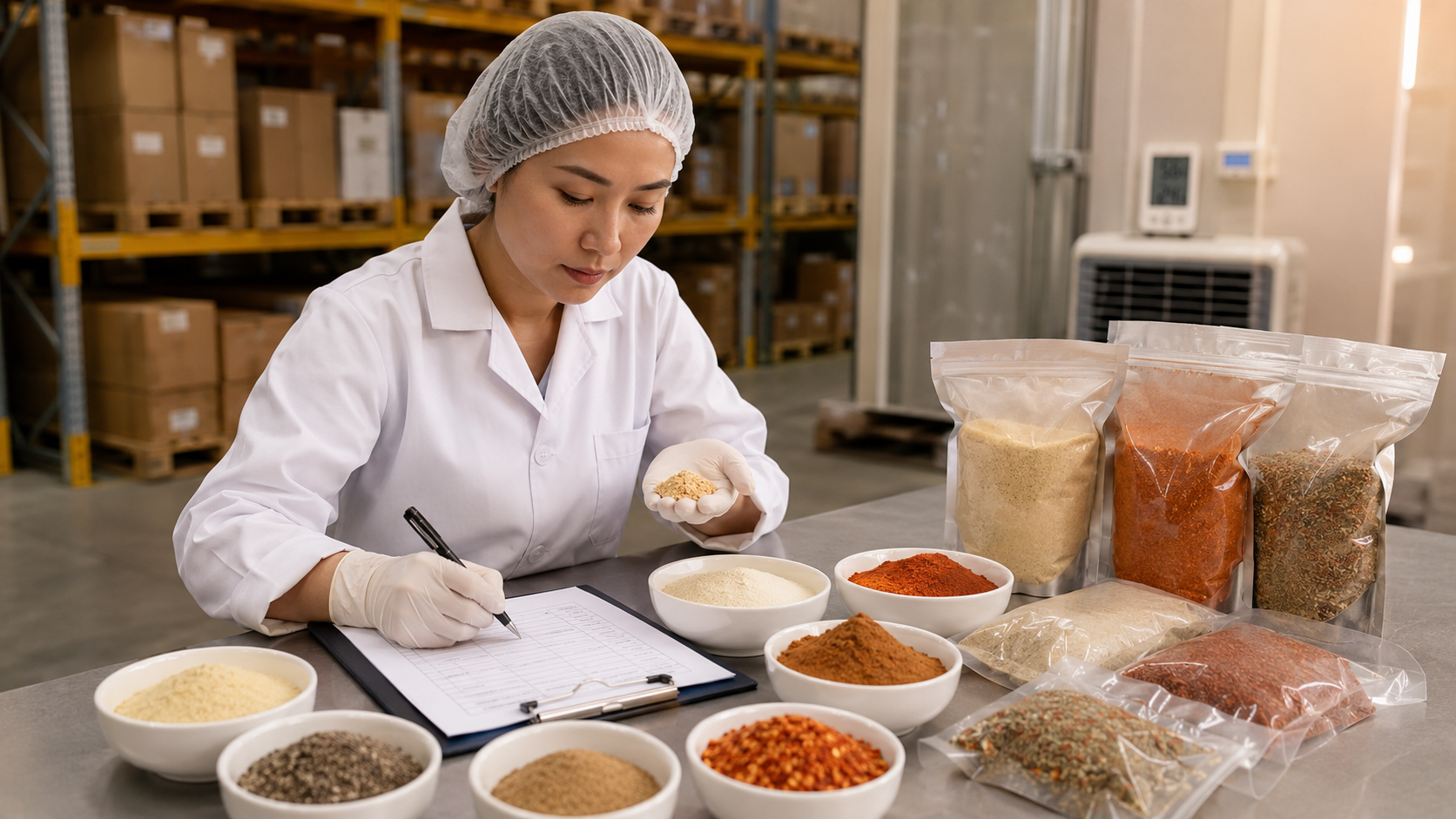
If you choose the OEM route, we put in place a highly rigorous, scientifically driven R&D process. After receiving your detailed flavor brief, our food scientists create physical prototypes within 7 to 14 days. We sign strict Non-Disclosure Agreements (NDAs) instantly to protect your intellectual property. We carefully adjust the exact micron size of the powders, manage the precise moisture levels, and ensure the final product passes all strict Halal and GCC food safety requirements.
We guarantee that your custom recipe remains your exclusive property forever. To see exactly how our high-tech facility handles this, review our Halal OEM Manufacturing Services.
Our Approach to Rapid ODM / Private Labeling
Launch your new brand next month.
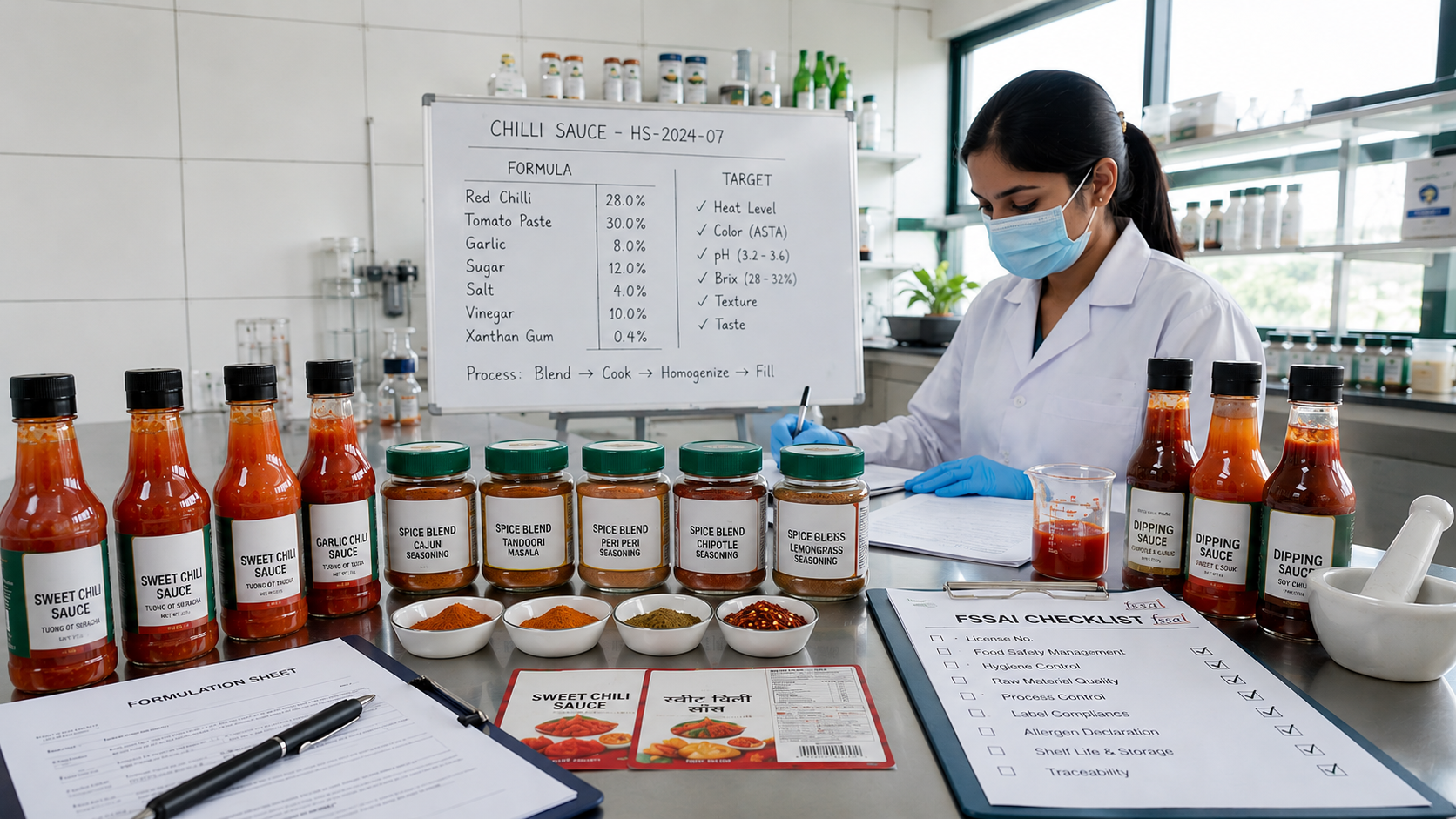
If you choose the ODM route, we offer a massive, highly refined catalog of proven, taste-tested spice blends and premium chili sauces. Because we’ve already perfected these recipes for the global market, you can skip the R&D phase entirely. You simply select a premium product from our catalog—such as our signature Vietnamese Phở spice base or our rich, smoky BBQ rub. You send us your beautiful packaging design. We pack the premium spices into your branded jars, print your labels, and prepare the necessary export documents rapidly.
If you want to understand how to design the perfect package for these ODM products, carefully read.
The Caregiver Promise
Whether you choose the OEM route or the ODM route in the vast OEM vs ODM food manufacturing ecosystem, our fundamental commitment to consumer safety never changes.
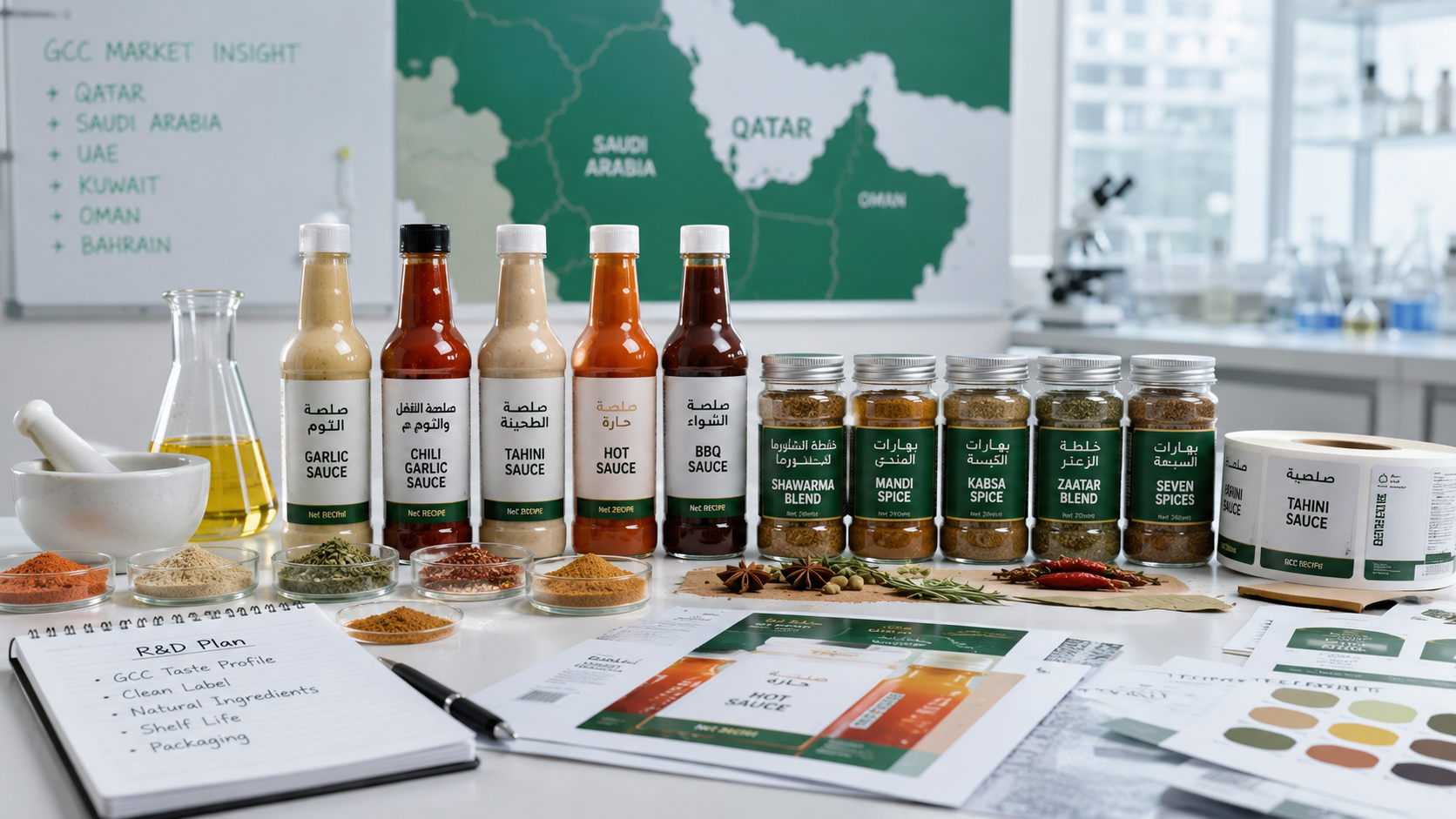
We absolutely refuse to use dangerous chemical fillers, artificial dyes, or unverified raw materials in any of our production lines. Every single batch we produce—whether it’s a custom OEM recipe or a standard ODM catalog item—comes with a thorough Certificate of Analysis (COA) and strict, GCC-recognized Halal certification.
We source our potent black pepper and sweet cinnamon directly from the best farms in Vietnam. Invite yourself to learn exactly why this sourcing gives you a massive market advantage by reading.
Conclusion: There is No “Better” Model, Only the “Right” Model
Let’s summarize the reality of the modern global condiment trade clearly.
There’s absolutely no universal “winner” in the debate between OEM vs ODM food manufacturing. Neither model is inherently superior to the other. There is only the specific model that perfectly aligns with your current budget, your desired timeline, and your long-term business strategy.
Understand the profound OEM ODM difference spice brands face to empower yourself to make intelligent, highly profitable decisions.
If your core goal is to build an unassailable, highly unique culinary legacy that no competitor can ever copy, you must invest the time and capital into OEM. If your core goal is to generate cash flow rapidly, test a new market safely, or monetize an existing audience immediately, ODM is your ultimate weapon.
Stop letting confusion delay your entrepreneurial dreams. Act decisively. Take the necessary time to evaluate your resources honestly. Once you know your path, let a trusted, highly capable manufacturing partner help you with the heavy lifting of the actual production floor.
Hoa Sen Foods is entirely ready to be your secure bệ phóng (launchpad). We possess the deep food science expertise, the massive raw material access, and the strict operational integrity required to bring your vision to life safely, regardless of which path you choose.
Ready to discuss which specific manufacturing model fits your brand best?
Frequently Asked Questions (FAQ)
1. Does Hoa Sen Foods charge a massive fee for OEM R&D development?
While OEM does require an initial R&D investment to cover laboratory time and prototype shipping, our fees are highly competitive. We focus heavily on building long-term manufacturing partnerships, not just making a quick profit on formulation fees in the OEM vs ODM food manufacturing space.
2. If I start with an ODM product, can I switch to a custom OEM formula later?
Absolutely. In our experience, this is a highly successful strategy for startups navigating the OEM ODM difference spice market. Many growing brands launch quickly using our proven ODM catalog to generate initial cash flow. Once their brand is established, they transition to a custom OEM formula to secure total market exclusivity.
3. How long does the ODM (Private Label) process usually take compared to OEM?
Because the ODM formula is already perfected, the timeline depends almost entirely on printing your custom packaging. Usually, an ODM product can be shelf-ready in 3 to 4 weeks. A custom OEM product typically takes 8 to 12 weeks due to the necessary flavor testing and approval loops.
4. Are both OEM and ODM products fully Halal certified for the Middle East?
Yes. Regardless of the specific model you choose in the OEM vs ODM food manufacturing landscape, every single product leaving our facility is processed under strict, GCC-recognized Halal guidelines. We provide all necessary export documentation to ensure your goods clear customs smoothly in Saudi Arabia, the UAE, and beyond.
5. How do I protect my brand if I use an ODM product that isn’t exclusive?
When you use ODM, your primary defense against the OEM ODM difference spice competitors exploit is your aggressive marketing, your beautiful packaging design, and your superior customer service. You win the market by building a stronger, more relatable brand identity than the competitors selling similar baseline products.